A country shaped almost entirely by water: fjords cut a hundred kilometres inland, a coast that runs past the Arctic Circle and keeps going, and cities small enough to walk between the mountains. Norway is expensive, and it is not padded.
4
City guides
5,627,400
People
8
UNESCO sites
100,915 km
Coastline
Region
Best months
Jun · Jul · Feb
Ideal length
8–12 days
Budget / day
$160–270
Language
Norwegian, with English almost everywhere
Getting around
Trains and coastal ships in the south, flights beyond Bodø
When to visit Norway
Two good seasons at opposite ends of the year, and two months between them that are nobody’s.
Best: February, March, June and August, the two seasons this country is actually built for Peak: July, when the fjord villages and the prices both fill up Good: January, May, September and December, quieter shoulders with one clear reason each Hardest: April and October, between the seasons, when passes and boats are both shut
Quick answer · where to go in Norway
Norway is one decision: how far north to go, and everything else follows from it. The standard first trip is Oslo to Bergen on the railway across the Hardangervidda plateau, then two or three days in the fjords behind Bergen, where the Nærøyfjord, the branch line to Flåm and the ledge at Trolltunga all sit within a short drive of each other. Stavanger does the same job further south with Preikestolen an hour away, and it pairs with the white timber towns of the south coast. The northwest is the other fjord half and needs a car: Ålesund for the Art Nouveau streets, Geiranger for the view everyone has already seen, and mountain passes that are shut by snow for half the year. Go north and the reasons change entirely. Tromsø is the aurora base from late September to March, Lofoten is the one landscape that beats the fjords, and Nordkapp is where the road stops. Ten days does Oslo, the fjords and one northern base. A week does the fjords properly and nothing else, which is the better trip.
Kartverket, the national mapping authority, remeasured the Norwegian coastline in 2011 and put it at 100,915 kilometres once every fjord and island is traced. Only 28,953 of those kilometres belong to the mainland; the other 71,963 are island shore. The country is about 1,750 kilometres long from end to end, so the coast folds itself roughly fifty-seven times over.
Stereotypes, sorted out
The clichés you have heard, what is actually true, and how to behave once you land.
"Norway is the fjords, and the fjords are one trip."
The realityThe fjords are two separate regions that most itineraries confuse. The Sognefjord system behind Bergen holds the Nærøyfjord, Flåm and Urnes, and is reachable by train and boat without a car. The Geiranger and Ålesund fjords sit three hundred kilometres north, run on mountain passes that close for half the year, and need a hire car. Doing both in a week means spending the week driving. Pick one, and use the days you save on Lofoten or the plateau.
"It is dark all winter and light all summer, everywhere."
The realityOnly above the Arctic Circle, which is where about a tenth of the population lives. Tromsø has no sunrise from 27 November to 15 January and no sunset from about 20 May to 22 July. Oslo, six hundred kilometres south of the circle, gets a short grey day in December and a long blue evening in June, which is a different thing entirely. If the polar night or the midnight sun is the reason for the trip, the trip has to go north.
"Everything is unaffordable, so there is no point going."
The realityRestaurants, alcohol and taxis are genuinely expensive and there is no way around them. Almost everything else is not. Trains and buses are reasonably priced and often cheaper booked early, museums are modest, tap water is excellent, and the single best thing to do in Norway is walk somewhere, which is free and legally protected. A trip built on supermarkets, hiking and public transport costs a fraction of one built on restaurants and hire cars.
"Norwegians are cold and unfriendly."
The realityThey are reserved with strangers and direct once you are talking, which reads as coldness to anyone expecting small talk. Nobody will sit next to you on an empty bus and nobody will ask how your day is going in a shop. Ask a real question and you will get a real, unhurried answer, usually in fluent English. The reserve drops entirely outdoors, on a trail or in a hut, where greeting people you pass is close to compulsory.
Brown cheese on everything, sliced thin with a cheese slicer somebody here invented.Every second person owns a cabin, and disappears to it the moment the week ends.Toddlers asleep outside in prams in February, which really does happen.Waffles shaped like hearts, served with sour cream and jam rather than syrup.The whole country on cross-country skis at Easter, in matching wool.Nobody sits next to you on the bus until every other seat is taken.
How to behave
Take your shoes off inside a home. This is not negotiable and nobody will ask you twice.
Queueing is done by number tickets, at pharmacies, bakeries and government offices alike. Take one on the way in.
Greet people you pass on a trail. In town nobody speaks to strangers; on a mountain path everybody does.
Alcohol above 4.7 per cent is sold only at Vinmonopolet, which shuts early on Saturday and does not open on Sunday. Plan Friday.
Cash is close to obsolete. Cards work everywhere, including on buses, in kiosks and at rural car parks.
Punctuality is taken literally. Being ten minutes late to something arranged is late, not fashionably close.
Do not praise your own achievements in company. The habit of playing yourself down has a name here, Janteloven, and it is still the social default.
Famous Norwegian faces
The names behind Norwegian exploration, writing, art, music, screen, sport, science and politics. Pick a field.
Roald Amundsen
Reached the South Pole on 14 December 1911, five weeks ahead of Scott, and had already made the first complete transit of the Northwest Passage between 1903 and 1906. His ship, the Fram, is on display in its own museum on the Bygdøy peninsula in Oslo.
Edvard Munch
Painted The Scream in 1893 and spent the rest of his life being reduced to it. He left more than twenty thousand works to the city of Oslo in his will, which is why the MUNCH museum on the Bjørvika waterfront can show a different hang every few months.
Henrik Ibsen
The playwright who made modern drama argue with its audience. A Doll’s House (1879) ended on a slammed door that scandalised Europe, and Peer Gynt gave Grieg the music everyone knows without knowing why.
Edvard Grieg
Composer of the Piano Concerto in A minor and the Peer Gynt suites, and the sound most people hear when they picture this country. His villa at Troldhaugen outside Bergen is open, and the hut where he actually worked sits below it on the water.
Fridtjof Nansen
Crossed the Greenland ice cap on skis in 1888, then deliberately froze the Fram into the pack ice to drift toward the Pole. He won the Nobel Peace Prize in 1922 for refugee work, and the travel document he devised carried stateless people across borders for decades.
Sigrid Undset
Sigrid Undset
Won the Nobel Prize in Literature in 1928, largely for the Kristin Lavransdatter trilogy, a medieval life told at a scale nobody had tried for a woman. Her timber house, Bjerkebæk, still stands in Lillehammer.
Magnus Carlsen
World chess champion from 2013 to 2023, when he declined to defend the title rather than lose it, and the holder of the highest classical rating ever recorded. He learned the game in Tønsberg and has never really left Norwegian public life.
Erling Haaland
Manchester City’s centre forward and the most prolific Norwegian footballer of his generation, which is the reason a country of five and a half million now sells out qualifiers.
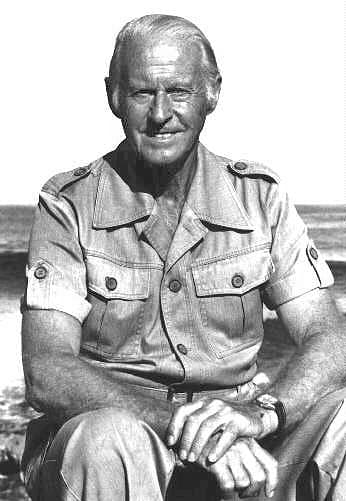
Thor Heyerdahl
Sailed a balsa raft, the Kon-Tiki, from Peru into Polynesia in 1947 to argue a point about migration that most specialists still reject. The raft is in Oslo, and the argument mattered less than the demonstration that it could be done at all.
Knut Hamsun
Won the Nobel Prize in Literature in 1920 and wrote Hunger, one of the first novels to live entirely inside a head. His support for the German occupation is inseparable from the work here, and Norwegian readers still argue about how to hold both.
Jo Nesbø
Wrote the Harry Hole novels that put Oslo on the crime-fiction map, after a first career as a footballer and a second as a musician. The city he describes is real enough to walk.
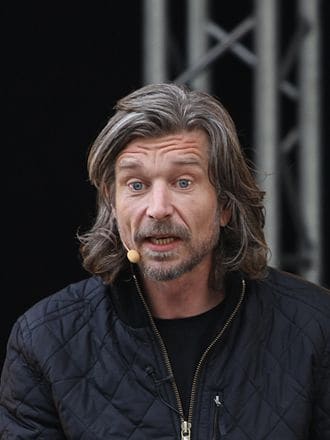
Karl Ove Knausgård
Spent six volumes and three and a half thousand pages describing an ordinary life in exhaustive detail, and made it a literary event across Europe. My Struggle became a national event here before it was translated anywhere.
Gustav Vigeland
Spent two decades filling a park in western Oslo with more than two hundred of his own sculptures, all human figures, all nude, in a deal that gave him a studio for life. It is free, open always, and unlike anything else in Europe.
Morten Harket
The voice of a-ha, whose Take On Me was a flop twice before its rotoscoped video made it inescapable in 1985. The band has kept a career going in Europe for forty years on the strength of much more than that song.
Kygo
The Bergen producer who took a soft, melodic strain of house music global from a bedroom studio in the early 2010s, and became the first Norwegian act to headline the main stages he had grown up watching.
Aurora
Aurora
A songwriter from outside Bergen whose stark, folk-inflected pop found its audience through streaming rather than radio, and who has stayed conspicuously unbothered about the usual pop machinery.
Liv Ullmann
Made ten films with Ingmar Bergman, including Persona and Scenes from a Marriage, and then directed her own, among them Faithless. She is the Norwegian actor other Norwegian actors are measured against.
Renate Reinsve
Won Best Actress at Cannes in 2021 for The Worst Person in the World, the first Norwegian to take an acting prize at the festival, after a decade of parts small enough that she had considered quitting.
Sonja Henie
Took Olympic figure-skating gold in 1928, 1932 and 1936 and ten consecutive world titles, then turned the sport into a Hollywood career. The art centre she and her husband founded at Høvikodden outside Oslo is her other legacy.
Marit Bjørgen
The most decorated Winter Olympian of all time, with fifteen medals across five Games, eight of them gold. Cross-country skiing is the national sport, and she is the reason a generation of Norwegian children took it up.
Johannes Høsflot Klæbo
The sprinter who has dominated cross-country skiing since his teens, and the current answer to a question this country takes more seriously than almost any other.
Kristian Birkeland
Worked out that the northern lights are charged particles from the sun steered into the atmosphere by the earth’s magnetic field, decades before satellites confirmed it. He also co-invented a process for fixing nitrogen that founded the company now called Yara.
Lars Onsager
Lars Onsager
Won the Nobel Prize in Chemistry in 1968 for the reciprocal relations that carry his name, which underpin the thermodynamics of irreversible processes. He was born in Oslo and did the work in the United States.
Gro Harlem Brundtland
Norway’s first woman prime minister, in 1981, and the chair of the 1987 UN commission whose report put the phrase sustainable development into general use. She later ran the World Health Organization for five years.
Trygve Lie
The first Secretary-General of the United Nations, from 1946 to 1952, and the man who had to invent the job while the Cold War was starting underneath it.
Must-try Norwegian food
Cured, dried, salted and slow-cooked, because that is what a short summer leaves you. Pick a category.
Fårikål
Mutton and cabbage layered in a pot with black peppercorns and left alone for hours. It is the national dish by a public vote and it appears on menus in autumn, when the lamb comes down off the mountain.
Brunost
Not cheese in any strict sense but boiled-down whey, caramelised to a fudge-brown block with a sweet, faintly goat flavour. Sliced paper-thin onto bread or waffles with the cheese slicer, which was invented here in 1925.
Lapskaus
A thick stew of meat and root vegetables cooked until nothing holds its shape, brown or light depending on the household. Sailors’ food that stayed on the table once nobody had to go to sea.
Fiskesuppe
A creamy fish soup, best in Bergen, where the fish market versions carry white fish, shellfish, root vegetables and a lot of butter. Order it as a main rather than a starter.
Rakfisk
Trout salted and fermented in a barrel for months, then eaten raw with flatbread, sour cream and red onion. It smells far stronger than it tastes. The Valdres valley holds a festival for it in November.
Pinnekjøtt
Salted and dried lamb ribs steamed over birch sticks until they slide off the bone, with mashed swede and boiled potatoes. The western Norwegian Christmas dinner, and the reason kitchens smell of juniper in December.
Smalahove
A salted, smoked sheep’s head, split and steamed, eaten from the cheek outward. A western Norwegian autumn tradition around Voss, taken seriously by the people who eat it and no less so by the people who will not.
Multekrem
Cloudberries folded into whipped cream, sometimes with a little sugar and nothing else. The berries grow on Arctic bogs, cannot be farmed at scale, and people keep their picking spots secret for life.
Kvæfjordkake
Sponge under meringue and almonds, split and filled with custard and cream. It was voted the national cake, which is why the menu often calls it verdens beste, the world’s best.
Kjøttkaker
Large flat beef patties in brown gravy, with mashed swede, boiled potatoes and lingonberry. Not meatballs, and a Norwegian will tell you so. This is canteen and family food at its most fundamental.
Raspeballer
Dense potato dumplings boiled with salted meat, served with butter and sometimes a slice of the same meat fried. Called komle, klubb or kumle depending on which stretch of the west coast you are on, and eaten on Thursdays.
Skrei
The migrating Arctic cod that swims from the Barents Sea to spawn off Lofoten between January and April. Firm, white and completely different from farmed cod. It is the one seasonal ingredient that reorganises menus across the country.
Gravlaks
Salmon cured in salt, sugar and dill for a couple of days, sliced thin and served with a sweet mustard sauce. The name means buried salmon, from a preservation method that involved exactly that.
Reker
Cold-water shrimp, sold off the boat by the kilo in summer and eaten on the quay with white bread, mayonnaise, lemon and a beer. You peel your own, and it takes the afternoon.
Kongekrabbe
Red king crab, caught in the far northeast around Kirkenes, where it arrived from Russian waters in the last century and never left. Legs the length of a forearm, usually served simply boiled.
Lutefisk
Dried whitefish rehydrated in a lye solution until it turns translucent and gelatinous, then baked and eaten with bacon, mushy peas and akevitt. Christmas food, genuinely divisive, and worth trying once with people who love it.
Fenalår
A whole leg of lamb salted, dried and matured for months, then shaved thin off the bone. It has protected status in the EU, and the good ones are hung for well over a year.
Finnbiff
Thin-sliced reindeer stewed with mushrooms, cream and juniper, served with lingonberry and mash. Sámi in origin, northern in geography, and the most reliably excellent thing on a Tromsø menu.
Skillingsbolle
The Bergen cinnamon bun, the size of a side plate, sold from bakeries all day and named for the coin it once cost. Best warm and best in Bergen, where the competition is real.
Krumkake
A thin patterned wafer pressed in a hot iron and rolled into a cone while it is still soft, then filled with cream. Christmas baking, and one of the seven kinds a traditional household is supposed to produce.
Akevitt
Potato spirit flavoured with caraway or dill and, in the linie style, matured in sherry casks that have crossed the equator twice by ship. Drunk cold with fatty Christmas food, and it does a real job there.
Kaffe
Norwegians drink more coffee per head than almost anyone, and Oslo roasters have spent two decades pushing light Nordic roasts on the rest of the world. Filter is the default and refills are often free.
Norway travel FAQ
Do you need a visa for Norway?+
Norway is not in the European Union but is in the Schengen area and the EEA, so its border rules are the Schengen ones. Citizens of the EU and the EEA travel on free movement. Visitors from the United Kingdom, the United States, Canada, Australia and New Zealand need no visa for stays up to 90 days in any 180. Since 10 April 2026 the EU Entry/Exit System has been fully operational at every Schengen external border, so arriving non-EEA travellers are registered biometrically and passports are no longer stamped. ETIAS, the separate pre-travel authorisation, is not in force yet and its start date has slipped more than once, so check the current position rather than assuming either way.
Is Norway as expensive as people say?+
Restaurants, alcohol and taxis are, and no amount of planning fixes them: a main course in a normal city restaurant is a serious sum and a beer with it is another one. Everything else is more reasonable than the reputation suggests. Trains and buses are fairly priced and cheapest booked weeks ahead, museums are modest, tap water is among the best anywhere, and hiking, swimming and sleeping in a tent are free by law. The trips that hurt are the ones built on restaurants and hire cars. The trips that do not are built on supermarkets, public transport and walking, which is also what Norwegians do.
When can you see the northern lights?+
From roughly late September to late March, when the nights are dark enough, and only in the north for a reliable chance. Tromsø is the busiest base because it has an airport, a season and enough operators to chase clear sky inland; Alta, Lofoten and the Finnmark plateau all work. Three practical things decide whether you see them: darkness, solar activity and cloud. You cannot influence the first two, so give yourself three or four nights rather than one, and go with someone willing to drive for the gap in the cloud. They are also visible much further south on strong nights, including from Oslo, but nobody should plan a trip on that.
How do you get around Norway without a car?+
Better than in most countries this shape. Trains link Oslo to Bergen, Stavanger, Trondheim and on to Bodø, which is as far as the railway goes, and the Bergen and Flåm lines are attractions in their own right. Express boats and car ferries fill in the fjord coast, and the Hurtigruten coastal ships have called at the same 34 ports between Bergen and Kirkenes since 1893, taking about twelve days for the round trip. Beyond Bodø the sensible move is to fly: the domestic network is dense because the alternative is a very long drive. The gaps are the mountain valleys and the small fjord arms, where a car saves a day.
Can you camp anywhere in Norway?+
Largely yes, and it is a legal right rather than a tolerated habit. Allemannsretten, the right of access written into the Outdoor Recreation Act of 1957, lets anyone walk, ski, swim and pitch a tent on uncultivated land. The rules are short: stay at least 150 metres from the nearest house or cabin, move on after two nights unless you are in the mountains or far from habitation, leave nothing behind, and respect the ban on open fires in or near woodland between 15 April and 15 September. Cultivated land, gardens and farmyards are excluded.
Do you tip in Norway?+
Not as an obligation. Service is included and staff are paid a real wage, so nothing is expected and nobody will chase you. Rounding up or leaving five to ten per cent after a good meal is normal and appreciated; card terminals often prompt for it and declining is unremarkable. Taxis, bars and hotels expect nothing at all.
Know before you go
The essentials for planning a Norway trip, entry and the cost of it first.
Norway has stayed out of the European Union twice by referendum, in 1972 and 1994, and is in the single market through the EEA agreement instead. For a visitor the practical position is simply Schengen: 90 days in any 180 for most visa-free nationalities, no internal border check arriving from another Schengen country, and full EU Entry/Exit System registration since 10 April 2026. Customs is where the difference shows, because Norway is outside the EU customs union and the duty-free allowances are strict and enforced.
Norway kept its own currency along with its EU distance, so euros are not accepted. It is also close to the most cashless country on earth: cards work on buses, in kiosks, at rural car parks and in the collection box of a village church. Carrying a little cash is a courtesy for the occasional roadside berry stall and nothing more. Foreign cards are accepted almost everywhere, and paying in your home currency at a terminal is always the worse rate.
Language
Norwegian in two written standards, English nearly everywhere
Norwegian has two official written forms, Bokmål and Nynorsk, and every municipality chooses one, which is why the same word can be spelled two ways on two road signs. Spoken dialect varies sharply and Norwegians simply speak their own. English is taught from the first years of school and is close to universal below retirement age, so no visitor needs Norwegian. Sámi languages are official in parts of the north.
Emergency
110 fire · 112 police · 113 ambulance
Three separate numbers rather than one, and 112 also works as the general European emergency number. Operators speak English. For mountain and sea rescue the number is still 112: the joint rescue coordination centres are what answer.
The state holds the retail monopoly on anything stronger than 4.7 per cent alcohol, so supermarkets sell only weak beer and cider and everything else comes from a Vinmonopolet shop. They keep office hours, close early on Saturday and do not open on Sunday, and there are a few hundred of them nationwide. Supermarket beer also stops being sold at 8pm on weekdays and 6pm on Saturdays. Bars and restaurants are unaffected, and priced accordingly.
Anyone may walk, ski, cycle, swim, pick berries and pitch a tent on uncultivated land, private or public, without asking. The obligations that come with it are taken seriously: 150 metres from the nearest dwelling, two nights in one spot outside the mountains, nothing left behind, no open fire in or near woodland from 15 April to 15 September, and gates closed behind you. It is the single thing that makes a cheap trip here possible.
The rail network reaches Bergen, Stavanger, Trondheim and Bodø and stops there, so the whole Arctic third of the country runs on domestic flights, the coastal ships and the E6. Book trains early for the cheap fares. Car ferries are frequent, take vehicles without reservation on most routes, and are simply part of the road. In the north, count driving times generously in winter: a mountain pass closes and the detour is hours, not minutes.
Dipped headlights are required day and night, all year. Toll roads have no barriers and no booths: cameras read the plate and the bill reaches the hire company, which passes it on with an administration fee, so budget for it rather than looking for a way to pay at the roadside. Winter tyres are compulsory in winter conditions and hire cars in the north carry them. Speed enforcement is automated and the fines are among the highest in Europe.
The archipelago sits about a thousand kilometres north of the mainland and is governed under the 1920 Svalbard Treaty, which makes it visa-free for every nationality but also puts it outside the Schengen area, so the flight from Oslo runs as an international one. Fewer than three thousand people live there. Outside the settlements polar-bear protection is mandatory and organised, which in practice means going with a guide.
Planning a Norwegian trip?
One fully-researched destination (ranked, mapped and paired with video) in your inbox every Thursday.