Don't be a tourist, be a traveler, world in motion
Plan a trip
Live destination map
◆ Country guide · Northern Europe

Top 10s across Ireland

An island you can drive across in four hours, with an Atlantic coast that takes two weeks to do properly. Ireland is small on the map and slow in practice, and the slowness is the point.

2
City guides
5,149,139
People
1
Video guide
26
Counties
Region
Best months
May · Jun · Sep
Ideal length
7–10 days
Budget / day
€110–190
Language
English and Irish
Getting around
Intercity rail between cities, a hire car for the coast

When to visit Ireland

Best months trade daylight against crowds.
Full month guide →
Jan
Feb
Mar
Apr
May
Jun
Jul
Aug
Sep
Oct
Nov
Dec
Best: May, June and September, when the evenings run long and the coast roads are open without the school-holiday traffic Peak: July and August, when Killarney, the Ring of Kerry and the Cliffs of Moher fill and rooms are booked months out Good: the shoulder months, plus March if you want St Patrick's Day and the crowds that come with it Off: short days and Atlantic weather, when the west is at its most dramatic and its least convenient
Quick answer · where to go in Ireland

Almost every trip lands at Dublin, and two or three nights there covers Trinity College, the national museums, the Georgian squares and a day out to the passage tombs of the Boyne Valley. After that the country splits three ways. The southwest is the classic run: Cork and its harbour towns, then Killarney, the Ring of Kerry and the Dingle Peninsula. The west trades those for Galway, the Burren, the Cliffs of Moher and Connemara, and it is the better half if you want fewer coaches on the road. The northwest, through Sligo, Mayo and Donegal, is the quietest stretch of the Wild Atlantic Way and the one that asks for the most driving. May, June and September are the months that balance daylight against crowds.

2 Ireland city guides

Sorted by what travelers are saving this month.

Fun fact

One number worth knowing

Irish is the first official language of the State and has been a full working language of the European Union since 1 January 2022, when a derogation limiting Irish translation ran out after sixteen years.

Stereotypes, sorted out

The clichés you have heard, what is actually true, and how to fit in.
"It rains all day, every day"

The realityRain here is frequent and light rather than constant. Met Éireann puts most of the eastern half of the country between 750 and 1,000 millimetres a year and the west between 1,000 and 1,400, with April and May the driest months and December the wettest. What the numbers do not show is the pattern: showers arrive off the Atlantic, pass through, and take the light with them and give it back. Pack a shell rather than an umbrella, because the wind will win.

"Everyone speaks Irish day to day"

The realityCensus 2022 counted 1,873,997 people aged three and over who said they could speak Irish, two in five of that population, and a much smaller number who use it daily outside the school system. English runs the country. Irish is the everyday language in the Gaeltacht areas on the western coast, it is on every road sign, and it is a live subject rather than a museum piece.

"The whole island is one country"

The realityThe Republic of Ireland is the 26 counties covered by this guide. Northern Ireland is part of the United Kingdom, with sterling, its own police service and its own entry rules. The border is open and mostly unsigned, so it is easy to cross without noticing, and easy to notice afterwards when your phone bill arrives.

"Every pub has live traditional music every night"

The realitySessions are real and they are scheduled. They cluster in particular towns (Doolin, Dingle, Galway, Ennis) and in particular pubs on particular nights, and the good ones are a circle of players facing each other rather than a band facing a room. Ask locally on the day, and do not talk over the slow airs.

"It is small, so a long weekend covers it"

The realityThe State is 70,273 square kilometres and you can cross it in an afternoon on the motorways. The coast is the catch. The scenery sits on regional and local roads where the default limit is 80 and 60 respectively, single track in places, and a distance that looks like ninety minutes takes three hours with the stops that are the reason you came.

A pint of Guinness poured in two goes, with the wait built into the ritualSheep holding up a car on a peninsula roadForty shades of green, said out loud at least onceA session in the corner of a pub, with nobody on a stageThe Cliffs of Moher in horizontal rainAncestry talk within ten minutes of arrivingA ruined castle photographed from a lay-by

Cultural notes that actually help

  • Buy your round. Pub rounds run on turns rather than on splitting a bill at the end, and quietly skipping yours is the one thing that gets noticed.
  • Order at the bar rather than waiting for a table service that is not coming, and check the kitchen hours: food usually stops well before the drink does.
  • Small talk first. A question lands better after a word about the weather or the drive. Getting straight to the point reads as rudeness rather than efficiency.
  • Let the person you are with set the tone on politics, history and the North. Curiosity is welcome, confident summaries are not.
  • Learn the two words on the toilet doors: fir is men and mná is women, and plenty of pubs label them only in Irish.
  • Tip by rounding up in a pub and by roughly ten per cent at a restaurant table when no service charge is on the bill.
  • Drive on the left, and give way at roundabouts to traffic coming from your right. On a single-track road, the pull-in nearest you is yours to use.

Famous Irish faces

The names behind Ireland's writing, music, film, sport and politics. Pick a field.
Seamus Heaney, Ireland (portrait via Wikimedia Commons)

Seamus Heaney

Poet, awarded the Nobel Prize in Literature in 1995
James Joyce, Ireland (portrait via Wikimedia Commons)

James Joyce

Novelist, whose Ulysses runs through a single Dublin day, 16 June 1904
Samuel Beckett, Ireland (portrait via Wikimedia Commons)

Samuel Beckett

Playwright and novelist, Nobel laureate in 1969 and author of Waiting for Godot
Mary Robinson

Mary Robinson

First woman President of Ireland, elected in 1990, later UN High Commissioner for Human Rights
Bono, Ireland (portrait via Wikimedia Commons)

Bono

Singer of U2, the band formed at a Dublin school in 1976
Sinéad O'Connor, Ireland (portrait via Wikimedia Commons)

Sinéad O'Connor

Singer, whose 1990 recording of Nothing Compares 2 U reached number one around the world
Saoirse Ronan, Ireland (portrait via Wikimedia Commons)

Saoirse Ronan

Actor, nominated for four Academy Awards, from Atonement to Little Women
Katie Taylor, Ireland (portrait via Wikimedia Commons)

Katie Taylor

Boxer, Olympic lightweight champion in 2012 and undisputed world champion as a professional
W. B. Yeats

W. B. Yeats

Poet, Nobel laureate in 1923 and a founder of Dublin's Abbey Theatre
Oscar Wilde, Ireland (portrait via Wikimedia Commons)

Oscar Wilde

Playwright and critic, born in Dublin in 1854 and still the city's quickest wit
Bram Stoker, Ireland (portrait via Wikimedia Commons)

Bram Stoker

Author of Dracula, born in Clontarf on the north side of Dublin in 1847
Sally Rooney, Ireland (portrait via Wikimedia Commons)

Sally Rooney

Novelist, whose Normal People was adapted for television by RTÉ and the BBC
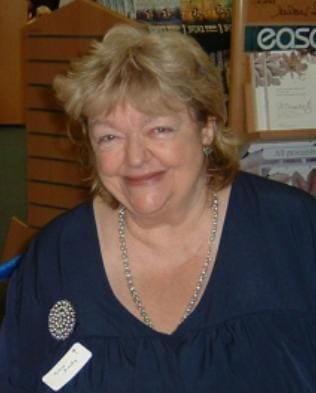
Maeve Binchy, Ireland (portrait via Wikimedia Commons)

Maeve Binchy

Novelist and Irish Times columnist, whose Circle of Friends sold worldwide
Enya, Ireland (portrait via Wikimedia Commons)

Enya

Singer from the Donegal Gaeltacht, whose Orinoco Flow topped the UK chart in 1988
Dolores O'Riordan, Ireland (portrait via Wikimedia Commons)

Dolores O'Riordan

Singer of The Cranberries, from Limerick, whose Zombie was released in 1994
Rory Gallagher, Ireland (portrait via Wikimedia Commons)

Rory Gallagher

Blues guitarist raised in Cork, and the player most Irish guitarists name first
Christy Moore

Christy Moore

Folk singer, a founder of both Planxty and Moving Hearts
Hozier, Ireland (portrait via Wikimedia Commons)

Hozier

Singer and songwriter from County Wicklow, whose Take Me to Church was released in 2013
Cillian Murphy, Ireland (portrait via Wikimedia Commons)

Cillian Murphy

Actor from Cork, awarded the Academy Award for Best Actor in 2024 for Oppenheimer
Colin Farrell, Ireland (portrait via Wikimedia Commons)

Colin Farrell

Actor from Dublin, nominated for an Academy Award for The Banshees of Inisherin
Brendan Gleeson, Ireland (portrait via Wikimedia Commons)

Brendan Gleeson

Actor from Dublin, a schoolteacher until his thirties and in everything since
Neil Jordan, Ireland (portrait via Wikimedia Commons)

Neil Jordan

Director and writer, awarded the Academy Award for Best Original Screenplay for The Crying Game
Roy Keane, Ireland (portrait via Wikimedia Commons)

Roy Keane

Midfielder from Cork who captained Manchester United and the Republic of Ireland
Sonia O'Sullivan

Sonia O'Sullivan

Middle-distance runner from Cobh, Olympic silver medallist over 5,000 metres in 2000
Henry Shefflin, Ireland (portrait via Wikimedia Commons)

Henry Shefflin

Hurler, ten All-Ireland senior titles with Kilkenny and the sport's most decorated forward
Michael Collins, Ireland (portrait via Wikimedia Commons)

Michael Collins

Revolutionary leader and the new State's first Minister for Finance, killed in County Cork in 1922
Éamon de Valera, Ireland (portrait via Wikimedia Commons)

Éamon de Valera

Taoiseach three times and President from 1959 to 1973, and the dominant figure of the State's first fifty years
Michael D. Higgins, Ireland (portrait via Wikimedia Commons)

Michael D. Higgins

Poet and politician, elected President of Ireland in 2011 and re-elected in 2018

Must-try Irish food

The potato plates first, then the coast, the butcher and the glass. Pick a category.
Irish stew, Ireland (Wimup)

Irish stew

Lamb or mutton with potato and onion, simmered until the meat gives up. Beef is the modern shortcut.

Colcannon, Ireland (Wimup)

Colcannon

Mashed potato folded through kale or cabbage, with butter and spring onion through it.

Boxty, Ireland (Wimup)

Boxty

A potato pancake from the northern midlands, made with grated raw potato and mash together.

Coddle, Ireland (Wimup)

Coddle

A Dublin pot of sausages, rashers, onion and potato, cooked pale in stock rather than browned.

Bacon and cabbage, Ireland (Wimup)

Bacon and cabbage

Boiled loin bacon with cabbage and parsley sauce, the Sunday plate before roast dinners took over.

Seafood chowder, Ireland dish (Wimup)

Seafood chowder

The standard pub lunch on both coasts, and the fastest way to judge a kitchen. Brown bread comes with it.

Smoked salmon, Ireland (Wimup)

Smoked salmon

Cold-smoked over oak or beech and sliced thin, eaten on brown bread with lemon and nothing else.

Fish and chips, Ireland dish (Wimup)

Fish and chips

Cod or haddock in batter from a chipper. In Dublin a 'one and one' orders it without saying it.

Spiced beef, Ireland dish (Wimup)

Spiced beef

A Cork Christmas cure, brined with spices for days and served cold in thin slices.

Drisheen, Ireland (Wimup)

Drisheen

A soft-set Cork blood pudding, traditionally eaten with tripe. The one to be brave about.

Guinness, Ireland (Wimup)

Guinness

Poured in two stages with a rest between them, which is why the wait is part of the order.

Irish whiskey, Ireland (Wimup)

Irish whiskey

Triple-distilled as a rule, and single pot still is the style that exists nowhere else.

Irish coffee, Ireland (Wimup)

Irish coffee

Coffee, sugar, whiskey and cream, invented for cold passengers at the Foynes flying-boat terminal in County Limerick.

Tea, Ireland (Wimup)

Tea

Strong, with milk, and offered within a minute of arriving anywhere. Refusing it takes two attempts.

Champ

Mash beaten with hot milk and scallions, served with a well of butter melting in the middle.

The full Irish

Rashers, sausage, egg, tomato and both puddings, black and white. Built for a day outdoors.

Galway oysters

Native flat oysters, in season from September, with a festival in Galway built around them each autumn.

Dublin Bay prawns

Langoustines, best plain with butter and bread rather than buried in breadcrumbs.

Irish beef

Grass-fed for most of the year, which is what the country's steak reputation actually rests on.

Soda bread

Raised with bicarbonate of soda and buttermilk instead of yeast, and best the day it is baked.

Barmbrack

A fruited tea loaf eaten at Halloween, with a ring baked in for whoever gets that slice.

Porter cake

A dark fruit cake made with stout, kept in a tin and noticeably better after a week.

Carrageen moss pudding

A set cream thickened with Atlantic seaweed rather than gelatine. A coast dish, not a dairy one.
Ireland travel FAQ

How many days do you need in Ireland?+
Seven to ten covers Dublin, one coast and the drive between them without rushing. Five is Dublin plus either the southwest or the west, picking one. Three is a city break with a long day out, and it is a good trip if you plan it as one rather than trying to add Kerry to it.
When is the best time to visit Ireland?+
May, June and September. The evenings are long, the coast roads and the island ferries are running, and the July and August crowds have either not arrived or have gone. March brings St Patrick's Day and a spike in prices around it. Winter is dark and wet, and the west is at its most dramatic in it.
Do you need a car in Ireland?+
For Dublin, Cork and Galway on their own, no. The intercity trains are comfortable and the cities are walkable. For the Wild Atlantic Way, the Ring of Kerry, Connemara or anywhere with the word peninsula in it, yes. Public transport reaches the towns and not the coast road between them.
Is Ireland expensive?+
Accommodation is the line that hurts, in Dublin especially and in Killarney and Galway in high summer. Food, drink and fuel sit alongside western Europe rather than above it. The country's best days out cost nothing: the coast roads, the beaches, the hill walks and most of the national parks.
Can you visit Northern Ireland on the same trip?+
Yes, and plenty of itineraries do, running Dublin to Belfast by train or taking the Causeway Coast on the way round the north. It is a different country with a different currency and its own entry rules, so check that your visa or permission covers the United Kingdom before you plan a crossing.

Know before you go

The essentials for planning an Ireland trip.
Currency

Euro (EUR)

Cards run almost everything, contactless by default, down to a coffee or a bus fare. Carry a little cash for rural pubs and small ferries. Northern Ireland is a separate jurisdiction and uses pounds sterling.

Language

English and Irish

English is the working language everywhere. Irish is the first official language of the State, road signs are bilingual, and in the Gaeltacht areas along the western coast it is what you will hear spoken around you.

Calling code

+353

Prepaid SIMs and eSIMs are sold at the airports and in phone shops, and coverage is good in the towns and patchy on the peninsulas. Northern Ireland numbers are +44, so a call across the border is an international one on many plans.

Power

230V, 50Hz, plug type G

The same three-pin rectangular plug as the United Kingdom, not the round European two-pin. Continental European and US devices both need an adapter, and US devices need to handle 230 volts.

Emergency

112 or 999

Both numbers reach the same operator for Garda, fire, ambulance and coast guard, free from any phone. The coast guard is the one to call for a cliff or water incident rather than the ambulance service.

Visa

Ireland is not in Schengen

Ireland is in the European Union but outside the Schengen area, so it runs its own visa system. A Schengen visa is not valid here and an Irish visa is not valid there. Check the Department of Foreign Affairs for your own nationality before booking.

Getting around

Rail between cities, a car for the coast

Iarnród Éireann runs a hub pattern into Dublin, so Cork to Galway by rail means changing and taking longer than the map suggests. Bus Éireann fills the gaps between towns. A Leap Card covers city buses, trams and local trains. For the peninsulas and the Wild Atlantic Way, a hire car is the only thing that works.

Driving

On the left, limits in km/h

Motorways are 120, national roads 100, regional roads 80, and since February 2025 the default on rural local roads is 60. Those local roads are where the scenery is: single track in places, with hedges to the edge and livestock on them. Book the smallest car you can live with.

Weather

Layers and a shell, year round

Met Éireann puts most of the eastern half of the country between 750 and 1,000 millimetres of rain a year and the west between 1,000 and 1,400, with the mountains well above that. April and May are the driest months, December the wettest. The wind is what defeats umbrellas.

Time zone

GMT in winter, UTC+1 in summer

Ireland keeps the same clock as the United Kingdom and changes on the same dates as the rest of Europe, which puts it an hour behind Paris and Berlin all year.

Tap water

Drink it

The public supply is treated and safe. Uisce Éireann occasionally issues a boil-water notice for a specific scheme, and it is announced locally when it happens. On the islands and in some rural houses the supply is a private well, so ask.

Tipping

Round up in pubs, about ten per cent at table

Nobody tips at the bar for a pint. In restaurants roughly ten per cent is normal when service is not already added, and larger groups often find a service charge on the bill. Taxi fares get rounded up rather than tipped.

The border

Open, but a different country

Northern Ireland is part of the United Kingdom. There is no checkpoint and often no sign, but the currency changes to sterling, the phone code changes to +44 and UK entry rules apply, which matters if your Irish visa does not cover you there.

Ireland on Wimup Videos

City vlogs to watch before you book.
YouTube ↗
9:33

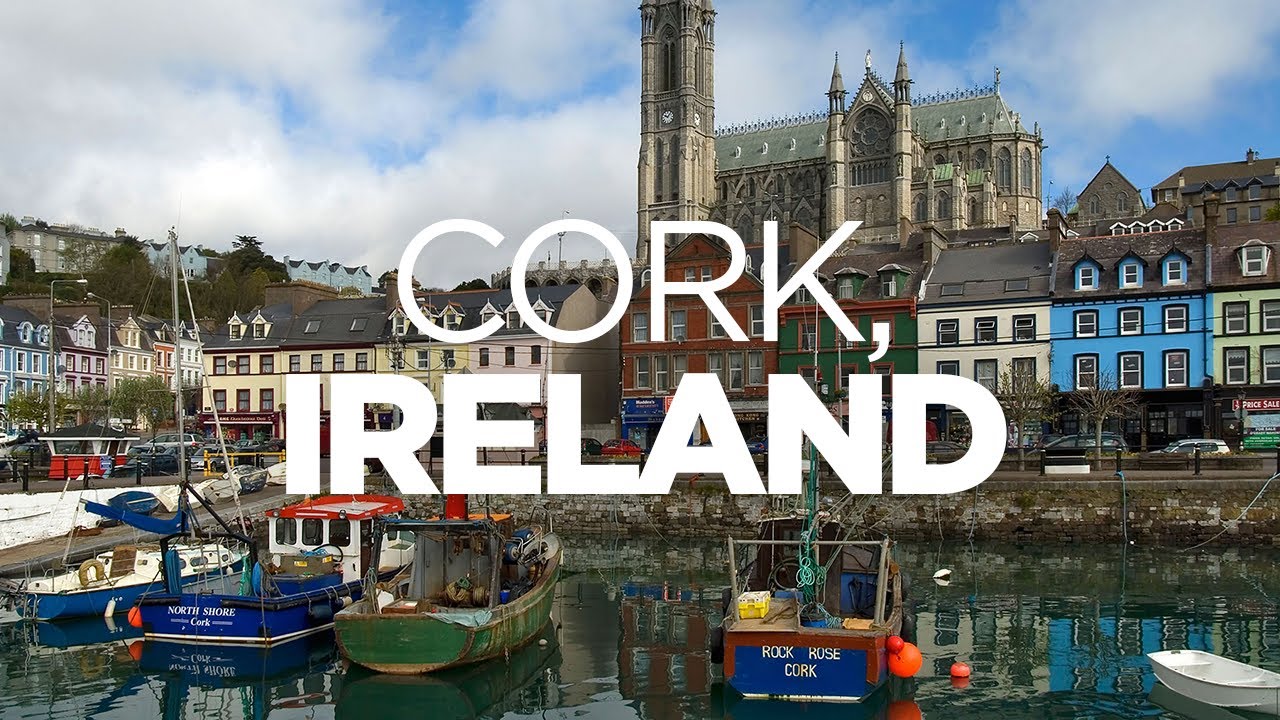
Best of Cork

Planning an Irish trip?

One fully-researched destination (ranked, mapped and paired with video) in your inbox every Thursday.

Photo credits (35)