


Start in Athens with two full days, then pick one sea and stay in it. The Cyclades (Naxos, Santorini, Mykonos) are the postcard and the busiest. Crete is its own holiday, with Chania at one end and Heraklion at the other. The Dodecanese put a medieval walled town on Rhodes within reach of Turkey. On the mainland, Nafplio anchors the Peloponnese and Kalambaka sits under Meteora. Hop inside one group: ferries are frequent within a chain and awkward between them. Book May, June or September.
4 Greek city guides
Fun fact
Greece counts around 6,000 islands and islets. Only about 227 are inhabited, and the ferries that link them shape most Greek itineraries.
Stereotypes, sorted out
The realityThat is the Cyclades, and it is one architecture among several. Rhodes is a walled medieval town the Knights of St John built. Corfu is Venetian and French. Northern Greece is stone, timber and slate. The postcard covers a handful of islands out of thousands.
The realityThe rhythm is different, not absent. Businesses close through the hot part of the afternoon and reopen into the evening, so dinner starts at nine. Ferries and coaches keep their timetables. What cancels them is weather.
The realityIt holds the Acropolis, the Acropolis Museum and the National Archaeological Museum, plus the best food in the country and neighbourhoods worth an evening each. Two days is the minimum that does not feel like a transfer.
The realityThose are the menu items written in English. What gets eaten is a table of small plates shared between everyone, and it changes island to island: fava on Santorini, dakos on Crete, bougatsa in Thessaloniki, gavros anywhere with a harbour.
The realitySummer is the crowded season. The sea is warm from late May, the sites are walkable in spring and autumn, and September has both. August adds heat, full ferries and Greek domestic holidays to the same islands you were heading for.
The realityEach group is its own country. The Cyclades are bare, bright and windy. The Ionians are green and Venetian. The Dodecanese look east to Asia Minor, and Crete is a mountain range with a coastline attached.
Cultural notes that actually help
- Order for the table, not for yourself. Small plates arrive in the middle and everyone reaches in, and ordering one main each reads as odd.
- Dinner is late. Turning up at seven puts you in an empty room; nine is normal and ten is unremarkable.
- Name days often matter more than birthdays, and the person celebrating is usually the one buying.
- The bill comes when you ask for it. A waiter leaving you alone after the plates are cleared is politeness, not neglect.
- Cover your shoulders and knees for monasteries and churches. Meteora and Athos-adjacent sites enforce it, and wraps are usually available at the door.
- Take the ferry weather seriously. A cancelled sailing in a strong meltemi is normal, so leave a day of slack before an international flight.
- Coffee is a seat, not a takeaway. A freddo espresso buys the table for as long as you want it, and rushing it misses the point.
- Do not put paper in the bowl where a bin is provided. Older plumbing on the islands is narrow, and the sign means it.
Famous Greek faces

Maria Callas

Mikis Theodorakis

Melina Mercouri

Giannis Antetokounmpo
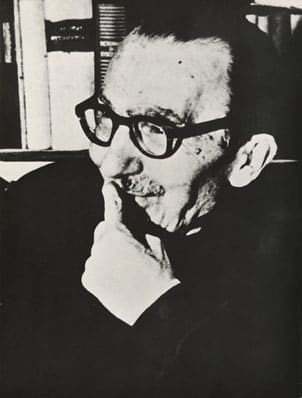
Nikos Kazantzakis

Constantine Cavafy

Odysseas Elytis

Theo Angelopoulos

Irene Papas

Yorgos Lanthimos

Costa-Gavras

Manos Hatzidakis

Nana Mouskouri

Vangelis

Demis Roussos

Nikos Galis

Stefanos Tsitsipas
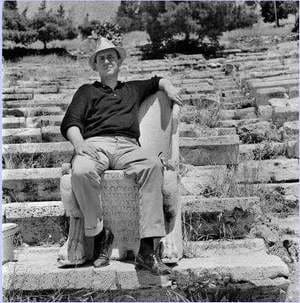
Yannis Tsarouchis

Georgios Papanikolaou

Constantin Carathéodory
Socrates
Aristotle
Homer
El Greco
Plato
Herodotus
Hippocrates
Archimedes
Sappho
Pericles
Alexander the Great
George Seferis
Spyridon Louis
Pyrros Dimas
Giannoulis Chalepas
Takis
Euclid
Must-try Greek food

Moussaka
Layered aubergine, spiced mince and a thick béchamel, baked and served in squares.

Pastitsio
Tubular pasta and mince under the same béchamel, the Greek answer to a baked lasagne.

Gemista
Tomatoes and peppers hollowed out, stuffed with rice and herbs, baked until they collapse.

Kleftiko
Lamb sealed with garlic and lemon and cooked slowly until it falls off the bone.

Stifado
Beef or rabbit stewed with a kilo of small onions, red wine and cinnamon.

Tzatziki
Strained yoghurt with cucumber, garlic and dill, and the first thing to hit the table.

Saganaki
A slab of hard cheese fried in a small pan until the edges blister.

Dakos
Cretan barley rusk soaked in tomato, piled with mizithra cheese and oregano.

Spanakopita
Spinach and feta between sheets of filo, sold by the slab in every bakery.

Tiropita
The cheese version, hot from the case, and the standard Greek breakfast on the move.

Bougatsa
Filo around semolina custard, dusted with sugar and cinnamon. A Thessaloniki institution.

Grilled octopus
Hung to dry in the sun, then charred over coals and dressed with oil and vinegar.

Astakomakaronada
Spiny lobster broken over pasta in a tomato broth, split between two people.

Loukoumades
Small yeast doughnuts fried to order, drenched in honey and cinnamon.

Kataifi
Shredded pastry wound around nuts, then syruped like baklava's rougher cousin.

Ouzo
Anise spirit that turns cloudy with water, sipped slowly alongside food.

Tsipouro
Mainland pomace spirit, served by the small bottle with plates that keep arriving.

Retsina
Wine resinated with pine, once a punchline and now taken seriously again.
Briam
Summer vegetables roasted in olive oil until sweet, eaten warm or at room temperature.
Taramasalata
Cured fish roe whipped with bread or potato into a pale, salty dip.
Melitzanosalata
Aubergines charred over flame, then mashed with olive oil, garlic and lemon.
Dolmades
Vine leaves rolled around rice and herbs, cold with lemon or warm in egg-lemon sauce.
Horiatiki
The village salad: tomato, cucumber, onion, olives and a slab of feta, no lettuce.
Fava
Yellow split peas cooked to a purée, topped with raw onion and oil. Best on Santorini.
Souvlaki
Skewered pork or chicken grilled over coals, eaten off the stick or folded into pita.
Gyros
Meat shaved off a vertical spit into pita with tomato, onion, tzatziki and chips inside.
Koulouri
A sesame bread ring sold from street carts, and what Athens eats on the way to work.
Kalamari
Squid floured and fried, or grilled whole when the taverna has it fresh.
Gavros marinatos
Anchovies cured in vinegar and oil, the cheapest good thing on a harbour menu.
Barbounia
Red mullet fried whole, eaten with fingers, and worth the bones.
Baklava
Filo, walnuts and syrup, cut into diamonds and sold by weight.
Galaktoboureko
Semolina custard baked in filo and soaked in syrup while still hot.
Yoghurt with honey
Thick sheep's yoghurt, thyme honey and walnuts. The dessert every taverna can make.
Raki
The Cretan version, poured at the end of the meal whether or not you asked.
Freddo espresso
Espresso shaken over ice, and the drink that buys you a table for an afternoon.
Assyrtiko
Santorini's white grape, grown in basket-woven vines, dry and mineral enough to age.