Don't be a tourist, be a traveler, world in motion
Plan a trip
Live destination map
◆ Country guide · Central Europe

Top 10s across Germany

Sixteen states, no single centre, and a fast train between all of them. Germany spreads its best cities, forests and wine country across the whole map rather than piling them into one capital.

3
City guides
83.6M
People
16
States
Region
Best months
May · Jun · Sep
Ideal length
7–10 days
Budget / day
$100–180
Language
German
Getting around
ICE rail & U-Bahn

When to visit Germany

Best months balance daylight, beer gardens and the summer holiday rush.
Full month guide →
Jan
Feb
Mar
Apr
May
Jun
Jul
Aug
Sep
Oct
Nov
Dec
Best: long days, beer gardens open, trains not yet full Peak: high summer and school holidays, when the Alps and the coast fill Good: mild shoulder weather, plus December for the Christmas markets Off: grey and cold, and dark by late afternoon in the north
Quick answer · where to go in Germany

First trips work best as two cities and one region. Take Berlin for the twentieth century and the nightlife, then Munich for the Alps behind it or Hamburg for water and warehouses. With a second week, add the Rhine valley, the Black Forest or Saxony. The strongest months are May, June and September, and December earns the cold because of the Christmas markets.

3 German city guides

Sorted by what travelers are saving this month.

Fun fact

One number worth knowing

Berlin holds about 3.7 million of Germany's 83.6 million people, under five percent of the country. Germany spent centuries as a patchwork of states, so Hamburg, Munich, Cologne and Frankfurt each still run an orbit of their own.

Stereotypes, sorted out

The clichés you have heard, what is actually true, and how to fit in.
"Germans have no sense of humour"

The realityThe humour is dry, literal and often aimed at itself. It lands the moment you stop waiting for the joke to be signposted.

"Everything runs exactly on time"

The realityGermans make this joke before you do, usually about the trains. Leave slack in a tight connection and check the DB app before you leave the hotel.

"It is all lederhosen and beer halls"

The realityThat is Bavaria, and only part of it. Hamburg is maritime and understated, Cologne drinks Kölsch in small glasses, and Berlin looks like none of the above.

"Germans are cold"

The realityDirect, not cold. Small talk is thin on the ground, but ask a real question and you get a real answer, usually a more useful one than you expected.

"The Autobahn has no speed limit"

The realityMuch of it does, and the rest carries an advisory speed. Roadworks, urban stretches and wet weather all bring limits, and they are enforced.

Beer and pretzelsLederhosen and dirndlsPunctual trainsA rule for everythingCash onlySausages for every occasionSensible shoes

Cultural notes that actually help

  • Say Guten Tag when you walk into a small shop or bakery, and Tschüss on the way out.
  • Wait for the green man. Crossing on red, especially in front of children, will earn you a comment.
  • Sort your rubbish, and take bottles back to the supermarket machine. The deposit is refunded on the spot.
  • Book a table, particularly at weekends and anywhere with a garden.
  • Carry cash for markets, bakeries and small bars even where cards are taken.
  • Sunday is quiet by law and by preference. Plan a walk, a gallery or a long breakfast.

Famous German faces

The names behind Germany's politics, science, music, cinema, art, sport and writing. Pick a field.
Albert Einstein, Germany (portrait via Wikimedia Commons)

Albert Einstein

Ulm-born physicist behind relativity, Nobel laureate in 1921
Angela Merkel, Germany (portrait via Wikimedia Commons)

Angela Merkel

Chancellor from 2005 to 2021, and the trained physicist who got there
Johann Sebastian Bach, Germany (portrait via Wikimedia Commons)

Johann Sebastian Bach

Baroque composer, born in Eisenach and cantor at Leipzig's Thomaskirche
Michael Schumacher, Germany (portrait via Wikimedia Commons)

Michael Schumacher

Seven-time Formula One world champion, from Hürth near Cologne
Karl Marx, Germany (portrait via Wikimedia Commons)

Karl Marx

Trier-born philosopher whose Das Kapital rearranged twentieth-century politics
Konrad Adenauer, Germany (portrait via Wikimedia Commons)

Konrad Adenauer

First chancellor of West Germany, and the mayor of Cologne before that
Willy Brandt, Germany (portrait via Wikimedia Commons)

Willy Brandt

Chancellor whose Ostpolitik won him the Nobel Peace Prize in 1971
Richard Wagner, Germany (portrait via Wikimedia Commons)

Richard Wagner

Composer of the Ring cycle, and of the Bayreuth festival that still stages it
Johannes Brahms, Germany (portrait via Wikimedia Commons)

Johannes Brahms

Hamburg-born composer of the German Requiem and four symphonies
Hans Zimmer, Germany (portrait via Wikimedia Commons)

Hans Zimmer

Frankfurt-born film composer, from Rain Man to Dune
Werner Herzog, Germany (portrait via Wikimedia Commons)

Werner Herzog

Munich director of Fitzcarraldo and Grizzly Man, and a voice you already know
Wim Wenders, Germany (portrait via Wikimedia Commons)

Wim Wenders

Director of Wings of Desire, which put Cold War Berlin on film for good
Rainer Werner Fassbinder, Germany (portrait via Wikimedia Commons)

Rainer Werner Fassbinder

The engine of New German Cinema, with more than forty films before he turned 37
Diane Kruger, Germany (portrait via Wikimedia Commons)

Diane Kruger

Actor known abroad for Inglourious Basterds and at home for In the Fade
Gerhard Richter, Germany (portrait via Wikimedia Commons)

Gerhard Richter

Dresden-born painter whose blurred photo-paintings hang in every major museum
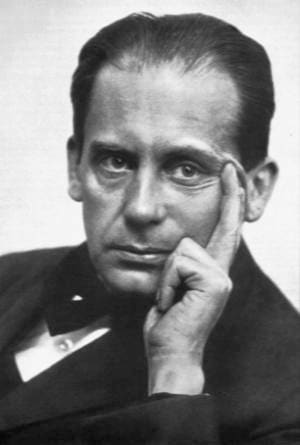
Walter Gropius, Germany (portrait via Wikimedia Commons)

Walter Gropius

Founded the Bauhaus in Weimar in 1919 and exported it to the world
Franz Beckenbauer, Germany (portrait via Wikimedia Commons)

Franz Beckenbauer

Won the World Cup as captain in 1974 and as manager in 1990
Steffi Graf, Germany (portrait via Wikimedia Commons)

Steffi Graf

22 Grand Slam singles titles, and the only Golden Slam in tennis history
Jürgen Klopp, Germany (portrait via Wikimedia Commons)

Jürgen Klopp

Won two Bundesliga titles with Dortmund and the Champions League with Liverpool
Hermann Hesse, Germany (portrait via Wikimedia Commons)

Hermann Hesse

Author of Siddhartha and Steppenwolf, Nobel laureate in 1946
Johann Wolfgang von Goethe

Johann Wolfgang von Goethe

Frankfurt-born poet and author of Faust, the reference point of German letters
Ludwig van Beethoven

Ludwig van Beethoven

Born in Bonn, wrote the nine symphonies that carried music into the Romantic era
Marlene Dietrich

Marlene Dietrich

Berlin actor and singer who left for Hollywood and never went back
Otto von Bismarck

Otto von Bismarck

Prussian minister-president who unified the German states into an empire in 1871
Max Planck

Max Planck

Founder of quantum theory and the namesake of Germany's research institutes
Robert Koch

Robert Koch

Identified the tuberculosis bacillus and founded modern bacteriology
Alexander von Humboldt

Alexander von Humboldt

Naturalist and explorer who mapped the Americas and invented modern geography
Werner Heisenberg

Werner Heisenberg

Physicist behind the uncertainty principle, Nobel laureate at 31
Clara Schumann

Clara Schumann

Leipzig-born pianist and composer who shaped the concert programme itself
Kraftwerk

Kraftwerk

The Düsseldorf group whose machine music seeded electronic pop worldwide
Albrecht Dürer

Albrecht Dürer

Nuremberg painter and printmaker who defined the German Renaissance
Käthe Kollwitz

Käthe Kollwitz

Printmaker and sculptor who made grief and war her subject
Thomas Mann

Thomas Mann

Lübeck novelist of Buddenbrooks and The Magic Mountain, Nobel laureate in 1929
The Brothers Grimm

The Brothers Grimm

Collected the folk tales, and wrote the dictionary of the German language
Bertolt Brecht

Bertolt Brecht

Playwright of Mother Courage, and founder of the Berliner Ensemble

Must-try German food

The classics first, then what each region is known for. Pick a category.
Currywurst, Germany (Wimup)

Currywurst

Sliced sausage under curried tomato sauce, eaten standing up at a Berlin Imbiss.

Sauerbraten, Germany (Wimup)

Sauerbraten

Beef marinated for days, then braised into a sweet and sour gravy.

Obatzda, Germany (Wimup)

Obatzda

Camembert whipped with butter, paprika and onion, made for a beer garden table.

Himmel un Ääd, Germany (Wimup)

Himmel un Ääd

Cologne's black pudding with apple sauce and mashed potato. Heaven and earth, literally.

Halve Hahn, Germany (Wimup)

Halve Hahn

A rye roll with aged Gouda and mustard. Anyone expecting half a chicken will be let down.

Reibekuchen, Germany (Wimup)

Reibekuchen

Potato fritters fried until the edges shatter, served with apple sauce.

Fischbrötchen, Germany (Wimup)

Fischbrötchen

Pickled or fried fish in a roll with onion, bought at the harbour and eaten on the wall.

Quarkkeulchen, Germany (Wimup)

Quarkkeulchen

Saxon curd-cheese and potato cakes, fried and dusted with cinnamon sugar.

Maultaschen, Germany (Wimup)

Maultaschen

Swabian pasta parcels of meat and spinach, in broth or fried with onions.

Käsespätzle, Germany (Wimup)

Käsespätzle

Egg noodles layered with mountain cheese and topped with fried onions.

Schwarzwälder Schinken, Germany (Wimup)

Schwarzwälder Schinken

Black Forest ham, smoked over fir and cut fine enough to see through.

Schwarzwälder Kirschtorte, Germany (Wimup)

Schwarzwälder Kirschtorte

Chocolate sponge, cherries and kirsch. The original is boozier than the export version.

Stollen, Germany (Wimup)

Stollen

Dense Dresden Christmas bread of fruit and marzipan under a snowfall of sugar.

Lebkuchen, Germany (Wimup)

Lebkuchen

Nuremberg's soft spiced gingerbread, baked on a wafer and sold from Advent.

Weissbier, Germany (Wimup)

Weissbier

Bavarian wheat beer, cloudy and banana-scented, poured slowly into a tall glass.

Apfelwein, Germany (Wimup)

Apfelwein

Frankfurt's tart cider, served from a stoneware jug in the Sachsenhausen taverns.

Schnitzel

Pork or veal beaten thin, breaded and fried, with lemon and a potato salad alongside.

Bratwurst

Grilled over beech, handed over in a bread roll with a stripe of mustard.

Rouladen

Beef rolled around bacon, onion and pickle, and slow-cooked into Sunday lunch.

Kartoffelsalat

Potato salad, with vinegar and stock in the south, mayonnaise in the north.

Weisswurst

Pale veal sausage with sweet mustard and a pretzel, traditionally eaten before noon.

Schweinshaxe

Roast pork knuckle with crackling you can hear across the beer hall.

Brezn

The Bavarian pretzel: dark, chewy, salted, and best within an hour of baking.

Leberkäse

A baked meatloaf sliced thick into a semmel. Bakery lunch, and no liver in it.

Pfefferpotthast

Dortmund's peppery beef stew, thickened with breadcrumbs and eaten with pickles.

Labskaus

Hamburg sailor food: corned beef and beetroot hash under a fried egg, with herring.

Grünkohl mit Pinkel

Winter kale stewed with a smoked sausage. The north eats it after the first frost.

Matjes

Young herring, mild and buttery, with onions, apple and new potatoes.

Thüringer Rostbratwurst

The long, marjoram-scented sausage from Thuringia, grilled and protected by name.

Soljanka

A sharp, smoky soup that arrived from the east and stayed on menus after 1990.

Dresdner Eierschecke

Three layers of quark, custard and cake, and the reason to sit down in Dresden.

Flammkuchen

Thin dough with crème fraîche, onion and bacon, blistered in a hot oven.

Berliner

A jam doughnut without the hole, called Pfannkuchen in Berlin itself.

Riesling

The Mosel and Rheingau grape: steep-slope wines that run bone dry to lusciously sweet.

Kölsch

Cologne's pale beer, in small glasses that keep arriving until you put the mat on top.

Know before you go

The essentials for planning a Germany trip.
Currency

Euro (€)

Cards are accepted almost everywhere now, but bakeries, market stalls and old-school bars still prefer cash. Keep a note or two on you.

Language

German

English is common in the cities, in hotels and among younger Germans. Bitte, danke and tschüss cover most counters, and opening in German changes the tone of an exchange.

Emergency

112

112 reaches an ambulance or the fire service anywhere in the country. The police have their own number, 110.

Visa

Schengen · 90 days

Germany is in the Schengen area, so many nationalities enter visa-free for up to 90 days in any 180. Confirm the rule for your own passport with the Federal Foreign Office before you book.

Getting around

ICE rail

Deutsche Bahn's ICE trains link the big cities in a few hours each. The Deutschlandticket, a rolling monthly pass, covers regional trains, buses, trams and the U-Bahn nationwide, though not the ICE.

Sundays

Shops closed

Sunday closing is law, not habit. Supermarkets shut, so buy on Saturday and give the day to museums, parks and a long lunch.

Tipping

Round up

Service is included. Round up to the next euro or add a little on a bigger bill, and say the total you want to pay as you hand the money over.

Quiet hours

Ruhezeit

Noise rules are taken seriously in flats: late evenings and all of Sunday are for keeping it down. Nobody minds a party, they mind a drill.

Germany travel FAQ

How many days do you need in Germany?+
Plan 7 to 10 days for a first trip: three or four in Berlin, then one more city and a region by train. Two weeks lets you add the Alps or the Rhine without changing hotel every night.
When is the best time to visit Germany?+
May, June and September. Long days, beer gardens open and lighter crowds than July and August. December is the exception worth the cold, because the Christmas markets are the reason to be there.
Is Germany expensive to visit?+
Gentler than most of western Europe. Munich and Frankfurt are the priciest of the big cities, Berlin and the eastern cities the easiest on a budget, and regional trains, bakeries and beer stay reasonable everywhere.
Do you need to speak German?+
No. English is widely spoken in cities, hotels and restaurants, and signage in stations is bilingual. A few German words still change the tone, so open with them.
Is it easy to get around by train?+
Yes, and it is the best way to travel here. ICE trains connect the major cities in a few hours, regional services reach almost every small town, and one monthly Deutschlandticket covers local transport nationwide. Leave slack in tight connections.

Planning a Germany trip?

One fully-researched destination (ranked, mapped and paired with video) in your inbox every Thursday.

Photo credits (38)