Forest and water for most of its surface, a Baltic capital at one end and the Arctic at the other. Finland is planned by season before it is planned by map, because the same lake district is a swimming trip in July and a frozen road in February.
1
City guide
5,652,897
People
7
UNESCO sites
179,000
Islands
Region
Best months
Jun · Jul · Feb
Ideal length
8–12 days
Budget / day
€110–190
Language
Finnish and Swedish, with English almost everywhere
Getting around
Trains as far as Rovaniemi and Kolari, buses and a hire car beyond
When to visit Finland
Two good seasons at opposite ends of the year, and three months between them that are nobody’s.
Best: February, March, June and August, the two seasons this country is actually built for Peak: July, when the lake towns, the festivals and the prices all fill up at once Good: January, May, September and December, quieter shoulders with one clear reason each Hardest: April, October and November, between the seasons, when there is neither snow nor daylight
Quick answer · where to go in Finland
Finland is two decisions, and the season is the first one. Helsinki is the year-round base: a compact Baltic capital where Suomenlinna, the design district and a shoreline sauna all sit inside one day, and it pairs neatly with Porvoo to the east or Turku and the archipelago to the west. In summer the country opens inland. The Lakeland is the reason to come between June and August: Savonlinna for the castle and its opera, Kuopio and Tampere for lake harbours and smoke saunas, Koli for the one view every Finnish painter went looking for. In winter the map moves north instead. Rovaniemi is the Arctic Circle hub and the easiest first trip, Levi holds the skiing, and Inari is the quiet one, further north, where Sámi Finland and the best aurora odds are. Ten days does Helsinki, one lake base and a week of Lapland. A week does either half properly, and picking one is the better trip.
UNESCO added Finnish sauna culture to its list of intangible cultural heritage in 2020, and the nomination counted roughly 3.3 million saunas against a population a little under 5.7 million. That is close to one for every household, and it explains why a sauna turns up in an apartment block basement, an office building and a Lapland cabin alike.
Stereotypes, sorted out
The clichés you have heard, what is actually true, and how to behave once you land.
"Finland is Lapland, and Lapland is one trip."
The realityLapland is a third of the country and the part almost nobody sees in summer, when the rest of Finland is at its best. The lake district, the archipelago and Helsinki are a completely different holiday with a different season attached, and doing Lapland and the lakes in one week means spending most of it moving. Pick the season first and the region follows from it.
"It is dark all winter and light all summer, everywhere."
The realityOnly above the Arctic Circle, where a small fraction of the population lives. Utsjoki, the northernmost municipality, has a polar night of roughly fifty days and a midnight sun of more than seventy. Helsinki, well over eight hundred kilometres south, gets a short grey afternoon in December and a long blue night in June that never quite goes dark. If the polar night or the midnight sun is the point of the trip, the trip has to go a long way north.
"Finland is Scandinavian."
The realityIt is Nordic, which is the wider group, and the difference is not pedantry. Finnish is not a Germanic language and is not related to Swedish, Norwegian or Danish at all. The country was governed from Stockholm for six centuries and from Saint Petersburg for one, declared independence in 1917, and kept Swedish as a second official language. Expect Nordic prices and Nordic design, and expect a language you will not recognise a single word of.
"The sauna is a spa treatment you book."
The realityIt is a room, and there are roughly 3.3 million of them for 5.7 million people. Apartment blocks have one in the basement, offices have one, and a lakeside cabin is built around one. It is where families talk and where colleagues talk, it is normally naked and normally single sex when strangers are present, and it is free at your hotel rather than something you pay extra for. Treat it as a room you use, not an experience you buy.
Coffee at a rate no other country matches, drunk at any hour, and refilled without asking.Salty liquorice that visitors spit out and Finns hand round like sweets, because it is one.A queue that forms with a metre between each person, and stays that way in a blizzard.Everyone with a summer cabin, and everyone gone to it the week midsummer lands.Comfortable, complete silence in a conversation, which is not awkward and is not a hint.A world championship for something absurd, held in a small town, entirely seriously.
How to behave
Take your shoes off inside a home, always. Nobody will ask, and nobody will need to.
Sauna is normally naked and single sex when strangers are present. Sit on a towel, and go out and cool off whenever you want to.
Silence is not a problem to solve. Finns leave gaps in conversation and do not read them as awkward, so let them sit.
Say what you mean. Politeness here is accuracy rather than warmth, and an overstated compliment lands as insincere.
Punctuality is literal. Ten minutes late to something arranged is late, and it will be noticed.
Take a number ticket at pharmacies, bakeries and public offices, and do not stand close to anyone in the queue.
Wine and spirits above eight per cent come from Alko rather than a supermarket, so plan drinks around its opening hours.
Famous Finnish faces
The names behind Finnish music, design, writing, screen, sport, science and politics. Pick a field.
Jean Sibelius
Wrote seven symphonies, a violin concerto and, in 1899, Finlandia, a piece that did as much political work as musical. His house at Ainola outside Järvenpää is open, and the concert hall named after him is the one Helsinki books its orchestras into.
Alvar Aalto
The architect who took modernism and made it warm, in wood and brick rather than white render. The Paimio Sanatorium, Finlandia Hall and the 1936 Savoy vase are all his, and Jyväskylä holds more of his buildings than any other city.
Tove Jansson
Tove Jansson
Created the Moomins, beginning in 1945, and spent decades being underestimated as a children’s illustrator while painting seriously and writing some of the best short stories in Swedish. She was a Swedish-speaking Finn, and her summers on a bare Gulf of Finland islet are all over the books.
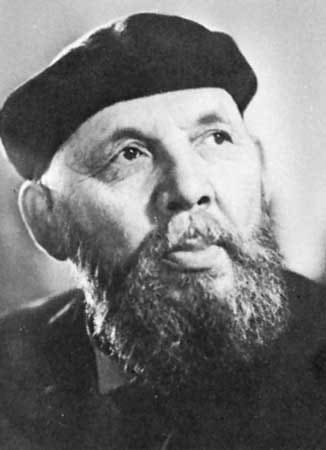
Elias Lönnrot
Elias Lönnrot
A country doctor who walked into Karelia collecting oral poetry and assembled it into the Kalevala, published in 1835 and expanded in 1849. Finnish national identity, and a good share of Finnish painting and music, is built on the book he made out of what he heard.
Paavo Nurmi
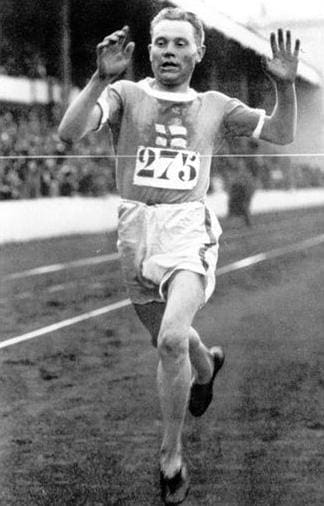
The first of the Flying Finns, and the most decorated: nine Olympic golds across the 1920s, run to a stopwatch he carried in his hand. His statue stands outside the Helsinki Olympic Stadium he never got to run in.
Carl Gustaf Emil Mannerheim
Commanded the Finnish army through the Winter War and the Continuation War, then served as the sixth president. The defensive line across the Karelian Isthmus carries his name, and so does the main street through Helsinki.
Linus Torvalds
Linus Torvalds
Wrote the first Linux kernel as a student in Helsinki in 1991 and released it for anyone to use, which is why most of the servers and phones on earth now run something descended from it. He also wrote Git, essentially as a side project.
Kimi Räikkönen
Formula One world champion in 2007 and, when he retired, the most-started driver in the sport’s history. Known at home as the Iceman for a manner that reads as rudeness abroad and as entirely normal in Finland.
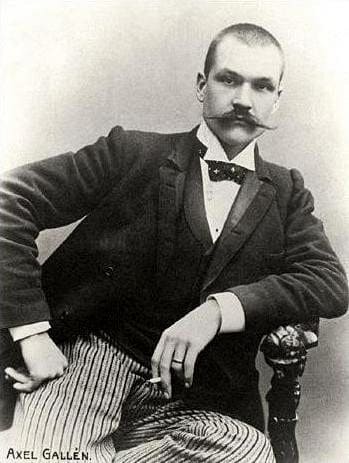
Akseli Gallen-Kallela
Painted the Kalevala into pictures, most famously the Aino triptych and the Defence of the Sampo, and covered the Finnish pavilion at the 1900 Paris exposition in frescoes. His studio house at Tarvaspää outside Helsinki is a museum.
Armi Ratia
Co-founded Marimekko in 1951 and turned oversized print onto plain cotton into a national visual language. The Unikko poppy, designed by Maija Isola in 1964, is the pattern most people can picture without knowing the name.
Eero Saarinen
Born at Kirkkonummi and taken to the United States as a boy, he designed the Gateway Arch in St Louis, the TWA Flight Center at JFK and the Tulip chair. His father Eliel designed Helsinki Central Station before they left.
Frans Eemil Sillanpää
Won the Nobel Prize in Literature in 1939, cited for his understanding of the Finnish peasantry and their relationship with nature. He remains the only Finn to have won the literature prize.
Minna Canth
Minna Canth
A playwright, newspaper owner and shopkeeper in Kuopio who wrote about poverty and about women’s rights while both were unmentionable. She was the first woman in Finland to be given her own flag day, on 19 March.
Väinö Linna
Wrote The Unknown Soldier in 1954, a novel about the Continuation War told entirely from inside a machine-gun company, and then Under the North Star. The film adaptation is broadcast every Independence Day.
Esa-Pekka Salonen
Esa-Pekka Salonen
Conductor and composer, principal at the Los Angeles Philharmonic for seventeen years and later at the Philharmonia and the San Francisco Symphony. A product of the Sibelius Academy conducting class that has supplied half the world’s podiums.
Kaija Saariaho
One of the most performed composers of her generation, best known for the opera L’Amour de loin, which reached the Metropolitan Opera in 2016. She worked for decades in Paris with the electronics that shaped her orchestral sound.
Lordi
Lordi
Won the Eurovision Song Contest in 2006 in full monster costume, giving Finland its first victory after four decades of trying and a homecoming crowd in Helsinki’s Market Square that nobody had predicted.
Aki Kaurismäki
Makes deadpan films about people at the bottom of the labour market, shot in flat colour with almost no dialogue. The Man Without a Past took the Grand Prix at Cannes in 2002 and Fallen Leaves brought him back to the same festival in 2023.
Renny Harlin
The Finnish director who went to Hollywood and made Die Hard 2 and Cliffhanger, at one point the most commercially successful Finn in the industry. He later moved much of his work to China.
Lasse Virén
Won both the 5,000 and the 10,000 metres at Munich in 1972 and did it again at Montreal in 1976, falling mid-race in the first of the four and still winning it in a world record.
Mika Häkkinen
Formula One world champion in 1998 and 1999, and the driver Ayrton Senna said he rated most highly. His duels with Michael Schumacher are the reason a generation of Finns follows the sport.
Teemu Selänne
Scored 76 goals as an NHL rookie in 1992 and 1993, a record that still stands, and played on into his forties. Finland treats ice hockey as a national argument, and he is the least argued-about part of it.
Jari Litmanen
The playmaker at the centre of the Ajax side that won the Champions League in 1995, and the best footballer Finland has produced by a distance that nobody at home disputes.
Artturi Ilmari Virtanen
Won the Nobel Prize in Chemistry in 1945 for a method of preserving fodder that let Nordic dairy herds be fed through the winter. It is an unglamorous prize and it changed farming across the north.
Ragnar Granit
Ragnar Granit
Shared the Nobel Prize in Physiology or Medicine in 1967 for work on how the eye turns light into signals. Much of the research behind it was done in Helsinki before he moved to Stockholm.
Bengt Holmström
Shared the Nobel Prize in Economic Sciences in 2016 for contract theory, the study of how incentives are written down. He is the most recent Finnish laureate and teaches at MIT.
Martti Ahtisaari
President from 1994 to 2000 and then a full-time mediator, awarded the Nobel Peace Prize in 2008 for three decades of conflict settlement across several continents, Namibia and Aceh among them.
Tarja Halonen
The first woman to be president of Finland, elected in 2000 and serving two terms. She had been foreign minister before it, and left office as one of the most popular holders of the job.
Sanna Marin
Became prime minister in 2019 at 34, led the country through the pandemic and through its NATO application, and left office in 2023. Finland joined the alliance in April of that year.
Must-try Finnish food
Rye, lake fish, forest berries and a great deal of coffee. Pick a category.
Ruisleipä
Sour, dense, dark rye bread, usually a flat ring with a hole in the middle. Finns abroad ask relatives to post it, which tells you most of what you need to know.
Hernekeitto ja pannukakku
Thick pea and pork soup with mustard, followed by oven pancake with jam. Served on Thursdays in canteens, barracks and schools across the country, for reasons nobody can fully explain.
Lihapullat
Small meatballs in cream gravy with mashed potato and lingonberry. Not the Swedish ones, a Finn will point out, and the argument is worth having over the plate.
Mustamakkara
Tampere blood sausage, grilled and eaten in the hand with lingonberry jam and cold milk. It belongs to that city, and it is sold at its market hall rather than nationally.
Lohikeitto
Salmon, potato, leek and dill in a creamy broth, with butter melting on top. The default lunch of a lakeside cafe, and the dish most visitors end up ordering twice.
Kalakukko
Vendace and pork baked inside a sealed rye loaf until the bones dissolve, then cut open at the table. Kuopio’s own dish, protected as a traditional speciality.
Runebergintorttu
A small almond and rum cake with raspberry jam and a sugar ring, sold in the weeks up to 5 February, the poet Johan Ludvig Runeberg’s day. It appears and disappears on schedule.
Lonkero
Gin and grapefruit soda, invented for the 1952 Helsinki Olympics and sold in cans ever since. Its name means long drink, and nobody uses the full phrase.
Karjalanpiirakka
A thin rye crust folded around rice porridge, eaten warm under munavoi, a paste of chopped egg and butter. The one thing every Finn eats, sold in every supermarket and best from a bakery.
Karjalanpaisti
Beef, pork and often lamb cut into chunks with onion, allspice and bay, then left in a low oven for hours. The Sunday stew of eastern Finland and about as simple as cooking gets.
Graavilohi
Salmon cured in salt, sugar and dill rather than smoked, sliced thin and served with mustard sauce on rye. A fixture of Christmas and midsummer tables alike.
Silakka
Baltic herring, fried in rye flour or pickled a dozen ways. Helsinki gives it its own market fair on the Market Square every October, which has run since the eighteenth century.
Muikku
Tiny vendace from the lakes, rolled in rye flour and fried whole, eaten head and all with garlic mayonnaise. Market stalls in Kuopio and Savonlinna do little else in summer.
Poronkäristys
Reindeer shaved frozen into thin curls, fried with butter and served over mashed potato with lingonberry and pickled cucumber. The dish Lapland is actually built on.
Leipäjuusto ja lakka
Squeaky baked cheese, often warmed, with cloudberry jam. The cheese comes from the north and the berry comes from the bogs, and the pairing is far better than the description suggests.
Korvasienimuhennos
A creamed stew of false morels, a spring mushroom that is poisonous raw and has to be parboiled twice before it is safe. Sold with the instructions printed on the packet.
Sienisalaatti
Funnel chanterelles or milk caps, picked in autumn and dressed with cream and onion. Foraging is a right rather than a privilege here, so this is genuinely home cooking.
Korvapuusti
The cinnamon and cardamom bun, cut on the slant so it sits like a slapped ear, which is what the name means. Ordered with coffee, at any hour.
Mustikkapiirakka
Bilberry pie on a soft base, sometimes with a layer of quark under the fruit. The berries come from the forest floor rather than a farm, and they stain everything.
Laskiaispulla
A cardamom bun split and filled with whipped cream and either jam or almond paste. The jam or almond question is a real national division and people take a side.
Mämmi
Baked rye and malt pudding eaten cold with cream at Easter, black and unpromising and genuinely good. Every Finn has watched a visitor try it and enjoyed the moment.
Kahvi
Finland drinks more coffee per person than any other country, light-roast and filtered, poured at work, at funerals and in a forest hut. Refusing a cup takes some explaining.
Sahti
A farmhouse ale strained through juniper twigs, unhopped or barely so, brewed in Häme for centuries. Cloudy, banana-scented and far stronger than it tastes.
Sima
Lightly fermented lemon mead made at home for Vappu on the first of May, bottled with a raisin in each bottle so you can see when it is ready.
Salmiakki
Salty liquorice, made with ammonium chloride, sold as sweets and as a spirit. It is the flavour that divides Finns from everyone else, and they know it.
Finland travel FAQ
Do you need a visa for Finland?+
Finland is in the European Union and the Schengen area, so citizens of the EU and the EEA travel on free movement and there is no border check arriving from another Schengen country. Visitors from the United Kingdom, the United States, Canada, Australia and New Zealand need no visa for stays of up to 90 days in any 180. Since 10 April 2026 the EU Entry/Exit System has been fully operational, so non-EU travellers are registered with fingerprints and a facial image at the external border rather than having a passport stamped. ETIAS, the pre-travel authorisation that will sit alongside it, is not yet in force and its start date has moved more than once, so check the current position before booking.
When is the best time to visit Finland?+
There are two good seasons and they are opposite halves of the year, so the honest answer depends on which country you want. June to August is the summer one: white nights, warm lake water, the archipelago open, festivals every weekend, and Lapland green rather than white. February and March are the winter one: deep, reliable snow, daylight back after the polar night, groomed ski trails and the best combination of aurora and usable hours. April, October and November are the months to avoid, because they fall between the two and offer neither snow nor light.
Where are the best odds for the northern lights?+
The further north the better, and the further from town lights. The Finnish Meteorological Institute puts aurora on the majority of clear nights in the far north around Utsjoki and Kilpisjärvi, with Rovaniemi and the Arctic Circle belt seeing them considerably less often. The season runs from roughly late August to early April, because you need real darkness and there is none of it in a Lapland summer. Give yourself several nights rather than one, stay somewhere you can walk away from lighting, and treat any single-night tour as a coin flip.
Is Finland expensive?+
It is Nordic, so yes by most standards, but it is the cheapest of the Nordic countries and noticeably less punishing than Norway or Iceland. Restaurants and alcohol are where the money goes, and both are heavily taxed. Almost everything else is reasonable: trains and buses are fairly priced and cheapest booked early, museums are modest, tap water is excellent, saunas are included where you are staying, and hiking, swimming, foraging and wild camping are free by law. A trip built on supermarkets, public transport and the outdoors costs a fraction of one built on restaurants and guided activities.
How many days do you need in Finland?+
A week does one half of the country properly. In summer that means Helsinki plus a lake base, or Helsinki plus Turku and the archipelago; in winter it means Helsinki plus one Lapland base, with three or four nights in the north to give the aurora a fair chance. Ten to twelve days is what it takes to do both a city and a real week somewhere else without spending the trip in transit. Trying to fit the Lakeland and Lapland into one week is the mistake most itineraries make, because the distances are Nordic and the seasons pull in opposite directions.
Do you need to speak Finnish?+
No. English is spoken close to universally under retirement age and is used freely in shops, restaurants, museums and on public transport, and staff will switch to it without being asked. Signage is bilingual in Finnish and Swedish and often carries English as well. Finnish is unrelated to any language you are likely to know, so nobody expects a visitor to attempt it, though kiitos for thank you is always welcome.
Know before you go
The essentials for planning a Finland trip, entry and the cost of it first.
Finland is in the European Union and in the Schengen area, so arriving from another Schengen country involves no border check at all. Visitors from the United Kingdom, the United States, Canada, Australia and New Zealand need no visa for stays of up to 90 days in any 180. The EU Entry/Exit System became fully operational on 10 April 2026, so non-EU travellers are now registered with fingerprints and a facial image on arrival and passports are no longer stamped. ETIAS, the separate pre-travel authorisation, is not in force yet, so check its current status rather than assuming either way.
Finland is the only Nordic country in the eurozone, which makes it the simplest of them to budget for if you are coming from elsewhere in Europe. It is also close to cashless: cards work on buses, in market halls, at museum kiosks and in rural cafes, and mobile payment is normal. Carry a small amount for a roadside berry stall and nothing more. Paying in your home currency at a card terminal is always the worse rate.
Finnish and Swedish are both official, which is why road signs carry two names and why the order of them flips depending on which language the municipality is majority. Swedish is the everyday language in Åland, on parts of the west coast and in pockets of the south. North Sámi, Inari Sámi and Skolt Sámi are recognised in the Sámi homeland in the far north, and Inari Sámi is spoken nowhere else on earth. English is close to universal under retirement age, and no visitor needs Finnish.
The rail network is good as far as Rovaniemi and Kolari and thin above them. The overnight sleeper from Helsinki to Lapland is the standard way north, it carries cars as well as passengers, and it books out early for winter dates. Long-distance coaches cover what the trains do not, domestic flights make sense for Ivalo and Kittilä, and a hire car is the only realistic option for the fells and the lake roads. Winter tyres are a legal requirement in the cold months, and hire cars have them fitted.
Jokaisenoikeudet, everyman’s rights, let anyone walk, ski, swim, pick berries and mushrooms and pitch a tent for a night on land they do not own, including private land, as long as they stay away from homes and cultivated fields and leave nothing behind. It is why hiking here costs nothing and why the national park network, more than forty parks run by Metsähallitus, is free to enter. Lighting a fire is the exception and needs the landowner’s permission or a marked fire pit.
Supermarkets have been allowed to sell fermented drinks up to 8.0 per cent since June 2024, which covers beer, cider and most seltzers. Wine and spirits come from Alko, the state monopoly, which since July 2026 may open seven days a week between nine in the morning and nine at night, though not every branch does. The legal drinking age is 18 for beer and wine and 20 for spirits, and photo identification is asked for freely.
Sauna
Included, not extra, and normally naked
Almost every hotel, campsite and rented cottage has a sauna and it is part of the price rather than a treatment to book. Public saunas in Helsinki, Tampere and Kuopio are mixed and swimwear is worn; a hotel or apartment sauna is normally single sex and normally naked. Sit on a towel, throw water on the stones whenever you want more heat, and go outside to cool down as often as you like. Nobody minds a beginner.
Tipping
Not expected anywhere
Service is included in the bill by law and staff are paid a full wage, so there is no tipping culture to learn. Rounding up a restaurant bill or a taxi fare is a compliment rather than an obligation, and leaving nothing is completely normal. Card terminals do not prompt for a tip.
Tap water
Among the best anywhere, everywhere
Finnish tap water is soft, cold and closely monitored, and bottled water is an unnecessary expense here. Fill up before a hike; water from a wilderness stream in Lapland is normally drinkable too, though a national park hut will tell you where it is not.
Winter kit
Layers, real boots and something for the wind
Inland Lapland regularly drops well below minus twenty in midwinter and the south sits close to freezing with damp Baltic wind, which feels colder than the number suggests. Thermal base layers, an insulated jacket, insulated boots with grip, a hat and gloves are the minimum, and studded shoe grips are worth buying on arrival for icy pavements. Aurora and husky operators lend heavy oversuits.
Planning a Finnish trip?
One fully-researched destination (ranked, mapped and paired with video) in your inbox every Thursday.
Mustamakkaraphoto by Sampo Ruohomäki. Previously unpublished personal photo, permission to publish image under Creative Commons license grant, CC BY-SA 4.0