Roughly a fifth of Malawi is water, and almost all of it is one lake holding more species of fish than any other lake on earth. The country is narrow, cheap and slow to leave: a shoreline, an escarpment and a plateau above it, with the parks and the mountains close enough to reach between swims.
1
City guide
17,563,749
People
800+
Cichlid species
3,002 m
Sapitwa Peak
Region
Best months
May · Sep · Jun
Ideal length
10–14 days
Budget / day
$45–140
Language
Chichewa & English
Getting around
Minibus, coach, lake ferry & hired 4x4
When to visit Malawi
Two seasons, and the dry one splits into a green half and a dusty half.
Best: May for the green dry season, September for animals at the water Peak: July and August, cool, dry and booked out in the parks Good: April, June and October, either side of the rush Wettest: November to March, when unsurfaced park roads become the deciding factor
Quick answer · where to go in Malawi
You land at Lilongwe, and the first decision is which end of the lake the trip is built around. The short version, and the one most first visits take, runs south: Liwonde for elephant, hippo and rhino on the Shire, Zomba and Mulanje for the plateau and the massif, and Cape Maclear on the Nankumba peninsula for the snorkelling the lake is listed for. That is a comfortable ten days and almost all of it is tarred road. The longer version goes north instead, up the lakeshore through Nkhata Bay to Likoma Island and the Nyika Plateau, which is high, cold, empty grassland and the least African-looking landscape in the country. Doing both means the MV Ilala, the weekly lake ferry, or a long day on the M1. Come between May and October if you want dry roads and animals at the water, and treat September and October as the hot, dusty, best-game-viewing end of that window.
Lake Malawi holds more species of fish than any other lake on earth. UNESCO puts the total at around 3,000, of which more than 800 are cichlids, and over 99 percent of those cichlids are found nowhere else. They are the textbook case of adaptive radiation, a single ancestral lineage that filled every niche in the lake in a geological instant, and the rocky shallows the mbuna live in are exactly what Lake Malawi National Park was inscribed to protect in 1984. A snorkel off Cape Maclear puts you in the middle of the experiment.
Stereotypes, sorted out
The clichés you have heard, what is actually true, and how to behave once you land.
"Malawi is the lake, and that is the whole country."
The realityThe lake is the reason most people book and it is not the reason most people stay. Malawi holds five national parks and four wildlife reserves in a country you can drive across in a day, and the two best of them sit within a few hours of Blantyre. Mount Mulanje rises straight out of the tea estates to 3,002 metres with twenty peaks and a network of huts on top, which is a multi-day walk rather than a viewpoint. The Nyika Plateau in the north is high montane grassland with roan, eland and zebra on it, and looks more like the Scottish Highlands than anywhere else in the region. And the Chongoni Rock Art Area near Dedza carries the densest concentration of rock art in Central Africa, still used in Chewa initiation rites. A trip that only sees water has skipped the half of the country that is 1,000 metres above it.
"There is no real wildlife here, so do the safari in Zambia or Tanzania."
The realityThat was fair twenty years ago and it is out of date now. Majete Wildlife Reserve had been emptied by poaching by the year 2000, was handed to African Parks in 2003, and has been restocked to Big Five status since. Liwonde received black rhino translocated from South Africa and now carries reintroduced predators alongside its elephant and hippo. And in 2016 and 2017, 520 elephants were moved from Liwonde and Majete to Nkhotakota in one of the largest translocations of its kind ever attempted. Malawi will not out-produce the Serengeti on volume. What it does is put a genuine park an hour or two from a beach, in a country small enough that you are not choosing between them.
"The Warm Heart of Africa is a tourism slogan and nothing more."
The realityIt is a slogan, and it is also the least contested thing about travelling here. What sits behind it is practical rather than sentimental: Malawi is densely populated, overwhelmingly rural, and has had no civil war, which means a foreigner walking through a village is an ordinary event rather than a security calculation. The flip side is worth saying plainly. Malawi is one of the poorest countries in the world by income per head, the friendliness is not a substitute for infrastructure, and the power cuts, the fuel queues and the state of the road to a park entrance are all real.
"You can swim anywhere in the lake, or you should never swim in it at all."
The realityBoth are wrong in the same way. Bilharzia is present in Lake Malawi and the risk is real, concentrated in warm, shallow, weedy, still water near reed beds and villages. It is also treatable with a single course of praziquantel, which most travellers take a few weeks after leaving, and it is why almost everyone who lives and works on the lake still swims. The rocky, deep, clear shores at Cape Maclear, Likoma and Nkhata Bay are where the snorkelling is and where the risk is lowest. Hippos and crocodiles are the other consideration and they are river and estuary animals here: the Shire around Liwonde, and river mouths anywhere. Ask locally before you get in, every time.
That Malawi is a stopover between Zambia and Tanzania, when it holds two UNESCO sites, the highest massif in south-central Africa and a lake with more fish species than any other on earth.That the lake is a sea, which visitors say because you cannot see across it, and Malawians say because the shore behaves like a coast.That nsima is bland, when the point of it is to carry the relish, and no Malawian has ever eaten it alone.That everything is cheap, which holds for buses, markets and guesthouses and stops dead at the park gates, where the fees and the lodges are priced like the rest of the region.That the country is too small for a real itinerary, when the drive from Karonga to Mulanje is the length of the lake and takes two days.That the Ilala runs to a timetable, which it publishes, and which everyone treats as a statement of intent.
How to get it right
Dress conservatively away from the beach. Knees covered is the practical rule for women in villages, markets and towns, and swimwear stays at the lodge and the lakeshore. Standards are noticeably more relaxed in Lilongwe and Blantyre than in a rural district.
Greet before you ask. A handshake and a "muli bwanji" opens a conversation that starting with the question does not, and the two-hand or supported handshake is the respectful version.
Ask before photographing anyone, and expect a no at government buildings, bridges, airports and police posts. Photographing a person without asking is the single most common way visitors give offence here.
Sunday and church matter, in a country that is overwhelmingly Christian with a substantial Muslim population along the southern lakeshore. Services run long, shops shorten their hours, and a village on a Sunday morning is not the place to be conspicuously on holiday.
Same-sex sexual conduct remains criminalised under sections 153, 154 and 156 of the penal code, and Malawi’s High Court sitting as a constitutional court rejected a challenge to those sections in June 2024. Enforcement against visitors is rare and the law is real. LGBTQ+ travellers should read their own foreign ministry’s advice before booking.
Carry cash, in kwacha, in small notes. Cards work in city hotels, the larger supermarkets and the lodges, and nowhere else; ATMs run out, and a bank branch and a working machine are not the same thing outside Lilongwe, Blantyre and Mzuzu.
Famous Malawian faces
The names behind Malawian politics, writing, music and sport. Pick a field.
John Chilembwe
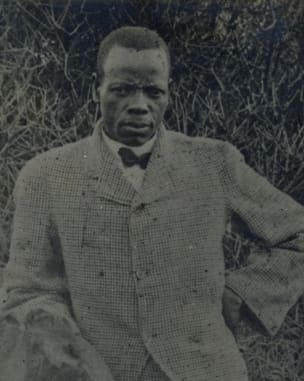
The Baptist minister and pan-Africanist who led the January 1915 uprising against the colonial estate system in Nyasaland. He was killed within weeks, and the country now marks Chilembwe Day on 15 January. The 1914 photograph of him in a hat beside the missionary John Chorley is the image Samson Kambalu restaged on the Fourth Plinth
Hastings Kamuzu Banda
Malawi’s first president, from independence in 1964 until the multiparty election of 1994, and Life President from 1971. He trained as a doctor in the United States and Scotland, ran a one-party state for three decades, and moved the capital from Zomba to Lilongwe in 1975
Joyce Banda
President from 2012 to 2014, the first woman to lead Malawi and the second to lead an African country. She succeeded on the death of Bingu wa Mutharika, devalued the kwacha and sold the presidential jet, and founded the Joyce Banda Foundation before entering politics
William Kamkwamba
Built a working windmill from scrapyard parts and a library textbook at fourteen, after his family was hit by the 2001 to 2002 famine and he had to drop out of school. His memoir The Boy Who Harnessed the Wind became a bestseller and a 2019 film
Vera Chirwa
Vera Chirwa
Malawi’s first woman lawyer and a founding member of the Malawi Congress Party and the Nyasaland African Women’s League. Convicted of treason under Banda, she was sentenced to death and spent twelve years in prison before her release, and campaigned on prison conditions across Africa afterwards
Peter Mutharika
President from 2014 to 2020 and again after winning the September 2025 election with 57 percent of the vote. A professor of international law who taught in the United States for decades, he is the younger brother of Bingu wa Mutharika, president from 2004 to 2012
Lazarus Chakwera
President from 2020 to 2025, and a Pentecostal theologian who led the Malawi Assemblies of God before entering politics. He won the court-ordered rerun of the 2019 election, a result that made Malawi one of the few African countries to annul a presidential vote and change the outcome
Jack Mapanje
Jack Mapanje
Poet and linguist, head of English at Chancellor College, detained without charge or trial from September 1987 to May 1991 over his first collection Of Chameleons and Gods. He wrote the prison poems that followed from memory, and the international campaign for his release made him the best-known Malawian writer of his generation
Legson Kayira
Legson Kayira
Walked out of his village in northern Nyasaland as a teenager and kept going, through Kampala and Khartoum, to a scholarship in Washington State. I Will Try, the 1965 memoir of that walk, was an international bestseller, and the novels that followed made him the country’s first internationally published novelist
Steve Chimombo
Steve Chimombo
Poet, novelist, playwright and editor, and the writer who pulled Malawian oral tradition into modern verse. Napolo, the serpent of the flood myth, runs through his work as a way of writing about political violence under a censor
Samson Kambalu
Artist and Professor of Fine Art at the Ruskin School, Oxford. His sculpture Antelope stood on the Fourth Plinth in Trafalgar Square from September 2022, restaging a 1914 photograph of John Chilembwe wearing a hat in defiance of a colonial rule against it
Lucius Banda
Lucius Banda
The reggae and Afro-pop singer known as Soldier, whose lyrics on poverty and government made him the country’s most quoted musician through the 1990s and 2000s. He later served as a member of parliament, and died in June 2024 at 53
Wambali Mkandawire
Wambali Mkandawire
Jazz and gospel singer with a voice that carried Malawian melody into South African arrangements, and one of the few Malawian artists with a serious international following. He died in January 2021
Giddes Chalamanda
Acoustic guitarist and singer born in 1931, a fixture of Malawian folk for six decades who played at the Library of Congress in 2016. His song Linny found a second life on TikTok in a mashup with Patience Namadingo, decades after he recorded it
Temwa Chawinga
Forward for Kansas City Current and the 2024 NWSL Most Valuable Player, the first African-born player to win it. She scored 20 goals in her first season in the league, breaking the single-season record
Tabitha Chawinga
Tabitha Chawinga
Striker for Olympique Lyonnais and Temwa’s older sister, a serial league top scorer across China, Sweden, Italy and France and a repeated nominee for CAF Women’s Player of the Year
Must-try Malawian food
Maize, groundnut and a lake full of fish. Pick a category.
Nsima
Maize flour cooked stiff enough to tear a piece off and dip. It is the plate rather than a dish, and the tradition around it went onto UNESCO’s intangible cultural heritage list in 2017, which is unusual company for a staple.
Usipa
Sardine-sized lake fish, either dried on racks along the shore or stewed with tomato and onion until they fall apart into the sauce. Cheap, salty and eaten whole.
Kampango
The big lake catfish, oilier and firmer than chambo and usually stewed rather than grilled. The order to make when the chambo on the counter looks thin.
Chambo
The tilapia found only in Lake Malawi, and the national fish. Grilled whole over charcoal with nsima and greens is the standard order. Stocks are under real pressure, so ask what you are being served.
Mpasa
The lake salmon, a large migratory fish that runs up the rivers to spawn and is most often eaten smoked or sun-dried. A northern-lakeshore speciality more than a restaurant dish.
Mkhwani
Pumpkin leaves stewed with tomato, onion and groundnut flour. The commonest ndiwo, the relish half of a Malawian plate, and the reason nobody here treats greens as a side.
Thelele
Okra boiled down to a smooth, deliberately slippery relish. Divisive among visitors and non-negotiable among Malawians.
Kondowole
Cassava flour and water worked into a dense, elastic dough, the northern answer to nsima. Standard on the lakeshore around Karonga and Nkhata Bay, and stickier than it looks.
Nyemba
Cowpeas simmered soft, often finished with groundnut flour. The everyday protein when the fish has not come in.
Futali
Sweet potato or pumpkin cooked down with groundnut flour into something between a side and a meal. Breakfast in a lot of households.
Chikanda
Wild orchid tubers ground with peanut flour and chilli and steamed into a firm cake, sliced like cold meat, which is why it travels under the name African polony. Northern Malawi shares it with Zambia, and the orchid harvest behind it is why conservationists watch the trade.
Zitumbuwa
Over-ripe bananas mashed into maize flour and fried into fritters, sold hot at the roadside. Best bought where the queue is.
Mandasi
The plain fried doughnut sold out of a bucket at every bus stage in the country. Breakfast, or the thing you buy while the minibus fills up.
Mbatata biscuits
Sweet potato biscuits, soft and lightly spiced, and the one Malawian bake that reliably turns up in cafes and lodges rather than only in kitchens.
Thobwa
A thick, grainy maize and millet drink, lightly fermented and sweet, sold in reused bottles. Non-alcoholic when it is fresh and less so by the end of a hot day.
Malawi tea
Malawi was the first African country to grow tea commercially, and the estates under Mulanje and around Thyolo still supply most of it. Some of the bushes there are the oldest on the continent.
Mzuzu coffee
Arabica grown by smallholder cooperatives on the northern highlands around Mzuzu and Misuku. A small crop by regional standards, and the reason the northern city smells the way it does.
Kuche Kuche
The local lager, brewed in Blantyre at the plant that opened in 1968 as Carlsberg’s first brewery outside Denmark. Low in alcohol and sold in a bottle you are expected to give back.
Malawi travel FAQ
Do you need a visa for Malawi?+
Most visitors do now. The visa waiver introduced in 2024 was revoked with effect from early January 2026, and the replacement policy works on reciprocity: a visa is required from any country that requires one of Malawians, which puts the United States, the United Kingdom, Canada and most of the European Union back inside the requirement. Apply through the immigration department’s e-visa portal at evisa.gov.mw before you fly, since it prefers advance applications to visas issued at the border, and check your own nationality on that site rather than on a travel blog, because this changed recently and will change again.
When is the best time to visit Malawi?+
Between May and October, which is the dry season. May and June are the sweet spot for scenery: the rains have just finished, the country is still green, the roads have dried out and the nights are cool. July and August are the coolest and the busiest. September and October are hot and dusty and the best months for game viewing, because the bush has thinned and the animals are tied to permanent water. November to April is the wet season, with the heaviest rain from December to February, and it closes some bush camps and makes unsurfaced park roads a real question.
Is it safe to swim in Lake Malawi?+
Yes, with two caveats that locals take seriously. Bilharzia is present, and the risk concentrates in warm, shallow, weedy water near reed beds and settlements rather than on the deep rocky shores where the snorkelling is. It is treatable with a single course of praziquantel taken some weeks after exposure, which is what most long-stay visitors do as a matter of routine. Hippos and crocodiles are the other consideration and they are river and estuary animals here, so river mouths and the Shire are the places to stay out of. Ask locally before you get in.
Can you see the Big Five in Malawi?+
Yes, and the fact that this is now a sensible question is recent. Majete Wildlife Reserve, west of Blantyre, had lost effectively all of its large mammals to poaching by 2000, was handed to African Parks in 2003 and has been restocked to Big Five status since. Liwonde National Park on the Shire holds elephant, hippo, buffalo and black rhino translocated from South Africa, with predators reintroduced alongside them. Nkhotakota Wildlife Reserve took 500 elephants moved from the south in 2016 and 2017. Expect lower densities than in Zambia or Tanzania, and considerably shorter drives between the park gate and a swimming beach.
How do you get around Malawi?+
The M1 is the spine, running the length of the country, and it is tarred for almost all of it. Intercity coaches cover the Lilongwe to Blantyre and Lilongwe to Mzuzu runs and are the comfortable option; minibuses and matola pickups cover everything else and leave when they are full rather than when the board says. The MV Ilala, in service since 1951, sails weekly between Monkey Bay and Chilumba calling at the islands, which is the only practical public route to Likoma. A hired 4x4 is what makes Nyika, the Chongoni sites and most park entrances straightforward. Driving is on the left, and driving after dark is the thing every operator in the country advises against.
Is Malawi expensive?+
It is one of the cheapest countries in the region to travel independently, and one of the reasons overland travellers stay longer than planned. Markets, guesthouses, minibuses and the ferry cost very little. The exception is organised wildlife: park entry fees, lodges and guided activities are priced against the regional safari market and are not cheap. A trip built on the lakeshore and public transport and a trip built on private lodges and transfers are separated by an order of magnitude here, more than almost anywhere else nearby.
Know before you go
The essentials for planning a Malawi trip.
Currency
Malawian kwacha (MWK)
The kwacha divides into 100 tambala and is written MK on a price list. City hotels, the larger supermarkets and safari lodges take Visa and Mastercard; markets, minibuses, the ferry and most guesthouses do not. Draw cash in Lilongwe, Blantyre or Mzuzu before heading for the lakeshore or a park, carry small notes, and treat a bank branch and a working machine as separate things.
Language
Chichewa and English
English is the official language and is used in government, business and secondary schooling, so nothing about a trip here needs a phrasebook. Chichewa is what is spoken at home and in the market across most of the country, with Chitumbuka common in the north and Chiyao along the southern lakeshore. Muli bwanji for how are you and zikomo for thank you are the two words that change how a conversation starts.
The 2024 visa waiver was revoked with effect from early January 2026 and replaced with a reciprocity rule: a visa is required of any nationality that requires one of Malawians. Apply on the immigration department’s e-visa portal before travelling, and check the current list there rather than anywhere else, because this policy has moved twice in two years.
Getting around
Coach, minibus, lake ferry, hired 4x4
The tarred M1 runs the length of the country and carries the intercity coaches. Minibuses and matola pickups fill the gaps and leave when full. The MV Ilala sails weekly between Monkey Bay and Chilumba by way of Likoma and Chizumulu, and is the practical way onto the islands. Malawian Airlines flies Lilongwe to Blantyre. Driving is on the left, and nobody local recommends doing it after dark.
Tipping
Around 10 percent in restaurants
Ten percent is normal in a restaurant that is not already adding a service charge, and worth checking the bill for. Guides, drivers and lodge staff are tipped separately and in cash, and lodges usually explain their own convention at check-in. Rounding up is enough for a taxi.
Power
230 V, 50 Hz, type G plugs
The same three-pin plug as the United Kingdom, so British travellers need no adapter and most others do. Load shedding is a fact of life: scheduled outages are common and lodges outside the cities generally run a generator or solar, often on set hours. Bring a power bank and charge when the power is on rather than when you need it.
Emergency
Police 997, ambulance 998, fire 999
The numbers exist and the coverage behind them is thin, particularly outside the cities. In practice the first call is to your lodge, your operator or your insurer, and serious cases are usually moved to Lilongwe or Blantyre, or evacuated to South Africa. Comprehensive travel insurance covering medical evacuation is not optional here.
Health
Malaria throughout, yellow fever certificate if arriving from a risk country
Malaria is present across Malawi all year and is worse in the wet season and at low altitude, which includes the whole lakeshore. Take prophylaxis and use a net. A yellow fever certificate is required if you are arriving from a country with transmission risk. Bilharzia is present in the lake and is treated after exposure rather than prevented. Take medical advice at least six weeks before travelling.
Safety
Low violent crime, ordinary urban caution
Malawi is calm by regional standards and violent crime against visitors is uncommon. Petty theft, bag snatching and vehicle break-ins are the usual risks in Lilongwe and Blantyre, and walking after dark in either is not advised. Fuel shortages and power cuts affect travel plans more often than crime does. Check your own foreign ministry’s current advice before booking.
Time zone
Central Africa Time, UTC+2, no daylight saving
The same clock all year and the same as South Africa, Zambia and Zimbabwe. Being close to the equator, daylight runs from roughly six to six with very little seasonal drift, which is worth planning drives around given the advice against driving at night.
Calling code
+265
Mobile coverage is good along the M1 and around the cities and patchy in the parks and on the plateaus. A local SIM from Airtel or TNM is cheap, sold at the airport and in every trading centre, and needs your passport to register. Data is the cheapest way to stay in touch.
Religion
Predominantly Christian, with a significant Muslim minority
Christianity is the majority faith across the country, with a substantial Muslim population along the southern lakeshore around Mangochi and Salima. Both are practised visibly and both shape the week: church runs long on Sunday, and Friday prayers matter in the lakeshore towns. Dress and behaviour around either are the same as anywhere: cover up and ask before photographing.
Planning a Malawian trip?
One fully-researched destination (ranked, mapped and paired with video) in your inbox every Thursday.
Photo credits (13)
Malawi travel guide: the lake, the parks and when to go | Wimupphoto by Panorama_Blick_auf_das_Zomba_Plateau_vom_Ndangopuma_Hügel.jpg : Rockwurm derivative work: Jjtkk, CC BY-SA 3.0