Don't be a tourist, be a traveler, world in motion
Plan a trip
Live destination map
◆ Country guide · Baltic states

Latvia, the forest, the coast and the Art Nouveau capital

More than half the country is forest and roughly a third of the people live in one city. That city holds the largest concentration of Art Nouveau architecture in the world, and everything else (a 498-kilometre Baltic coastline, four historic regions and a lake district) sits within a morning of it.

1.8M
People
64,589 km²
Area
3
UNESCO sites
Region
Latvia, Wimup country guide
Rupjmaize, Latvia (Wimup)Rupjmaize
Sklandrausis, Latvia (Wimup)Sklandrausis
Pīrāgi, Latvia (Wimup)Pīrāgi
Best months
May–Sep
Ideal length
5–7 days
Budget / day
€60–130
Language
Latvian
Getting around
Trains, coaches and a hire car

When to visit Latvia

A short, bright summer worth planning around, two fixed dates in June and November, and a winter that belongs to the capital.
Full month guide →
Jan
Feb
Mar
Apr
May
Jun
Jul
Aug
Sep
Oct
Nov
Dec
Best: May, June and September, long light and open trails Peak: July and August on the coast, and December in Riga Good: March, April and October, shoulder weather and thin crowds Off: January, February and November, dark, cold and cheapest
Quick answer · where to go in Latvia

Give Riga two full days: the medieval core, the Art Nouveau streets and the Central Market in its Zeppelin hangars. Then pick a region. Vidzeme is an hour by train to Sigulda, the Gauja valley and Cēsis. Kurzeme is the long one: Jūrmala, Kuldīga and the coast road to Cape Kolka. Zemgale is a half day for Rundāle Palace. Latgale needs two nights for lakes, Catholic villages and the Rothko centre in Daugavpils. Five days covers Riga and one region. A week covers three.

Fun fact

One number worth knowing

Riga holds around 800 Art Nouveau buildings, the largest concentration anywhere, and UNESCO cited them when it listed the centre in 1997. Most went up between 1904 and 1914 as apartment blocks, so the style is still lived in. Mikhail Eisenstein designed about twenty, the wildest on Alberta iela.

Stereotypes, sorted out

What the stag-weekend reputation left behind, why the three Baltic states are not one country, and how the language question actually works.
"Latvia is Riga, and Riga is a stag weekend."

The realityThe stag trade peaked in the 2000s. Since then Riga has built a restaurant scene with its own Michelin Guide (2024) and reopened its art museum, and its Art Nouveau is why UNESCO listed it. Beyond lie 64,589 square kilometres of forest, coast and lake. The stag parties never left six streets.

"The three Baltic states are basically one country."

The realityEstonian is Finnic, closer to Finnish. Latvian and Lithuanian are the last living Baltic languages and not mutually intelligible. Latvia is Lutheran with a Catholic southeast, Lithuania is Catholic, Estonia among the least religious countries in Europe. The three old towns look nothing alike.

"There is nothing to do outside the capital."

The realityThree of the five regions carry a trip alone. Vidzeme has the Gauja, the oldest and largest national park. Kurzeme has the west coast, UNESCO-listed Kuldīga and the widest waterfall in Europe. Latgale has lakes and a Catholic, Latgalian-speaking culture. Buses are thin, so hire a car.

"It is a Russian city with a Latvian flag on it."

The realityHalf a century of Soviet occupation left a large Russian-speaking minority, and Russian is the everyday language in Daugavpils. Latvian is the only official language, the state has spent thirty years rebuilding around it, and the question is live. People here have thought about it harder than you.

"Latvians are cold."

The realityReserved is the better word. Strangers do not chat in queues and small talk is short. The same person will spend an hour explaining which forest mushrooms are worth picking. The national celebration is a hundred thousand people singing in four-part harmony. That is not a cold country.

Europe's best-kept secretThe Paris of the NorthEvery grey building is SovietLatvia means RigaNobody speaks EnglishMixing it up with Lithuania

How to behave

  • Open in Latvian if you can (labdien for hello, paldies for thank you) and in English if you cannot. Which language a stranger prefers is not always obvious and is not a neutral question here, so let them choose, and do not default to Russian.
  • Take your shoes off inside a home. This is not negotiable and slippers are usually offered.
  • Bring an odd number of flowers to anything but a funeral. Even numbers are for graves, and it is the kind of rule everyone notices and nobody mentions.
  • Do not treat the Soviet period as history that ended tidily. Families here have deportations in them. Take the question to the Occupation Museum in Riga or the Corner House on Brīvības iela, not to a dinner table.
  • The forest is public. Picking mushrooms and berries on unfenced land is a normal weekend, and it is the closest thing the country has to a national hobby. Ask before you eat anything you picked.
  • Singing is not a performance here. At Jāņi and at the Song and Dance Celebration people sing because everyone else is, and joining badly is better received than standing back politely.
  • Tipping is rounding up or about ten per cent for a good meal in a restaurant. It is welcome and not expected, and it is not the practice in a bar or a bakery.

Famous Latvian faces

A world chess champion, the painter Daugavpils gave America, two conductors and a dancer out of one city, and the president who argued Latvia into NATO.
Mark Rothko, Latvia (portrait via Wikimedia Commons)

Mark Rothko

Painter born in Daugavpils in 1903, whose art centre opened in its fortress in 2013.
Mikhail Baryshnikov, Latvia (portrait via Wikimedia Commons)

Mikhail Baryshnikov

Riga-born dancer who defected in 1974 and became the classical dancer everyone could name.
Mikhail Tal, Latvia (portrait via Wikimedia Commons)

Mikhail Tal

The Magician from Riga, world chess champion in 1960 at twenty-three on wild sacrifices.
Vaira Vīķe-Freiberga, Latvia (portrait via Wikimedia Commons)

Vaira Vīķe-Freiberga

President from 1999 to 2007, the first woman to lead a post-Soviet European country.
Edgars Rinkēvičs, Latvia (portrait via Wikimedia Commons)

Edgars Rinkēvičs

President since July 2023. In 2014 he became Latvia's first openly gay senior politician.
Gidon Kremer, Latvia (portrait via Wikimedia Commons)

Gidon Kremer

Riga-born violinist who founded Kremerata Baltica from young players of all three states.
Mariss Jansons, Latvia (portrait via Wikimedia Commons)

Mariss Jansons

Conductor born in Riga in 1943 who led the Concertgebouw and Bavarian Radio Symphony.
Andris Nelsons, Latvia (portrait via Wikimedia Commons)

Andris Nelsons

Born in Riga in 1978, a former opera-pit trumpeter, now music director in Boston.
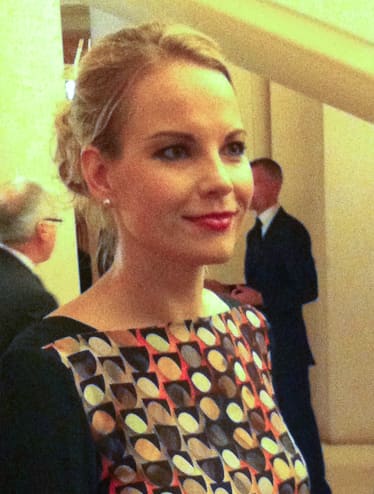
Elīna Garanča, Latvia (portrait via Wikimedia Commons)

Elīna Garanča

Riga-born mezzo-soprano booked for Carmen and Dalila on the world's big stages.
Kristaps Porziņģis, Latvia (portrait via Wikimedia Commons)

Kristaps Porziņģis

Liepāja-born seven-foot-three shooter who reached the NBA in 2015.
Jeļena Ostapenko, Latvia (portrait via Wikimedia Commons)

Jeļena Ostapenko

Won the 2017 French Open unseeded, the first Latvian grand slam singles champion.
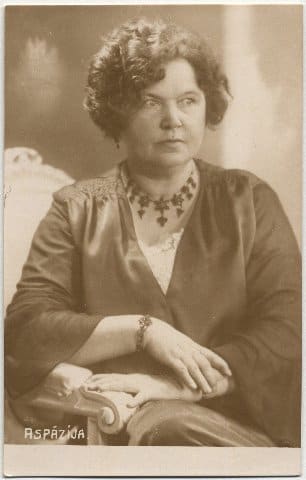
Aspazija, Latvia (portrait via Wikimedia Commons)

Aspazija

Poet and playwright, Rainis's wife, who put women at the centre of Latvian drama.
Sergei Eisenstein

Sergei Eisenstein

Film director born in Riga in 1898. Battleship Potemkin rewrote what montage could do.
Māris Štrombergs

Māris Štrombergs

BMX racer, Olympic champion in Beijing in 2008 and in London in 2012.
Rainis

Rainis

Poet and playwright of Fire and Night, whose politics sent him into Siberian exile.
Isaiah Berlin

Isaiah Berlin

Riga-born philosopher whose Two Concepts of Liberty still frames the argument.

Must-try Latvian food

Grey peas and smoked pork, a rye loaf everything else sits on, cold pink soup in July, and a bitter that has been made to the same recipe since 1752.
Rupjmaize, Latvia (Wimup)

Rupjmaize

Dense dark rye sourdough with malt and caraway. The loaf Latvians pack to go abroad.

Sklandrausis, Latvia (Wimup)

Sklandrausis

Kurzeme rye tart of potato and carrot, the first Latvian food with EU TSG status, in 2013.

Pīrāgi, Latvia (Wimup)

Pīrāgi

Crescent buns stuffed with bacon and onion, baked by the tray and eaten by the handful.

Jāņu siers, Latvia (Wimup)

Jāņu siers

Caraway curd cheese pressed into a yellow wheel and eaten at midsummer with beer.

Aukstā zupa, Latvia (Wimup)

Aukstā zupa

Bright pink cold beetroot soup on kefir with cucumber, dill and egg. Summer only.

Karbonāde, Latvia (Wimup)

Karbonāde

Pork beaten thin, breaded and fried, with mushroom sauce. The safest order anywhere.

Riga Black Balsam, Latvia (Wimup)

Riga Black Balsam

Bitter herbal liqueur from a 1752 Riga pharmacist's recipe. Neat, in coffee or sweetened.

Kvass, Latvia (Wimup)

Kvass

Fermented rye bread drink, sweet and barely alcoholic, sold from street tankers in summer.

Pelēkie zirņi ar speķi

The national dish: grey peas with fried onion and speck, essential at Christmas.

Skābeņu zupa

Sorrel soup with barley, potato and smoked ribs, egg and sour cream. Spring's first soup.

Frikadeļu zupa

Meatball soup with carrot, potato and bay. The standard weekday canteen lunch.

Rasols

Potato salad with egg, pickled cucumber and herring or sausage. On every festive table.

Rīgas šprotes

Alder-smoked Baltic sprats in oil, on buttered rye with egg: the national open sandwich.

Maizes zupa

Rye bread soup with dried fruit and cinnamon, served cold under cream. Really a pudding.

Bērzu sula

Birch sap tapped for a few weeks in early spring, drunk fresh or lightly fermented.

Know before you go

The essentials for planning: entry, money, language, transport, the seasons and the numbers to have on your phone.
Currency

Euro (EUR)

Latvia adopted the euro on 1 January 2014. Cards are accepted almost everywhere, contactless included, and cash is rarely needed beyond a market stall or a rural bus.

Language

Latvian

Latvian is the only official language, one of two surviving Baltic languages. Russian is a first language for a large minority, and English is normal in Riga and tourist places.

Visa

Schengen area

Latvia joined the EU in 2004 and Schengen in December 2007, so standard Schengen rules apply. Check whether your passport needs ETIAS before you book.

Getting around

Trains, coaches and a hire car

Trains from Riga reach Jūrmala, Sigulda and Cēsis often and cheaply. Coaches cover the rest on residents' timetables. A car makes the Kurzeme coast and the Latgale lakes practical.

Latvia travel FAQ

When is the best time to visit Latvia?+
May to September, and the shoulders of that range are the good part. June has the longest days of the year and Jāņi on the 23rd and 24th, which is the biggest date in the calendar and effectively shuts the country down for two days of bonfires. July and August are the warm months, the only ones when the Baltic is worth swimming in, and the busiest on the coast. September is the quiet reward: the forests turn, the mushroom season starts and Riga empties out. Winter is cold and dark, and the case for it is the Christmas market season in the capital plus cheap flights.
How many days do you need?+
Two nights in Riga is a city break, not a country trip. Five nights is the honest minimum: two days for the capital, then one region done properly. A week gets you Riga plus two regions, which is usually the Gauja valley and the Kurzeme coast, and ten days reaches Latgale in the southeast without hurrying. If you only have a weekend, spend it entirely in Riga and take the train to Sigulda for one of the days.
Do you need a car?+
For Riga, Jūrmala and Sigulda, no. Trains run from Riga central station to all three often and cheaply, and Cēsis is on the same line. Beyond that the answer changes. The Kurzeme coast road, Cape Kolka, Kuldīga, Rundāle Palace and the Latgale lakes are all reachable by intercity coach but on timetables built for residents, which usually means one useful bus each way. A hire car for the second half of a week is the standard compromise.
Which language should I use?+
Latvian is the only official language and English works for almost everything a visitor does in Riga and in tourist-facing places elsewhere. Russian is a first language for a large minority and the everyday language in Daugavpils and much of Latgale. Which language to open in is not a neutral choice here after fifty years of occupation, so the courteous move is to start in Latvian or English and follow whatever the other person switches to.
Is Latvia expensive?+
It is the cheapest of the three Baltic states and considerably cheaper than the Nordic countries across the water, and it is no longer the bargain it was a decade ago. Riga restaurant prices are close to a mid-sized western European city; everything outside the capital is noticeably less. Trains and coaches cost very little, museums are modestly priced, and accommodation is where the range is widest. The obvious saving is the set lunch, a national institution.
Is it safe, given where it is?+
Latvia is a member of NATO and the European Union and is a normal, low-crime European country to travel in, with the usual pickpocketing in the tourist streets of Riga and nothing unusual beyond it. The eastern border with Russia and Belarus is a real border with a real security posture, and the practical advice is the same as anywhere: do not photograph border installations, do not attempt to walk into a frontier zone, and check your own foreign ministry's current advice before booking.

Planning a Latvian trip?

One fully-researched destination (ranked, mapped and paired with video) in your inbox every Thursday.

Photo credits (20)