The newest country in Europe, and the youngest: independence was declared in 2008 and the last census still put half the population under thirty-five. Kosovo crosses in an afternoon, ranks among the cheapest countries on the continent to travel in, and saves its best hours for Prizren's old town and the mountains behind Peja.
1
City guide
1,602,515
People
2008
Independence
4
UNESCO monuments
Region
Best months
May · Sep · Jun
Ideal length
5–8 days
Budget / day
$40–80
Language
Albanian & Serbian
Getting around
Buses, shared taxis & a hire car
When to visit Kosovo
Four real seasons, and two months that are better than the rest.
Best: May and September, warm, green or golden, and quiet Peak: July and August for the festivals, December for the families coming home Good: April, June and October for walking, January and February for the snow Quietest: March and November, thawing or grey
Quick answer · where to go in Kosovo
You land at Pristina, and almost nothing here is more than two hours from it. Give the capital a day: the NEWBORN monument, the bronze Clinton on his boulevard, the Imperial Mosque, the domed National Library, and the monastery at Gracanica just down the road. Then go west. Prizren is the town everyone comes back for, an Ottoman river town under a fortress, best walked in the evening and unmissable in August when DokuFest hangs screens over the river. Peja is the other base, at the mouth of the Rugova canyon, with the Patriarchate monastery outside town and the Accursed Mountains directly behind it. Between the two sit Gjakova's rebuilt bazaar, the monastery at Decan, the Mirusha waterfalls and the vineyards around Rahovec. The Sharr mountains close the south, with Brezovica for snow and Prevalla for the drive over. Four days does the capital, Prizren and Peja properly. A week adds the walking, and the walking is the reason to come back.
Pristina's main thoroughfare was Vladimir Lenin Street until 1999. It is now Bill Clinton Boulevard, and a bronze Clinton about three and a half metres tall has stood on it since 1 November 2009, arm raised in a wave. It is one of the very few statues anywhere of a living foreign head of state, and Kosovo put it up for the NATO air campaign that ended the war.
Stereotypes, sorted out
The clichés you have heard, what is actually true, and how to behave once you land.
"Kosovo is still a war zone."
The realityThe war ended in 1999 and the country a visitor meets in 2026 is a young, cheap, unhurried place where the main hazard is the traffic. Pristina's cafes fill on a Tuesday afternoon, Prizren's riverfront is one of the more pleasant evenings in the Balkans, and the mountains are the same range Albania and Montenegro market hard. What is true is narrower and worth knowing: the municipalities north of the Ibar have had roadblocks and incidents since late 2022, several foreign ministries publish specific advice about them, and residual mines remain in a few border areas, which is why the rule on the high trails is to stay on the path.
"It is basically Albania with a different flag."
The realityThe language and much of the culture are shared, and the border feels like a formality, but the two countries travel very differently. Albania has a coast and the tourism economy that grew on it; Kosovo is landlocked, has no resort strip, and its draw is towns, monasteries and mountains. The history diverged for most of a century too: Kosovo spent it inside Yugoslavia rather than under Hoxha, which shows in the architecture, the second language people reach for, and the fact that the Serbian Orthodox monasteries here are among the most important in that church anywhere.
"There is nothing to see but Pristina."
The realityPristina is the least interesting day of a good Kosovo trip, and locals will tell you so first. The country's case is made in Prizren, where an Ottoman town sits under a fortress with a fourteenth-century Orthodox church a few streets from a sixteenth-century mosque; in Peja, at the mouth of a canyon with a patriarchal monastery outside the town gates; and in the Accursed Mountains behind both. Give the capital a day for NEWBORN, the library and Gracanica, then go west.
"The monasteries are a political minefield you should probably avoid."
The realityThey are working Serbian Orthodox monasteries in a majority-Albanian country, and four of them make up a UNESCO World Heritage site that has been on the in-danger list since 2006, so the politics are real. Visiting is not the difficult part. Decani and the Patriarchate of Peja are guarded, so bring a passport, expect to leave it at the gate and to be asked to dress properly, and check opening hours before you drive out. Inside are some of the finest medieval frescoes in Europe, and the monks are used to visitors.
That the country is dangerous, when the practical risks are the driving and the pickpockets, and the one real caveat is a set of municipalities in the north.That Pristina is ugly, when what it actually is is unfinished, and the National Library is one of the most argued-about buildings in Europe rather than merely a bad one.That everything closes at the Serbian border, when the trip works fine in the order Serbia first, then Kosovo, or out through a third country.That there is no hiking infrastructure, when the Peaks of the Balkans has waymarking, huts and an agency-run permit process across three countries.That the food is the same grilled meat as everywhere else in the Balkans, when flija takes hours over an open fire and is closer to a ceremony than a dish.That the euro means European prices, when Kosovo is among the cheapest places on the continent to eat, sleep and travel.
How to get it right
Coffee is the invitation. A macchiato is how a conversation starts, how business is done and how an afternoon passes, and turning one down is turning down the person.
At a monastery, cover shoulders and knees, carry a passport for the guarded ones, and ask before photographing anything inside. At a mosque, the same rules and shoes off.
The war is recent and almost everyone has a story. People will talk about it openly if you ask; leading with it, or with an opinion about who was right, is a different thing.
Kosovo, Kosova and, in Serbian usage, Kosovo i Metohija are not neutral synonyms. Use whichever your host uses and do not correct anyone's.
Hospitality is close to obligatory. If you are fed, fed again, and then sent away with something, the correct response is to accept and to come back rather than to reach for a wallet.
Take shoes off at the door of a house, and expect raki before you have decided whether you want raki.
Famous Kosovar faces
The names behind Kosovar politics, sport, music, art and film. Pick a field.
Ibrahim Rugova
Literary scholar turned politician, president through the 1990s parallel state and again from 2002 until his death in 2006. He led the non-violent resistance to Belgrade for a decade, and the silk scarf he wore in every photograph became the country's most recognisable object
Majlinda Kelmendi
Majlinda Kelmendi
Judoka from Peja and double world champion, who won Kosovo's first Olympic medal of any colour at Rio 2016, gold at 52 kg, at the country's first Games as an independent nation
Dua Lipa
Singer, born in London to Kosovo Albanian parents from Pristina and briefly schooled there as a teenager. With her father Dukagjin she runs the Sunny Hill Festival, which brings an international line-up to the capital most summers
Rita Ora
Rita Ora
Singer and actor, born in Pristina in 1990 and taken to London as an infant when her family left Kosovo. She has performed in the country repeatedly and campaigned on its behalf abroad
Atifete Jahjaga
President from 2011 to 2016, the first woman to hold the office and, at 36, the youngest head of state in Europe when she took it. A career police officer before politics, she made survivors of wartime sexual violence a central subject of her presidency
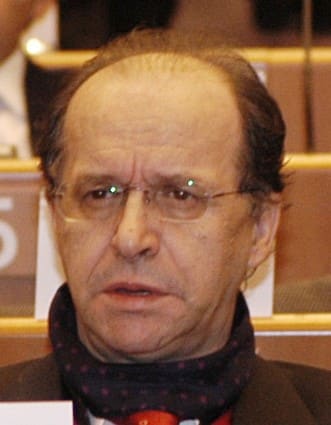
Adem Demaçi
Writer and political prisoner who spent 28 years in Yugoslav jails, more than any other dissident of the era, and took the European Parliament's Sakharov Prize in 1991. He published his first novel at 22 and was called Kosovo's Mandela for the rest of his life
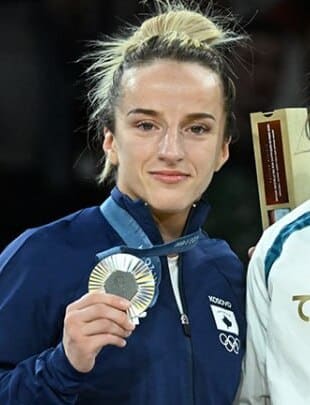
Distria Krasniqi
Judoka from Peja, Olympic champion at 48 kg at the Tokyo Games and an Olympic silver medallist at 52 kg in Paris. One of the three golds that made judo the national sport in everything but name
Nora Gjakova
Nora Gjakova
Judoka, Olympic champion at 57 kg at the Tokyo Games, where she and Distria Krasniqi won on separate days of the same week. She competes alongside her brother Akil, also an international
Xherdan Shaqiri
Xherdan Shaqiri
Footballer, born in Gjilan and taken to Switzerland as a small child. He played the wing for Switzerland at four major tournaments and for Bayern Munich and Liverpool, winning a Champions League with the latter
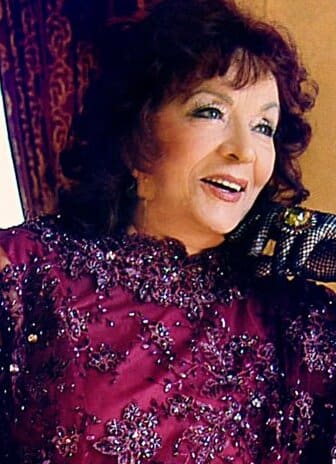
Nexhmije Pagarusha
Singer and actor (1933 to 2020), the voice of Albanian music in Kosovo for half a century and known as its nightingale. Baresha, written for her by her husband, is the song everyone in the country can still finish
Era Istrefi
Singer from Pristina whose 2016 single Bonbon went global from a home-made video, and who performed at the closing ceremony of the 2018 World Cup final in Moscow
Petrit Halilaj
Petrit Halilaj
Artist, born in Kosterrc, who represented Kosovo at its first Venice Biennale in 2013 and took a special mention from the jury in 2017. His work rebuilds childhood, war and natural history museums out of drawings, birds and dirt
Sislej Xhafa
Sislej Xhafa
Conceptual artist from Peja, based in New York, who represented Kosovo at the Venice Biennale in 2017 with Lost and Found, a work about the families of people still missing since the war
Bekim Fehmiu
Bekim Fehmiu
Actor (1936 to 2010) who grew up in Prizren and became the first eastern European star to lead a Hollywood film during the Cold War. He broke through in I Even Met Happy Gypsies and played Odysseus in the 1968 television Odyssey, and acted in nine languages
Blerta Basholli
Blerta Basholli
Director, whose debut feature Hive swept the World Cinema Dramatic section at Sundance in 2021, taking the grand jury, directing and audience awards in one night. It tells the true story of Fahrije Hoti, a widow from Krusha e Madhe who built an agricultural cooperative
Must-try Kosovar food
An open fire, a heavy pan and a lot of peppers. Pick a category.
Flija
The national dish and closer to a ritual: batter ladled in rings onto a pan, layer over layer under a hot lid, brushed with cream between each one. It takes hours over an open fire and arrives with yoghurt and honey.
Makiato
The small milky coffee the whole country runs on, ordered by the hour rather than by the cup. It costs almost nothing and buys a table for as long as you want one.
Tavë e Prizrenit
Prizren's own baked dish: lamb, peppers and tomato set in a clay pan with yoghurt and eggs poured over and browned. The one plate that is Kosovar rather than generally Balkan.
Pite
The house pie, coiled or layered filo with cheese, spinach, leek, meat or pumpkin. Bakeries sell it by the slab from early morning, and it is the cheapest good breakfast in the country.
Sarma
Vine or cabbage leaves rolled around rice and minced meat and simmered slowly. A winter dish and a celebration dish, and the cabbage version is the one to order after October.
Qebapa
Fingers of minced beef grilled hard and served in flatbread with raw onion and a spoon of kajmak. Ordered by the count rather than the plate, and the default lunch in every town.
Qofte
Flatter, wider patties with more onion and paprika in them, grilled alongside the qebapa. Judge a grill house on these rather than on anything with a menu photograph.
Mish në furrë
Lamb or veal roasted slowly with potatoes in a wood oven, carved to order and sold by weight. Sunday food, and the reason a village restaurant on the road to Rugova is worth stopping at.
Ajvar
Roasted red peppers cooked down with aubergine into a thick relish and jarred by the case every September. Households still make their own, and everyone insists their family recipe is the right one.
Djathë i Sharrit
The brined sheep's cheese of the Sharr mountains, salty and firm, matured in wooden barrels. It turns up in pite, on a breakfast plate and beside a glass of raki.
Speca me salcë
Green peppers stewed with tomato, garlic and oil and eaten warm or cold with bread. A side dish everywhere, and a whole meal in a mountain guesthouse.
Pasul
Slow-cooked white beans with paprika and, usually, smoked meat. Cheap, filling and the thing to order on the first cold day.
Sheqerpare
Soft semolina biscuits baked and then soaked in syrup until they give under a fork. Every bakery has a tray of them and every tray is slightly different.
Tullumba
Ridged batter piped into hot oil and drowned in cold syrup, crisp outside and dense within. Eaten standing up, from the tray.
Bakllava
Filo, walnuts and syrup, cut into diamonds and made in quantity for weddings and for Eid. The Prizren version is the one people travel for.
Raki
Fruit brandy, usually grape or plum, poured at any hour a guest arrives and refused at your peril. Homemade is stronger than shop-bought and offered with more pride.
Rahovec wine
The vineyards on the slopes between Rahovec and Prizren are the country's wine region, planted through the Yugoslav years and replanted since. Vranac and Merlot are the reds to ask for.
Boza
Fermented maize drink, thick, faintly sour and sold from specialist shops rather than cafes. An acquired taste, and a very old one.
Kosovo travel FAQ
Is Kosovo safe to visit?+
Yes, and the gap between the reputation and the experience is wider here than almost anywhere in Europe. The war ended in 1999, violent crime against visitors is rare, and the ordinary risks are the European ones: pickpockets in a crowd, and drivers who treat a lane marking as a suggestion. The one genuine caveat is geographic. The municipalities north of the Ibar, including northern Mitrovica, have seen roadblocks and incidents since late 2022 and several foreign ministries publish specific guidance about them, so check your own government's advice for that area close to your date. Everything in this guide sits outside it.
Do you need a visa for Kosovo?+
Most Western travellers do not. Citizens of the EU and Schengen states, the UK, the US, Canada, Australia and a long list of others enter without a visa for up to 90 days in any 180-day period, and a valid Schengen, UK or US visa will generally get you in on its own. There is no visa on arrival for nationalities outside that list, so check the Ministry of Foreign Affairs list before you book. Note that a Kosovo stamp is not a problem for onward travel anywhere except Serbia, which is a separate question below.
Can you travel between Kosovo and Serbia?+
You can, but the direction matters. Serbia does not recognise Kosovo's independence and treats the crossings as internal, so arriving at a Serbian post from Kosovo with no Serbian entry stamp in your passport can be refused as an illegal entry. The pattern that works is to enter Serbia first and continue south into Kosovo, or to loop out through Albania, Montenegro or North Macedonia and enter Serbia from there. Hire cars are the other catch: many Kosovo rental contracts exclude Serbia outright, and the crossings expect a green card insurance certificate. Practice shifts, so check current foreign ministry guidance near your date.
When is the best time to visit Kosovo?+
May and September. Both give you warm days, cool nights and the towns without the August crowd, and September adds the harvest around Rahovec. July and August are hot on the plain but they are also when the calendar is best: DokuFest takes over Prizren in the first half of August and Sunny Hill fills Pristina around the same time, so book beds well ahead. June through October is the window for the high trails in the Accursed Mountains. Winter is for Brezovica and the Sharr, and March and November are the two months to skip.
How cheap is Kosovo really?+
It is consistently among the least expensive countries in Europe to travel in, and it uses the euro, so there is no exchange-rate arithmetic softening the comparison. Guesthouses, intercity buses, restaurant meals and the national addiction to macchiato all cost a fraction of what the same things cost in the EU countries an hour's drive away. The exceptions are the ones you would expect: a guided mountain trip, a hire car and anything imported. Budget the trip as cheap and spend the difference on a guide for the Rugova side.
How do you get around Kosovo without a car?+
Easily, for the towns. Intercity buses are frequent, inexpensive and connect Pristina to Prizren, Peja, Gjakova, Gjilan and Ferizaj in under two hours each, with tickets bought at the station rather than online. Shared taxis fill the gaps. What buses do not reach is the good part of the country: the Rugova canyon, the Mirusha waterfalls, Brezovica out of season and the trailheads all want a car or a driver. A common compromise is buses between the towns and a taxi or a local guide for one or two days in the mountains.
Know before you go
The essentials for planning a Kosovo trip, including the border rules.
Currency
Euro (EUR)
Kosovo adopted the euro unilaterally rather than by joining the eurozone, so the notes are the same ones you would carry in Italy and there is nothing to change on arrival. The economy still runs largely on cash: hotels, supermarkets and the better restaurants in Pristina and Prizren take cards, but bakeries, buses, market stalls, mountain guesthouses and most of the smaller towns do not. Draw cash in a city before a day in the hills.
Language
Albanian and Serbian
Both are official across the country, and Turkish, Bosnian and Romani carry official status in the municipalities that speak them. Albanian is what you will hear almost everywhere. English is widespread among anyone under about forty, which in the youngest population in Europe is most of the room, and German is common because of the diaspora in Germany and Switzerland. Faleminderit for thank you goes a long way anyway.
Calling code
+383
Kosovo was assigned its own country code in 2016 and finished migrating to it in 2017. Numbers printed before that carried Monaco or Slovenian prefixes, which is why an old guidebook or a stale website listing can still fail to connect.
Emergency
112 for police, fire and ambulance
112 reaches all three services. The University Clinical Centre in Pristina is the main referral hospital and the destination for anything serious; regional hospitals in Prizren, Peja, Gjakova, Gjilan and Mitrovica handle the rest. Mountain rescue capacity in the Accursed Mountains and the Sharr is limited, so insurance that covers hiking and evacuation is worth the line item.
Visa
Visa-free for 90 days in 180 for most Western passports
Citizens of the EU and Schengen states, the UK, the US, Canada, Australia and a long list of others enter without a visa for up to 90 days in any 180-day period, and anyone holding a valid Schengen, UK or US visa can generally enter on that. There is no visa on arrival for nationalities outside the list, so check the Ministry of Foreign Affairs list before booking rather than at the gate.
Getting around
Buses, shared taxis and a hire car
Intercity buses are frequent, cheap and the way most people travel: Pristina to Prizren or Peja takes under two hours, and the stations sell tickets on the spot rather than online. Trains exist on a small network and are slow. Driving is on the right, the motorways to Albania and towards North Macedonia are new and fast, and a hire car is what unlocks Rugova, the Sharr and the waterfalls. Check with the rental company before crossing any border: many contracts exclude Serbia outright, and a green card insurance certificate is what the crossings ask for.
Tipping
Round up, or about ten percent
Service is rarely added to the bill. Rounding up is normal in a cafe and ten percent is generous in a restaurant. Nobody is working for a tip in the way they are in North America, so the gesture reads as a compliment rather than as an obligation.
Kosovo, Serbia and the entry stamp
Plan the direction of travel before you book
Serbia does not recognise Kosovo's independence and treats its border posts as internal crossings rather than international ones. In practice that means entering Serbia straight from Kosovo can be refused if your passport carries no Serbian entry stamp, because Serbian officers may read the trip as having entered Serbian territory illegally. The reliable pattern is to enter Serbia first and continue into Kosovo, or to loop out through Albania, Montenegro or North Macedonia before crossing into Serbia. Rules and practice both move, so check current guidance from your own foreign ministry close to the date.
The north
Read the current advice before driving up
The municipalities north of the Ibar, including the northern half of Mitrovica, have seen periodic roadblocks and violent incidents since late 2022, and several foreign ministries publish specific guidance about them that has changed more than once. The rest of the country is not covered by that guidance and is calm. If the north is part of the plan, check your own government's advice on the week you travel rather than relying on a page written earlier.
Landmines
Stay on marked paths near the borders
Residual mines and unexploded ordnance from the 1999 conflict remain in a small number of areas, concentrated along the Albanian border, in the mountains shared with Albania and Montenegro, and around the Dulje pass in the centre. Roads, tracks and the waymarked trails have been cleared. The rule is the ordinary mountain one applied strictly: stay on the path, do not shortcut across open ground, and walk the high routes with a local guide.
Border permits for the high routes
Peaks of the Balkans and Via Dinarica
The trails that cross the green borders into Albania and Montenegro need a cross-border permit issued by the police, applied for weeks rather than days in advance, and it is a separate document from any visa. Guiding agencies handle the paperwork as a matter of routine. Walking those sections without one is not a formality anyone should skip.
Coffee
The macchiato is the local unit of time
Kosovo runs on coffee, and specifically on a small macchiato that costs less than almost anywhere in Europe and is never drunk in a hurry. Meetings happen over it, so do interviews, and refusing an invitation to one reads as refusing the conversation. Sit down.
Planning a Kosovar trip?
One fully-researched destination (ranked, mapped and paired with video) in your inbox every Thursday.
Photo credits (10)
Kosovo travel guide: Prizren, Peja and the mountains | Wimupphoto by qiv, CC BY-SA 2.0
Ibrahim Rugovaphoto by European People's Party, CC BY 2.0