
Don't be a tourist, be a traveler, world in motion
Plan a trip
Where the coast, the forest and the north sit
◆ Country guide · West Africa

Top 10s across Ghana

The first sub-Saharan colony to win independence, and it still travels like a country with something to prove. Ghana pairs an Atlantic coast of slave forts with a capital that exports its music to the rest of the continent.

2
City guides
30,832,019
People
1
Video guide
16
Regions
Region
Best months
Nov · Dec · Jan · Feb
Ideal length
10–14 days
Budget / day
$50–120
Language
English, with Twi, Ewe, Ga and Dagbani
Getting around
Domestic flights, coaches and trotros

When to visit Ghana

Dry from November to March. The rains come in two goes, and the north keeps its own calendar.
Full month guide →
Jan
Feb
Mar
Apr
May
Jun
Jul
Aug
Sep
Oct
Nov
Dec
Best: the dry season, November to February Peak: December, when the diaspora comes home Good: the shoulder, drying out or briefly cool Off: the rains, April to June and September
Quick answer · where to go in Ghana

Almost every trip starts in Accra and then runs west along the coast road to Cape Coast and Elmina, where the castles sit above working fishing harbours and the canopy walkway at Kakum is an hour inland. Kumasi, up in the forest belt, is the Asante capital and the reason to leave the coast: a royal court, the craft villages around it, and the largest single market in West Africa. East of Accra the Volta region has the lake, the hills and the country’s tallest waterfall. The north travels like a different country, and Mole National Park beyond Tamale is where the elephants are. Come between November and March and you get the dry season.

2 Ghana city guides

The Top 10 for the city almost every Ghana trip starts in.

Fun fact

One number worth knowing

Ghana was the first country in sub-Saharan Africa to gain independence from colonial rule, on 6 March 1957. It took its name from the medieval Ghana Empire, which sat several hundred kilometres to the northwest of the modern border.

Stereotypes, sorted out

The clichés you have heard, what is actually true, and how to behave when you get there.
"Ghana is one long beach"

The realityThe coast is the southern edge of it. Behind that sits the forest belt and Kumasi, then savanna, then the far north around Tamale, which reads as a different country in language, food and religion. Lake Volta runs down the middle of the map and takes a day to cross.

"West Africa is hard to travel"

The realityGhana is where people start for a reason. English is official, the coastal road is well served, STC and VIP coaches keep a timetable, and PassionAir and Africa World Airlines fly Accra to Kumasi, Tamale and Takoradi.

"The jollof argument is settled"

The realityIt is not, and nobody here wants it to be. Ghanaian jollof is built on aromatic rice cooked in the stew itself, which is a different dish from the Nigerian version rather than a worse one. Ordering it is how you start a conversation.

"Accra is Ghana"

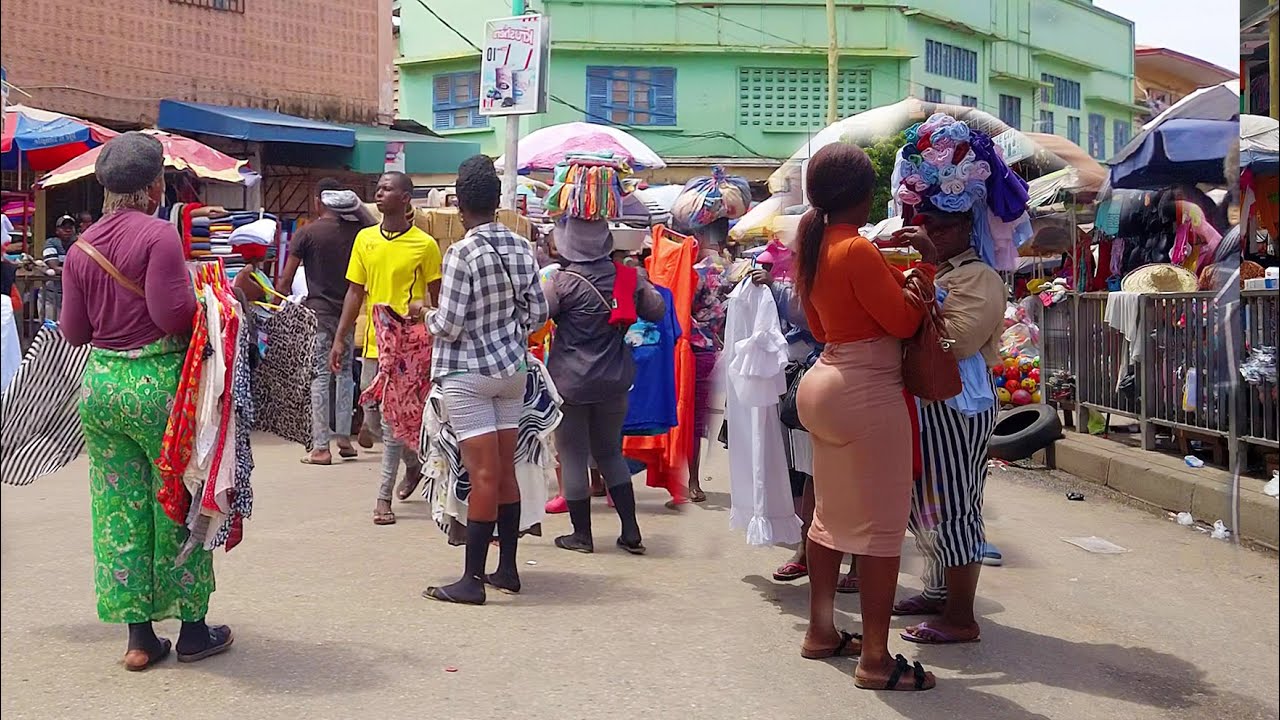
The realityKumasi is the seat of the Asante kingdom, with its own court at Manhyia, its own craft villages and the largest single market in West Africa. Skipping it for the beach is the most common Ghana mistake.

"The castles are a museum stop"

The realityCape Coast and Elmina are pilgrimage sites, and the dungeon tours are not a light hour. The Year of Return in 2019 brought the diaspora back in numbers and the country has been rebuilding around that ever since.

Akwaaba on every arrivals signThe jollof rivalryKente clothHighlife, and then afrobeatsA trotro mate leaning out of the doorChurch that runs all Sunday morningNames given by the day you were born

Cultural notes that actually help

  • The right hand does the giving, the receiving and the eating. Passing money or food with the left reads as rude, even from a visitor who clearly did not mean it.
  • Greet before you ask for anything. A handshake and a "good morning" come first, and in a group you work along the line from your right.
  • Ghanaian day names are real names, not nicknames. Kwame is a Saturday-born boy, Ama a Saturday-born girl, and Kwame Nkrumah was named for the day he arrived.
  • Ask before photographing people, and put the camera away in the dungeons at Cape Coast and Elmina unless your guide says otherwise.
  • Sunday belongs to church across most of the south, and the north keeps Friday prayers. Neither is the morning to expect a busy office or a quick errand.
  • The handshake often ends in a finger snap. Let the other person lead it and follow through; refusing the hand is the only wrong move.
  • Chiefs still hold real authority. Entering a palace or a village properly means going through the chief’s elders, which is what a local guide is actually for.

Famous Ghanaian faces

Presidents, boxers, novelists and the rappers exporting Twi. Pick a field.
Kwame Nkrumah

Kwame Nkrumah

Led Ghana to independence in 1957 as its first prime minister and president, and made the country the address of Pan-Africanism
Kofi Annan, Ghana (portrait via Wikimedia Commons)

Kofi Annan

Secretary-General of the United Nations from 1997 to 2006, and joint winner of the Nobel Peace Prize in 2001
Yaa Asantewaa

Yaa Asantewaa

Queen mother of Ejisu, who led the Asante against the British in the War of the Golden Stool in 1900
Jerry John Rawlings, Ghana (portrait via Wikimedia Commons)

Jerry John Rawlings

Air force officer turned head of state for nearly two decades, who then handed power to an elected opponent in 2001
Azumah Nelson, Ghana (portrait via Wikimedia Commons)

Azumah Nelson

Three-time world champion, and the first African boxer inducted into the International Boxing Hall of Fame
Abedi Pele

Abedi Pele

Three times African Footballer of the Year, and a European Cup winner with Marseille in 1993
Michael Essien, Ghana (portrait via Wikimedia Commons)

Michael Essien

The midfield engine of Chelsea through its Premier League and Champions League years
Asamoah Gyan, Ghana (portrait via Wikimedia Commons)

Asamoah Gyan

Ghana’s record scorer, and the striker of the 2010 World Cup run that ended a penalty short of the semi-final
Marcel Desailly, Ghana (portrait via Wikimedia Commons)

Marcel Desailly

Born in Accra, and a World Cup winner with France in 1998 after two European Cups as a defender
Mohammed Kudus, Ghana (portrait via Wikimedia Commons)

Mohammed Kudus

Came through the Right to Dream academy outside Accra and scored twice for the Black Stars at the 2022 World Cup
Ama Ata Aidoo

Ama Ata Aidoo

Playwright, novelist and poet who put the modern African woman at the centre of the work, from Anowa onwards
Ayi Kwei Armah

Ayi Kwei Armah

Novelist of The Beautyful Ones Are Not Yet Born, the sharpest account of post-independence disillusion in African writing
Efua Sutherland

Efua Sutherland

Playwright and children’s writer who built Ghana’s theatre movement and the Drama Studio in Accra
El Anatsui, Ghana (portrait via Wikimedia Commons)

El Anatsui

Sculptor of vast metal tapestries stitched from bottle caps, shown from the Venice Biennale to Tate Modern
Ibrahim Mahama, Ghana (portrait via Wikimedia Commons)

Ibrahim Mahama

Installation artist from Tamale who wraps buildings in jute sacks and has built the north its own art institutions
Sarkodie, Ghana (portrait via Wikimedia Commons)

Sarkodie

The rapper who carried Twi-language hip-hop out of Tema and across the continent
Stonebwoy, Ghana (portrait via Wikimedia Commons)

Stonebwoy

Dancehall and afrobeats out of Ashaiman, and one of the biggest live draws in West Africa
Amaarae

Amaarae

Singer and producer whose album Fountain Baby took Ghanaian alté pop to a global audience
Black Sherif, Ghana (portrait via Wikimedia Commons)

Black Sherif

The rapper whose First Sermon broke out in 2021 and made him the voice of a younger Ghana

Must-try Ghanaian food

Rice, swallows, street food and the sauce that goes on all of it. Pick a category.
Jollof rice, Ghana dish (Wimup)

Jollof rice

Rice simmered in a tomato, onion and pepper base until it takes the colour of the stew. The argument with Nigeria over it is never going to end.

Waakye, Ghana (Wimup)

Waakye

Rice and beans cooked with dried millet leaves, which turn the whole plate red-brown. Breakfast food, piled with egg, gari, spaghetti and shito.

Kenkey, Ghana (Wimup)

Kenkey

Fermented maize dough steamed in a husk and sold as a ball, eaten with fried fish and as much shito as you can take.

Omo tuo, Ghana (Wimup)

Omo tuo

Rice pressed into balls and served sitting in soup. Sunday food across the south.

Tuo zaafi, Ghana (Wimup)

Tuo zaafi

The northern staple: a soft maize or millet swallow eaten with a green ayoyo leaf soup.

Sobolo, Ghana (Wimup)

Sobolo

Hibiscus steeped with ginger and pineapple and drunk cold. The national soft drink in all but name.

Red red

Black-eyed peas stewed in palm oil, with fried plantain alongside. The everyday lunch, and the one that happens to be vegetarian.

Fufu with light soup

Cassava and plantain pounded to a smooth, elastic dough, torn by hand and dipped in a clear pepper broth with goat or fish.

Banku and tilapia

Fermented maize and cassava dough, sour and dense, served with a whole grilled tilapia and a bowl of ground pepper.

Groundnut soup

Peanut ground into a thick soup with chicken or goat, and usually met with fufu or rice balls rather than a spoon.

Palm nut soup

Palm fruit pounded and boiled into a deep orange soup, often with smoked fish and crab in it.

Kelewele

Ripe plantain diced, tossed in ginger, chilli and spice and deep-fried. Evening food, sold hot by the bag.

Chichinga

Skewered meat rubbed in a dry peanut and pepper mix and grilled over charcoal. Ghana’s answer to suya.

Shito

The black pepper sauce that rides on everything: dried fish and shrimp, ginger, garlic and chilli cooked down in oil.

Bofrot

Fried dough balls, sweet and slightly chewy, sold warm from a glass case at the roadside.
Ghana travel FAQ

Do you need a visa for Ghana?+
Holders of African passports do not: Ghana dropped the requirement for them in January 2025. Everyone else needs a visa before travelling, applied for through the Ghana Immigration Service e-visa portal or at a Ghanaian mission. Proof of yellow fever vaccination is an entry requirement on top of the visa.
When is the best time to visit Ghana?+
November to March, the dry season. December is the busiest and the most fun, because the diaspora comes home and Accra runs on concerts and weddings. January and February are the quieter half of the same weather, and the best window for elephants at Mole.
How long do you need in Ghana?+
Ten days covers Accra, the castle coast at Cape Coast and Elmina, and Kumasi at a pace that is not a forced march. Two weeks gets you the north as well, because Mole and Tamale are a flight or a long day on the road from the coast.
Is Ghana easy to travel independently?+
It is one of the more straightforward countries in West Africa to do alone. English is the official language, the coastal route is well worn, coaches run to a timetable and domestic flights cut the long hauls. Check your own government’s current travel advice before fixing an itinerary, particularly for the areas near the northern borders.
Is Ghana expensive?+
The country is not, and the trip can be. Markets, trotros and chop bars cost very little. The money goes on hotels in Accra, domestic flights and hired cars with drivers, which is what most itineraries end up using to cover the distances.

Know before you go

The essentials for planning a Ghana trip.
Currency

Ghanaian cedi (GH₵)

Cash runs the markets and the trotro stations, and mobile money runs almost everything else. Cards are taken in Accra hotels and larger restaurants, and they thin out quickly beyond them.

Languages

English, with Twi, Fante, Ewe, Ga and Dagbani in daily use

English is the official language and the language of schooling, signage and government, which makes Ghana one of the simplest countries in West Africa to travel independently. Akan, in its Twi and Fante forms, is what you will hear most.

Power

230V · Type G, with Type D in older buildings

The British three-pin plug is the standard. Bring an adapter from anywhere else, and a charged battery pack for the evenings the grid drops out.

Emergency

112

112 is the national emergency line. Police answer on 191, the fire service on 192 and the ambulance service on 193.

Visas

Visa-free for African passports, e-visa for everyone else

Holders of African passports have entered without a visa since January 2025. Everyone else applies to the Ghana Immigration Service before travelling, through its e-visa portal or a mission abroad. Proof of yellow fever vaccination is asked for on arrival.

Health

Yellow fever certificate required

The yellow fever certificate is an entry requirement rather than a recommendation. Malaria cover is standard advice for the whole country, so take it up with a travel clinic well before you fly.

Getting around

Domestic flights, coaches and trotros

PassionAir and Africa World Airlines link Accra with Kumasi, Tamale and Takoradi. STC and VIP coaches run the same routes by road on a timetable, and trotro minibuses fill in everywhere else, leaving when they are full rather than when the clock says.

Driving

On the right

Ghana drives on the right. The trunk roads between the main cities are sealed and busy, and night driving is the part most visitors are advised to skip.

Tipping

Welcome, not required

Service is often already on the bill in hotels and larger restaurants. Rounding up for a driver or a guide is normal and appreciated, and nobody will chase you for it.

National day

6 March

Independence Day marks the end of British rule in 1957. Republic Day, on 1 July, marks the constitution that followed in 1960.

Ghana on Wimup Videos

Films to watch before you book.
YouTube ↗
2:50:08

Best of Accra

Planning a Ghana trip?

One fully-researched destination (ranked, mapped and paired with video) in your inbox every Thursday.

Photo credits (19)