Don't be a tourist, be a traveler, world in motion
◆ Country guide · Southeast Asia

Top 10s across Cambodia

The Khmer Empire left a capital in the forest and a river system that still sets the rhythm. Cambodia is small, flat and far richer in ruins than its size suggests.

2
City guides
15,552,211
People
24
Provinces
Live destination map
AllAngkor & the northwestPhnom Penh & the MekongSouthern coastNortheastern highlands
Best months
Nov · Dec · Jan
Ideal length
8–12 days
Budget / day
$40–120
Language
Khmer
Getting around
Buses, boats & tuk-tuks
Region Theme Budget Best month Trip length 2 guides
Grid Map
Quick answer · where to go in Cambodia

Most trips run Siem Reap to Phnom Penh: three days for Angkor, two for the capital, and a short flight or a long bus between them. Add the southern coast for Kampot's pepper farms and the crab market at Kep, or Battambang for the shophouses and the countryside behind them. Kratié puts you on the Mekong, and the northeastern highlands at Sen Monorom and Banlung are the part of the country almost nobody books. November to February is the dry, cooler window worth planning around.

2 Cambodia city guides

Sorted by what travelers are saving this month.

Fun fact

One number worth knowing

Angkor Archaeological Park covers roughly 400 square kilometres and was inscribed on the UNESCO World Heritage List in 1992, which makes it one of the largest heritage sites anywhere in Asia.

Stereotypes, sorted out

The clichés you have heard, what is actually true, and how to fit in.
"Cambodia is Angkor and nothing else"

The realityAngkor earns its three days and most itineraries open there. The rest is what surprises people: a Mekong river town at Kratié, pepper farms and a crab market on the south coast, and highland forest at Sen Monorom that sees almost no coaches.

"Khmer food is milder Thai food"

The realityThe pantry is different. Kroeung, a pounded paste of lemongrass, turmeric, galangal and kaffir lime, does the work chilli does next door, and prahok, fermented fish paste, carries the salt. Heat is a condiment here, added at the table rather than cooked in.

"The country is still dangerous"

The realityThe cities and the main routes are ordinary travel. Demining is still under way in parts of the northwestern border provinces, which is the reason rural paths are marked. Stay on marked ground and the caution ends there.

"Everything runs on US dollars"

The realityDollars circulate widely and prices are often quoted in them, but the riel is the national currency and change under a dollar comes back in riel. Carry small, clean notes: a torn fifty is no use to anyone.

"Three days covers it"

The realityThree days covers Angkor. The country is small and flat, which makes it tempting to rush, but the short distances hide slow roads and long bus legs. Eight to twelve days is the honest length for Siem Reap, Phnom Penh and one region past them.

"The Khmer Rouge is the whole story"

The realityThe genocide sites in Phnom Penh are told plainly and are worth your time. They are one chapter of a history that also holds the largest religious monument on earth, a golden age of 1960s rock and roll, and a young population rebuilding what that period tried to erase.

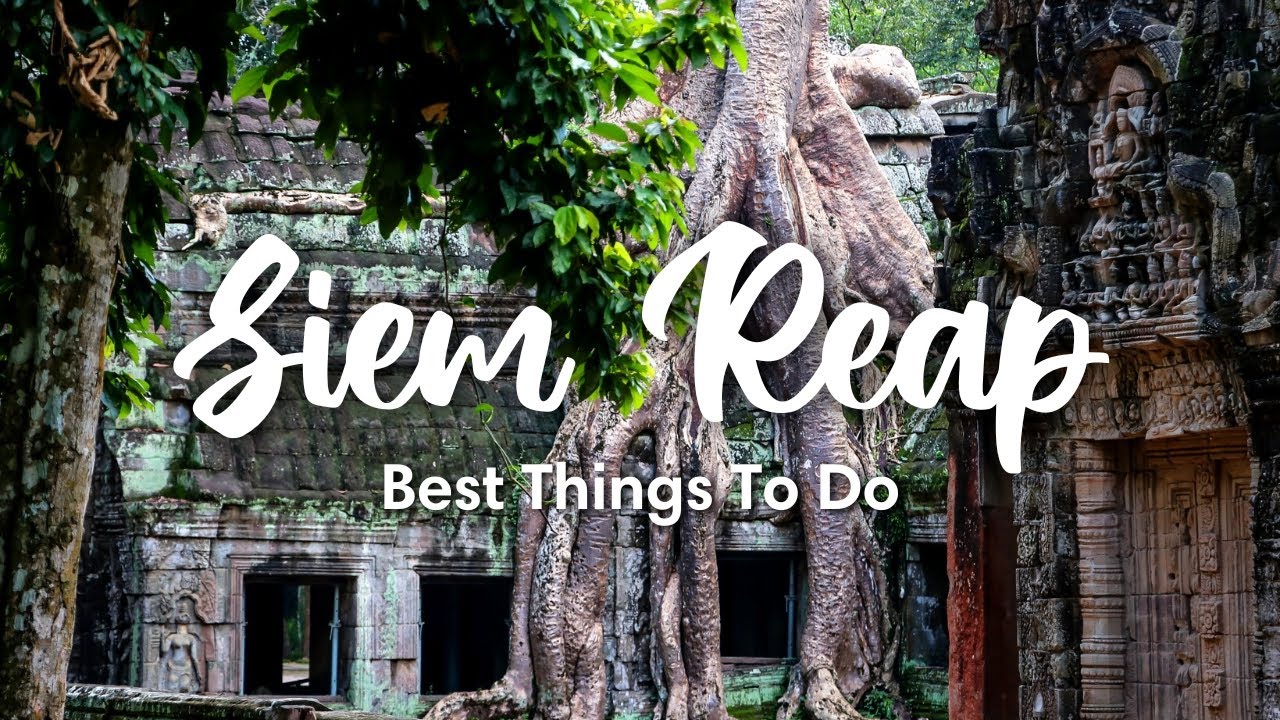
Sunrise crowds behind Angkor WatPrices in dollars, change in rielTuk-tuks hailed through an appThe bamboo railway at BattambangFried tarantulas at SkuonPepper farms on every Kampot itineraryTemples held together by strangler figsIced coffee thick with condensed milk

Cultural notes that actually help

  • Greet with the sampeah: palms together, a small bow. The higher the hands, the more respect it carries, and returning one is always right.
  • Cover shoulders and knees at temples. Angkor enforces its dress code at the gate, and there is nothing to buy once you are past it.
  • Do not touch anyone on the head, and do not point your feet at a person or a Buddha image. Tuck them under you when you sit down.
  • Pass and receive with the right hand, or with both. The left hand alone reads as careless.
  • Ask before photographing monks or people at work, and never use the genocide memorials as a backdrop.
  • Shoes come off before a home or a temple hall. Watch what the pile at the door is doing and copy it.
  • Keep your temper. Raising your voice loses the argument here, and staying calm gets further than being right.
  • Keep small riel notes on you. Nobody wants to break a large dollar bill for a bowl of noodles, and damaged notes get refused.

Famous Cambodian faces

The names behind Cambodia's history, music, film, art, writing and sport. Pick a field.
Jayavarman VII

Jayavarman VII

Angkor's builder king, who raised Angkor Thom and the Bayon in the late 1100s
Sinn Sisamouth

Sinn Sisamouth

The King of Khmer Music, and the voice of Phnom Penh's 1960s golden age
Rithy Panh

Rithy Panh

Documentary director whose The Missing Picture became the first Cambodian film nominated for an Oscar
Haing S. Ngor

Haing S. Ngor

Doctor turned actor, and the first performer of Asian descent to win the Best Supporting Actor Oscar
Vann Molyvann

Vann Molyvann

Architect of New Khmer Architecture, and of the National Stadium in Phnom Penh
Norodom Sihanouk

Norodom Sihanouk

King, prime minister and film director across six decades of Cambodian politics
VannDa

VannDa

Rapper whose Time to Rise, recorded with chapei master Kong Nay, passed 100 million views
Sorn Seavmey

Sorn Seavmey

Taekwondo fighter who took Cambodia's first Asian Games gold at Incheon in 2014
Jayavarman II

Jayavarman II

Declared the Khmer Empire in 802, the date Cambodian history still counts from
Suryavarman II

Suryavarman II

Built Angkor Wat in the early 1100s as a temple to Vishnu
Norodom Sihamoni

Norodom Sihamoni

King since 2004, and a classical dancer and choreographer before the throne
Ros Serey Sothea

Ros Serey Sothea

The Queen with the Golden Voice, and the other half of the 1960s sound
Kong Nay

Kong Nay

Chapei dang veng master, known at home as the Ray Charles of Cambodia
Davy Chou

Davy Chou

Director of Diamond Island and Return to Seoul, and a builder of the film scene here
Sopheap Pich

Sopheap Pich

Sculptor working in rattan and bamboo, shown at the Metropolitan Museum of Art
Vann Nath

Vann Nath

Painter, one of the few adults to leave S-21 alive, and the man who documented it
Loung Ung

Loung Ung

Author of First They Killed My Father, the memoir that reached the widest audience
Vaddey Ratner

Vaddey Ratner

Novelist whose In the Shadow of the Banyan drew on her own childhood under the regime
Dith Pran

Dith Pran

Photojournalist who survived the regime, and who gave the killing fields their name
Chan Vathanaka

Chan Vathanaka

Cambodia's best-known footballer, and a forward for the national team
Bou Samnang

Bou Samnang

Runner who finished the 2023 SEA Games 5,000m last, in torrential rain, and became a national figure

Must-try Khmer food

The classics first, then the street stalls, the coast and the sweet counter. Pick a category.

Fish amok

Steamed fish mousse set with coconut milk and kroeung, served in a banana leaf cup.

Lok lak

Cubes of beef seared hard, piled on salad, with a black pepper and lime dip.

Kuy teav

The breakfast bowl: clear pork broth, rice noodles, fried garlic and whatever the stall adds.

Nom banh chok

Soft rice noodles under a pale green fish and kroeung gravy, with raw herbs you tear in.

Samlor korko

The everyday Khmer stew, thickened with toasted rice and loaded with whatever is in season.

Bai sach chrouk

Grilled pork over broken rice with pickles and a bowl of broth on the side, eaten early.

Num pang

The Khmer baguette, a French inheritance filled with pâté, pickles and herbs.

Sach ko ang

Beef skewers grilled over coals on the pavement and sold by the stick after dark.

A'ping

Fried tarantula, the Skuon speciality, crisp outside and better split than bitten.

Kralan

Sticky rice, coconut and black beans roasted inside a bamboo tube, then split open.

Kampot pepper crab

Kep crab stir-fried with whole green Kampot peppercorns, fish sauce and palm sugar.

Prahok ktis

Fermented fish paste cooked down with pork and coconut into a dip for raw vegetables.

Trey aing

Whole river fish grilled over coals, then wrapped into lettuce with herbs at the table.

Samlor machu trey

Sour fish soup, sharp with tamarind and lemongrass, ordered with a plate of rice.

Num ansom

Sticky rice with banana or pork, wrapped in banana leaf and steamed for festivals.

Num plae ai

Palm sugar hidden inside glutinous rice balls and rolled in fresh coconut.

Num kom

A steamed pyramid of glutinous rice with palm sugar and coconut folded inside.

Tuk ampov

Sugarcane pressed at the roadside and poured over crushed ice, sweet and grassy.

Iced Khmer coffee

Dark robusta run through a filter, sweetened with condensed milk, poured over ice.

Cambodia travel FAQ

How many days do you need in Cambodia?+
Eight to twelve. Three days for Angkor at Siem Reap, two in Phnom Penh, and the rest for one region beyond them: the south coast, the Mekong at Kratié, or the highlands. A week works if you fly between the two cities rather than taking the bus.
How long do you need at Angkor?+
Three days. One day covers Angkor Wat, Angkor Thom and Ta Prohm and leaves you finished. Three lets you reach the outer temples and Banteay Srei, and take a sunrise at a quieter gate. The multi-day pass exists for exactly that reason.
Is Cambodia safe to travel in?+
The cities and the main routes are ordinary travel: watch your bag in Phnom Penh traffic and agree a tuk-tuk fare before setting off. Demining continues in parts of the northwestern border provinces, which is why rural paths are marked. Stay on them.
Dollars or riel?+
Both, and you will use both in a day. Prices are often quoted in US dollars and ATMs dispense them, while change under a dollar comes back in riel. Bring clean, untorn notes, because damaged dollars get refused.
When is the best time to visit Cambodia?+
November to February: dry, cooler, and the countryside still green from the rains. December and January are the busiest at Angkor. October and March trade a little comfort for far fewer people, and the wet season from June is cheap, green and wet in the afternoons.

Know before you go

The essentials for planning a Cambodia trip.
Currency

Riel (៛) & US dollars

Prices are quoted in both and ATMs dispense dollars. Change under a dollar comes back in riel, at a rate that has sat close to 4,000 to the dollar for years.

Language

Khmer

Khmer is the national language and uses its own script. English is common in Siem Reap, Phnom Penh and along the coast, thinner on rural roads, and French lingers with the oldest generation.

Visa

e-Visa or on arrival

Most nationalities buy a 30-day tourist visa on the government portal before flying, or on arrival at the main airports and land crossings. Use the official site: the lookalikes charge more for the same thing.

Arrival card

File before you land

Cambodia asks arriving travelers to file an e-Arrival card in the week before landing. It is not a visa and does not replace one.

Getting around

Buses, boats & tuk-tuks

Day and sleeper buses link the main cities, a short flight cuts the Siem Reap to Phnom Penh leg, and app-hailed tuk-tuks handle everything inside a town.

Angkor tickets

Angkor Enterprise only

Passes come from the state operator, at the ticket office or online, and carry your photo. Anything sold by a hotel or a tout is not valid at the gate.

Tipping

Not required, widely done

Service is rarely added to the bill and wages are low, so rounding up, and a little more for a guide or a driver who worked a full day, is normal.

Dress code

Shoulders and knees

Angkor enforces it at the gate and every working pagoda expects the same. A light scarf covers the gap and doubles as sun cover.

Weather

Tropical monsoon

Dry and cooler from November, hot through March and April, wet in the afternoons from May to October. The Tonlé Sap reverses its flow with the rains, which is worth timing a boat trip around.

Water

Bottled or filtered

Tap water is not for drinking. Refill points are common in guesthouses on the main routes and beat buying a bottle a day.

Provinces

24, plus Phnom Penh

The capital is administered at provincial level rather than inside a province, which is why the count is sometimes given as 25.

When to visit Cambodia

Best months trade heat and rain against the crowds at Angkor.
Full month guide →
Jan
Feb
Mar
Apr
May
Jun
Jul
Aug
Sep
Oct
Nov
Dec
Best: dry, cooler air, and the countryside still green Peak: driest and busiest, when Angkor fills before sunrise Good: shoulder months, hotter or wetter but far quieter Off: monsoon afternoons, slow roads, lowest prices

Planning a Cambodia trip?

One fully-researched destination (ranked, mapped and paired with video) in your inbox every Thursday.