Don't be a tourist, be a traveler, world in motion
Plan a trip
Live destination map
◆ Country guide · Southeast Asia

Timor-Leste, one road and everything off it

Half an island, an enclave inside Indonesia, and two islands offshore. Timor-Leste is the youngest country in Southeast Asia and the least visited, and the reefs off Ataúro were surveyed as the richest in fish species anywhere on earth.

1.3M
People
14,919 km²
Land
2,963 m
Highest point
Region
Best months
Jun · Jul · Oct
Ideal length
8–12 days
Budget / day
$70–140
Language
Tetum & Portuguese
Getting around
Microlets, 4WD & ferries

When to visit Timor-Leste

Two seasons, and the dry one decides how far off the highway you get.
Full month guide →
Jan
Feb
Mar
Apr
May
Jun
Jul
Aug
Sep
Oct
Nov
Dec
Best: May to October, the dry season, when the water is clear and the roads hold Peak: August, and again in November for the southbound whales Good: April and December, the shoulders either side of the rain Wettest: January to March, when mountain roads slide and visibility drops
Quick answer · where to go in Timor-Leste

Start in Dili, a day's worth: Cristo Rei on Cape Fatucama, the Resistance Museum, the Chega! exhibition in the old Balide prison, and the Tais Market. Ataúro, a ferry north, has reefs surveyed as the richest in fish species on record. East, Baucau is the base for the beaches, and Tutuala leads to a boat across to sacred, uninhabited Jaco. Inland, Maubisse and Hato Builico set up the pre-dawn walk up Tatamailau. Oecusse, the enclave, is for a second trip.

1 Timor-Leste city guide

The country layer comes first here. Town guides follow it.

Fun fact

One number worth knowing

Ten survey sites off Ataúro averaged 253 reef fish species each, the highest average recorded anywhere on earth. Conservation International published the survey in 2016, with one site at 315 species, third-highest in the world and ahead of Raja Ampat, which had held the record.

Stereotypes, sorted out

The clichés you have heard, what is actually true, and how to behave once you land.
"Timor-Leste is part of Indonesia."

The realityIt has been sovereign since 20 May 2002. Indonesia invaded in December 1975 and occupied for twenty-four years, until the UN referendum of August 1999. The border with West Timor is a working international one, and in October 2025 the country joined ASEAN as its eleventh member.

"It is still dangerous."

The realityThe unrest people picture dates from 2006, and the peacekeepers left in 2012. The real threats are mountain roads without barriers, wet-season landslides, currents off empty beaches, and a health system that evacuates serious cases to Darwin. Plan around those.

"There is nothing to do."

The realityThat is the verdict of someone who spent two nights in Dili. Ataúro's reefs were surveyed as the world's richest in fish species, pygmy blue whales pass twice a year, the highest peak is a sunrise walk, and the eastern beaches are empty. What is missing is infrastructure.

"Everyone speaks Portuguese."

The realityPortuguese is official, the language of the constitution and the courts, but the street speaks Tetum. Indonesian is understood by those schooled under the occupation, English turns up in Dili and the dive shops, and many indigenous languages fill the districts. Learn a dozen words of Tetum.

"You can do it on a Southeast Asia budget."

The realityThe currency is the US dollar, nearly everything manufactured is imported, and outside Dili there is almost no competition in beds or vehicles. Warung food and microlets are cheap. Guesthouses, dive boats, hired 4WDs and domestic flights are not, and they are what a real itinerary here is made of.

One long beachDili is the destinationAtaúro the resort islandThe occupation is historyCoffee as a souvenirA tais is a tablecloth

How to get it right

  • Greet people. A handshake and a nod are the minimum, and skipping past someone to ask a question reads badly. Bondia, botarde and obrigadu or obrigada will carry most of a day.
  • Ask before photographing anyone, and always before photographing a ceremony, a grave or a sacred house. The uma lulik, the sacred house, is not a photo opportunity and is not entered on impulse.
  • Lulu, the local system of prohibitions, applies to specific places: a spring, a rock, a stretch of reef, an island. Jaco is the clearest example, visited by day and slept on by nobody. If a guide says a place is off limits, that is the end of the conversation.
  • Dress modestly away from the water. Shoulders and knees covered is the norm in towns and expected in a church, and this is one of the most Catholic countries on earth.
  • Give and receive with the right hand, or with both. Handing something over with the left alone is read as careless.
  • Sunday belongs to mass across the country. Offices close, transport thins, and turning up to a service is welcomed if you dress for it.
  • Do not press people for their war stories. Almost every family lost someone between 1975 and 1999, and many will talk about it openly, but that is theirs to offer.

Famous Timorese faces

The names behind Timorese politics, resistance, art and sport. Pick a field.
Xanana Gusmão, Timor-Leste (portrait via Wikimedia Commons)

Xanana Gusmão

Resistance commander jailed in Jakarta, first president from 2002 and later prime minister
José Ramos-Horta, Timor-Leste (portrait via Wikimedia Commons)

José Ramos-Horta

Shared the 1996 Nobel Peace Prize. President 2007 to 2012 and again from 2022
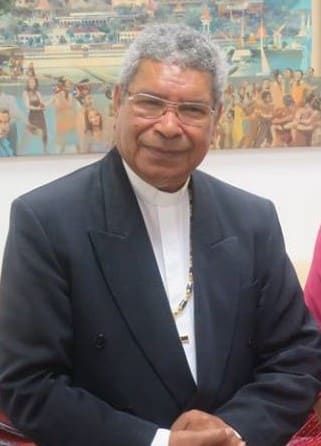
Carlos Filipe Ximenes Belo, Timor-Leste (portrait via Wikimedia Commons)

Carlos Filipe Ximenes Belo

Bishop of Dili, 1996 Nobel laureate, restricted by the Vatican in 2020 over abuse claims
Mari Alkatiri, Timor-Leste (portrait via Wikimedia Commons)

Mari Alkatiri

Fretilin founder and first prime minister, who negotiated the sea border with Australia
Taur Matan Ruak, Timor-Leste (portrait via Wikimedia Commons)

Taur Matan Ruak

Last Falintil commander, president 2012 to 2017 and prime minister 2018 to 2023
Nicolau Lobato, Timor-Leste (portrait via Wikimedia Commons)

Nicolau Lobato

Resistance leader killed in 1978. Dili's international airport carries his name
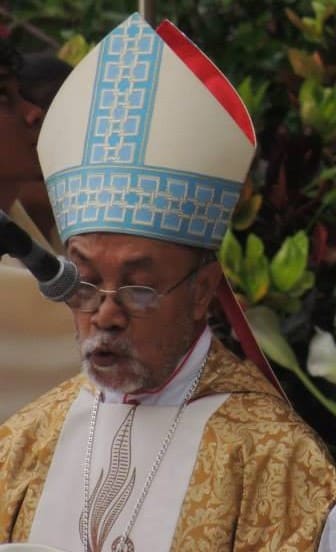
Alberto Ricardo da Silva, Timor-Leste (portrait via Wikimedia Commons)

Alberto Ricardo da Silva

Bishop of Dili from 2004, the Motael priest who sheltered students before Santa Cruz
Luís Cardoso, Timor-Leste (portrait via Wikimedia Commons)

Luís Cardoso

Leading novelist in Portuguese, author of The Crossing and an Oceanos prize winner
Maria Madeira

Maria Madeira

Artist who represented the country at the 2024 Venice Biennale, using tais and red earth
Ego Lemos

Ego Lemos

Tetum singer-songwriter whose song Balibo won an Australian Screen Music Award
Águida Amaral

Águida Amaral

Marathoner and first woman to represent the country at the Olympics, Sydney 2000
Gil da Cruz Trindade

Gil da Cruz Trindade

Marathoner and flag bearer at Athens 2004, the first Games as an independent nation

Must-try Timorese food

Grilled fish, fermented chilli, corn from the highlands and four centuries of Portuguese habits. Pick a category.

Ikan sabuko

Spanish mackerel marinated in tamarind, grilled with chilli and basil. The national plate.

Budu

Fermented anchovy sauce with calamansi, red onion and chilli. It comes with the fish.

Batar da'an

Corn, mung beans and pumpkin simmered with garlic. The everyday highland main.

Tukir

Goat cooked in green bamboo over a fire. Ceremony food in the east; accept it if offered.

Katupa

Rice cooked in coconut milk inside a woven palm-leaf pouch. Feast food that travels.

Saboko

Small fish pounded with tamarind and chilli, grilled in palm leaf. Street food.

Grilled reef fish

Caught that morning on Ataúro and the east coast. Order it whole, with rice and budu.

Feijoada

The Portuguese bean and pork stew, kept for four centuries and cooked slower here.

Caril

Mild chicken or goat curry in coconut milk. The safest order in a new town.

Bibinka

Layered coconut cake, grilled until the top caramelises. Market and festival food.

Timorese coffee

Ermera arabica. The Híbrido de Timor, found here in 1927, underpins rust-resistant coffee.

Know before you go

The essentials for planning a Timor-Leste trip.
Currency

US dollar

The US dollar, with local centavo coins, makes sums easy and prices high, since nearly everything is imported. Cards work in a few Dili hotels and machines stay in the capital. Carry cash beyond Dili.

Language

Tetum and Portuguese

Tetum and Portuguese are official. You will hear Tetum, read Portuguese on government buildings, find Indonesian understood by most over thirty, and English in Dili. Learn a dozen words of Tetum.

Power

220V, 50Hz, type C, E, F and I plugs

Sockets are mixed, so bring a universal adaptor. Outside Dili, Ataúro and mountain guesthouses often run on solar and generator hours; pack a power bank.

Emergency

112

112 is the general line, but mobile signal thins off the main roads and serious cases are evacuated to Darwin or Bali. Insurance that names medical evacuation is essential.

Visa

Tourist visa on arrival at Dili airport

Flying in, most nationalities get a 30-day visa on arrival, extendable once, paid in US dollar cash. Overland, most need an advance Visa Application Authorization. All file an online declaration.

Getting around

Microlets, buses, 4WD and ferries

Numbered microlets run fixed routes in Dili and towns. The sealed north coast highway and the Maubisse road suit a sedan. Elsewhere, hire a 4WD with a driver. Landslides close mountain roads when wet.

Ferries

Dili to Ataúro and Oecusse

The Berlin Nakroma and faster boats reach Ataúro from Dili port. The Berlin Ramelau runs overnight to Oecusse twice a week, or fly. Schedules move and boats go into refit: check the tourism board.

Tipping

Not expected, rounding up is normal

No tipping culture, and no service charge outside some Dili hotels. Rounding up is welcome. On multi-day trips, tip guides, boat crews and drivers: it is part of their income.

Religion

Overwhelmingly Catholic

Timor-Leste is among the most Catholic countries on earth, and the church carried the language and the resistance through the occupation. Mass fills on Sunday. Dress for it if you go in.

Health

Malaria and dengue risk, no reliable pharmacy chain

Dengue is year-round, peaking in the wet season; malaria risk is low but real outside Dili; tap water is unsafe everywhere. Bring your medicines and repellent, because Dili pharmacies are limited.

Independence

Restored 20 May 2002

Declared on 28 November 1975 and reversed by invasion nine days later. The referendum of 30 August 1999 ended the occupation, and sovereignty came on 20 May 2002. Most adults here lived through it.

ASEAN

Member since October 2025

Admitted as ASEAN's eleventh member in Kuala Lumpur in October 2025, the bloc's first expansion since 1999, after a bid lodged in 2011. Effects on flights, customs and prices will come slowly.

Timor-Leste travel FAQ

Do you need a visa for Timor-Leste?+
Most nationalities do not need one in advance if they fly in. A 30-day tourist visa is issued on arrival at Presidente Nicolau Lobato International Airport in Dili, extendable once for the same period, and the fee is paid in US dollars in cash at the counter, where there are no card facilities. Your passport needs six months of validity beyond arrival, and you will be asked to show funds and an address. Crossing by land is the exception: apart from Indonesian, Portuguese and United States nationals, a land border needs a Visa Application Authorization arranged before you travel. An online declaration is filed by every traveller before arrival and before departure. Check the Migration Service before booking, because both the exempt list and the fee are revised from time to time.
When is the best time to visit Timor-Leste?+
May to October, the dry season. That is when the mountain roads are passable, the rivers stop pushing silt into the sea and the diving off Ataúro is at its clearest. Inside that window, July is the most reliable and October is the most interesting, because the southbound pygmy blue whale migration through the Wetar Strait begins mid-month and runs into early December while the water is still clear. January to March is the wet season, when the landscape is spectacular and the logistics are not.
Is Timor-Leste safe for travellers?+
For ordinary travel, yes, and it has been for well over a decade. The unrest people remember dates from 2006, and the international peacekeeping mission left in 2012. The risks that actually matter here are practical: mountain roads with no barriers, landslides in the wet season, strong currents off the beaches, dengue year-round and a health system that evacuates serious cases abroad. Petty theft happens in Dili as it does anywhere. Read your own foreign ministry's current advice, then plan around the road and the water.
How do you get to Ataúro Island?+
By boat from Dili port, across the Wetar Strait. The government ferry Berlin Nakroma is the cheap and slow option, a few hours each way on a fixed weekly schedule, and smaller fast boats run the crossing in about an hour when they are operating. Sailings are limited, they change, and they are cancelled in bad weather, so build a spare day around the return and avoid a same-day connection to a flight. Once you are on the island, transport is a tuk-tuk between Beloi and Vila Maumeta, a boat along the coast, or a 4WD if you are going up into the interior.
How expensive is Timor-Leste?+
More than its neighbours, and the reason is structural. The currency is the US dollar, nearly everything manufactured is imported, and outside Dili there is very little competition in beds or vehicles. Local food and public transport are cheap, a plate at a warung or a microlet fare costing very little, but a guesthouse, a dive boat, a hired 4WD or a domestic flight are priced closer to a Pacific island trip than an Indonesian one. Budget in the region of seventy to a hundred and forty US dollars a day for a mid-range trip, and more if diving or vehicle hire is the point of it.
Is Timor-Leste part of Indonesia?+
No. It is a sovereign state, independent since 20 May 2002, and it occupies the eastern half of the island of Timor plus the Oecusse enclave on the north coast of the Indonesian half. Indonesia invaded in December 1975 and occupied the territory for twenty-four years; a United Nations referendum in 1999 ended that, followed by a transitional administration. In October 2025 Timor-Leste joined ASEAN as its eleventh member. The land border with Indonesian West Timor is a working international border with its own visa rules.

Planning a Timorese trip?

One fully-researched destination (ranked, mapped and paired with video) in your inbox every Thursday.

Photo credits (9)