Don't be a tourist, be a traveler, world in motion
◆ Country guide · Southeast Asia

Top 10s across Singapore

A city, an island and a country at once. Singapore is the most efficient introduction to Southeast Asia: four cultures on one small island, everything within an hour of everything else, and hawker food good enough to plan a trip around.

1
City guide
5,866,139
People
1
Video guide
4
Official languages
One island, and the quarters worth crossing it for
AllThe bay & civic districtThe heritage quartersOrchard & the green beltThe eastThe westThe northOffshore islands
Best months
Feb · Mar · Apr
Ideal length
3–4 days
Budget / day
$120–200
Language
English, plus Malay, Mandarin and Tamil
Getting around
MRT, buses and short taxi rides
Region Theme Budget Best month 1 guides
Grid Map
Quick answer · where to go in Singapore

Stay in the centre and treat the whole island as one city. Marina Bay is the postcard: the waterfront loop, Gardens by the Bay and the skyline from the Merlion. The heritage quarters are the reason to stay longer and they sit a few MRT stops apart, so give a morning each to Chinatown, Little India and Kampong Glam, and eat in hawker centres rather than restaurants. Then head east to Katong and Joo Chiat for Peranakan shophouses and laksa, take a half day in the Botanic Gardens or the rainforest trails of the central catchment, and add Sentosa if you are travelling with children. With one spare morning, catch the bumboat from Changi to Pulau Ubin, which is what the island looked like before the towers.

1 Singapore city guide

One guide so far, and it covers the whole island.

Fun fact

One number worth knowing

Singapore has grown by roughly a quarter since independence through land reclamation, and is still expanding.

Stereotypes, sorted out

The clichés you have heard, what is actually true, and how to fit in.
"It is a stopover, not a destination"

The realityIt was, when the airport was the point and the city was a night between flights. Three days is the honest minimum now: a day for the bay, a day for the quarters, a day for the east coast or the reserves. The food alone fills the time, and the queue outside the good stalls is the proof.

"It is sterile, a shopping mall with a flag"

The realityOrchard Road earns that description and almost nothing else does. Kampong Glam, Little India, Chinatown, Tiong Bahru, Geylang Serai and Katong are shophouse quarters with their own noise and smell, hawker centres are the loudest rooms in the country, and Pulau Ubin is a bumboat ride from all of it.

"It is too expensive to bother with"

The realityThe hotel rate is the expensive part, along with the drinks. Eat where residents eat and a full meal costs less than a coffee in most European capitals, and the MRT crosses the island for pocket change. The city is expensive to live in and cheap to eat in, which is an unusual and useful combination for a visitor.

"Chewing gum is illegal"

The realityChewing it is not. Importing and selling it has been banned since 1992, after gum jammed the doors on MRT trains, and pharmacists have been allowed to supply dental and therapeutic gum since the mid-2000s. The rule everyone repeats is a trade restriction, not a personal one.

"Everything is new"

The realityThe skyline is. The Botanic Gardens have been running since 1859 and were listed by UNESCO in 2015, the shophouse quarters are nineteenth and early twentieth century, and the temples, mosques and churches between them predate every tower on the waterfront.

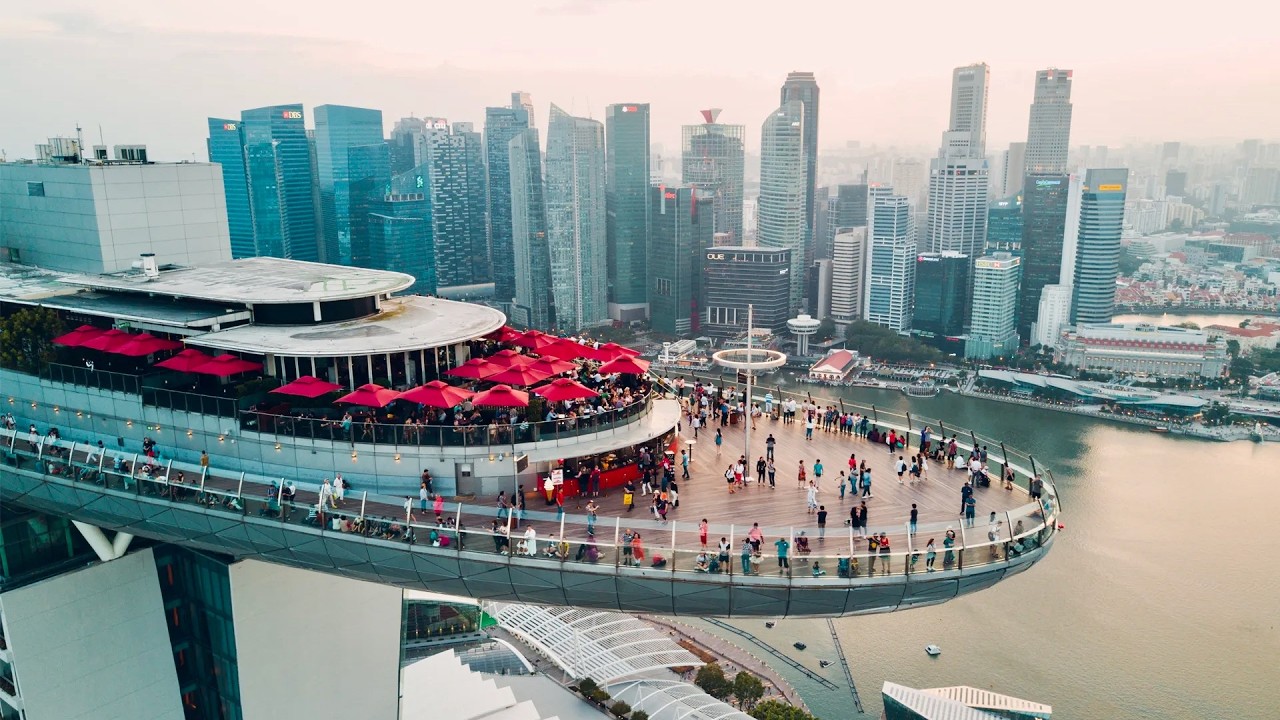
The Merlion, photographed mid-spitA Singapore Sling at Raffles, ordered once and never again at that priceSomeone explaining the chewing gum law within an hour of landingA packet of tissues on a hawker table, holding a seat nobody would take anywayThe Marina Bay Sands rooftop, in every second photograph of the tripAir conditioning set to arctic in every mall, and a jumper packed for the tropicsA queue treated as proof that the stall is worth it, which it usually is

How to fit in

  • Choping is real: a packet of tissues left on a hawker centre table reserves it, and the seat is taken even though it looks empty.
  • Clear your own table. Tray return at hawker centres and food courts stopped being a suggestion in 2021.
  • Queue, and do not treat the queue as negotiable. It is the closest thing the country has to a national sport.
  • Cover shoulders and knees at temples and mosques, and take your shoes off where the sign or the pile of shoes says so.
  • Eating and drinking on the MRT is fined, and durian is banned outright, sign and all.
  • English carries every conversation, so Singlish is a register to enjoy rather than to imitate.
  • Ask before photographing people at work in a hawker stall or a market, and do not block the queue to do it.

Famous Singaporean faces

A founding prime minister, an Olympic champion, a badminton world champion and the voices of Mandopop. Pick a field.
Lee Kuan Yew

Lee Kuan Yew

Prime minister from 1959 to 1990 and the architect of the modern state, through separation from Malaysia in 1965 and everything after it
Joseph Schooling

Joseph Schooling

Won Singapore's first Olympic gold in the 100m butterfly at Rio 2016, beating Michael Phelps in an Olympic record of 50.39
Stefanie Sun

Stefanie Sun

The biggest Mandopop voice the country has produced, and a Golden Melody winner for both best new artist and best female vocalist
Lawrence Wong

Lawrence Wong

Prime minister since May 2024, the fourth since independence and the first born after it
Tharman Shanmugaratnam

Tharman Shanmugaratnam

President since September 2023, after two decades in government as finance minister and deputy prime minister
Halimah Yacob

Halimah Yacob

President from 2017 to 2023, the first woman to hold the office
Loh Kean Yew

Loh Kean Yew

Beat the Olympic champion and the world number one on the way to the 2021 badminton world title, the first Singaporean world champion in the sport
Yip Pin Xiu

Yip Pin Xiu

Seven Paralympic golds in the pool between Beijing 2008 and Paris 2024, all of them in backstroke
Fandi Ahmad

Fandi Ahmad

The first Singaporean to play professionally in Europe, scoring for Groningen against Inter Milan in 1983, and 55 goals for the national team
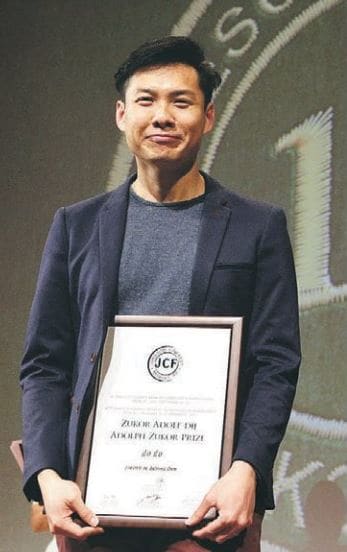
Anthony Chen

Anthony Chen

Took the Camera d'Or at Cannes in 2013 with Ilo Ilo, his first feature, set during the 1997 financial crisis
Fann Wong

Fann Wong

The first Singaporean actress to land a Hollywood role, opposite Jackie Chan in Shanghai Knights in 2003
Sonny Liew

Sonny Liew

Won three Eisner Awards in 2017 for The Art of Charlie Chan Hock Chye, a graphic novel that retells the country's own political history
Kevin Kwan

Kevin Kwan

Singapore-born novelist whose Crazy Rich Asians, published in 2013, put the island's old-money families in front of a global audience
Catherine Lim

Catherine Lim

Short-story writer whose 1978 collection Little Ironies: Stories of Singapore sits on every list of the country's classic books
JJ Lin

JJ Lin

Singer and producer, and the Golden Melody best Mandarin male singer of 2014, who fills arenas across the region
Dick Lee

Dick Lee

Songwriter behind Home, written in 1997 and first sung at the 1998 National Day Parade, which the country now treats as a second anthem
Chan Hon Meng

Chan Hon Meng

The soya sauce chicken rice hawker whose stall took a Michelin star in 2016, one of the first two street stalls anywhere to get one
Violet Oon

Violet Oon

Cook and food writer who spent decades recording Peranakan and Singaporean home cooking before anyone else was writing it down

Must-try Singaporean food

Hawker plates, noodle bowls and two ways with crab. Pick a category.

Hainanese chicken rice

Poached chicken over rice cooked in its stock, with chilli, ginger and dark soy on the side. The dish the country argues about most.

Chilli crab

Mud crab in a thick sweet and savoury chilli gravy, invented here in the 1950s. Order the fried mantou buns to mop the plate.

Black pepper crab

The drier, hotter alternative: crab wok-tossed in butter and a heavy crack of black pepper. Locals are split on which is better.

Laksa

Rice noodles in coconut and prawn gravy with cockles. The Katong version cuts the noodles short so the whole bowl is eaten with a spoon.

Char kway teow

Flat rice noodles fried hard over high flame with egg, cockles, sweet soy and lard. Smoke is the point.

Hokkien mee

Yellow noodles and vermicelli braised in prawn stock, finished with lime and a spoon of sambal.

Bak chor mee

Minced pork noodles sharp with vinegar and chilli. The Hill Street stall holds a Michelin star, and the queue to match.

Bak kut teh

Pork ribs in a peppery garlic broth, eaten at breakfast with fried dough sticks and a pot of tea.

Satay

Charcoal skewers of chicken, mutton or beef with peanut sauce, cucumber and pressed rice cakes. Ordered by the dozen after dark.

Fish head curry

A red snapper head in a tamarind curry, created in Singapore in 1949 by a Kerala-born cook feeding Chinese customers, and claimed by everyone since.

Chai tow kway

Radish cake cut into cubes and fried with egg and preserved radish. White is savoury, black is finished with sweet soy.

Rojak

Fruit, dough fritters and cucumber tossed in prawn paste, sugar and lime, with crushed peanuts over the top. Sweet, sour and pungent at once.

Roti prata

Dough thrown, folded and griddled crisp, served with fish or mutton curry. Plain, egg or cheese, at any hour of the day.

Kaya toast

Charcoal-toasted bread with coconut and egg jam and a cold slab of butter, eaten with soft-boiled eggs seasoned with dark soy and white pepper.

Nasi lemak

Coconut rice with fried anchovies, peanuts, egg and sambal, wrapped in banana leaf at the Malay stalls.

Chendol

Shaved ice over coconut milk, palm sugar and green pandan jelly noodles. The best answer to the middle of the afternoon.

Ice kacang

A mound of shaved ice built over red beans, sweetcorn and jelly, poured with syrup and evaporated milk.

Kopi

Coffee brewed through a cloth sock and ordered in code: kopi-o is black, kopi-c uses evaporated milk, kosong means no sugar.

Teh tarik

Tea pulled between two jugs until it foams, sweet with condensed milk. The Malay and Indian stalls make the best of it.
Singapore travel FAQ

How many days do you need in Singapore?+
Three to four. One day covers the bay, the civic district and Gardens by the Bay, a second the heritage quarters of Chinatown, Little India and Kampong Glam, and a third the east coast at Katong and Joo Chiat or the greenery of the Botanic Gardens and the central catchment. A fourth buys Sentosa, Pulau Ubin or the zoo at Mandai. Anything longer is a food trip, which is a defensible way to spend a week.
Do you need a visa for Singapore?+
Most passports do not. Visa-free entry runs to 30 or 90 days depending on nationality, and holders of other passports apply for a visa before travelling. What almost everyone does need is the SG Arrival Card, submitted free online within three days before arrival, with transit passengers and residents entering by land the main exceptions. Check the Immigration and Checkpoints Authority page close to booking, because the arrival card rules have changed more than once.
When is the best time to visit Singapore?+
February and March. Sitting almost on the equator, Singapore has no cool season and no real dry season, so the question is only how much rain you want. February is the driest month, November to January the wettest, and December the wettest of all. The rain arrives as short heavy downpours rather than all-day grey, so it rearranges an afternoon rather than a trip. Book well ahead around National Day in August, the Formula 1 night race and the Christmas weeks.
Is Singapore expensive?+
The hotels and the alcohol are, the rest is not. A hawker centre meal costs a fraction of a restaurant one and is often the better plate, the MRT is cheap and reaches nearly everything, and the museums and gardens are modestly priced or free. The bill to watch is the bar tab: a cocktail in the centre costs what a full hawker dinner for two does. Budget for a ten percent service charge and GST on restaurant bills, neither of which appears on the menu price.
What rules do visitors actually need to worry about?+
Fewer than the stories suggest, but they are enforced. Do not eat or drink on the MRT, do not litter or smoke outside the marked areas, and do not drink in public between half past ten at night and seven in the morning. Chewing gum is legal to chew and illegal to import or sell, which is why nobody sells it. The one to take seriously is drugs: trafficking carries the death penalty, and the law makes no allowance for visitors.

Know before you go

The essentials for planning a Singapore trip.
Currency

Singapore dollar (SGD)

Cards and phones are accepted almost everywhere, including a growing share of hawker stalls, which take contactless and QR payments. Older stalls and the wet markets still want small notes and coins.

Language

English, plus Malay, Mandarin and Tamil

Four official languages, with English the language of government, business and schooling, so nothing about the trip needs a phrasebook. Malay is the national language and the anthem is sung in it. Singlish is the local register, and it is faster than it sounds.

Power

230V · Type G

The same three-pin plug as the UK, so British chargers go straight in.

Emergency

999 police · 995 fire and ambulance

Both are free and answered around the clock. Where it is not safe to speak, the same services take an SMS on 70999 and 70995.

Visa

Visa-free for most passports, arrival card for everyone

Most nationalities enter without a visa, typically for 30 or 90 days depending on the passport. The SG Arrival Card is separate and applies to almost every arrival: it is free, submitted online within three days before you land, and travellers who skip it can be refused entry. Check the immigration authority's own page rather than a booking site.

Getting around

MRT, buses and a contactless card

The MRT reaches Changi Airport and most of what a visitor wants, and buses fill the gaps. Tap in and out with a contactless bank card or phone through SimplyGo, or buy a stored-value or tourist pass at a station office. Taxis and ride apps are metered and reasonable for short hops.

Tipping

Not expected

Restaurants usually add a ten percent service charge, and GST is charged on top of it, so the bill is higher than the menu. Hawker centres add neither and take no tips.

Alcohol

No public drinking between 10.30pm and 7am

The Liquor Control Act sets that window nationwide, and shops stop selling takeaway alcohol at the same hour. Geylang and Little India are designated liquor control zones with tighter weekend rules. Licensed bars and restaurants keep serving as normal.

Laws to know

Fines are real, and drug penalties are severe

Littering, jaywalking, eating or drinking on the MRT and smoking outside marked areas all carry fines. The 1992 law bans the import and sale of chewing gum rather than the chewing of it. Drug offences carry Singapore's heaviest penalties, including death for trafficking, and the law applies to visitors.

Water

Safe from the tap

Tap water meets national drinking standards across the island, so a refillable bottle saves both money and plastic in the heat.

Climate

Equatorial, hot and humid all year

Daytime temperatures sit in the high twenties and low thirties every month, and the rain comes as short heavy downpours rather than grey days. November to January is the wettest stretch and February the driest month.

Time zone

SGT (UTC+8)

Eight hours ahead of UTC, with no daylight saving, which is why sunset lands close to seven all year.

When to visit Singapore

Hot and humid all year. February and March are the driest, and the rain sets in from November.
Full month guide →
Jan
Feb
Mar
Apr
May
Jun
Jul
Aug
Sep
Oct
Nov
Dec
Best: February and March, the driest stretch of the year Peak: National Day, the night race and the Christmas weeks Good: warm and bright, with rain arriving late in the day Off: the wet monsoon phase, November to January

Singapore by theme

Themed Top 10s that take in the island.
All themes →

Singapore on Wimup Videos

Films to watch before you book.
YouTube ↗

Planning a Singapore trip?

One fully-researched destination (ranked, mapped and paired with video) in your inbox every Thursday.