Sierra Leone, an Atlantic beach coast with a rainforest behind it
The beaches on the peninsula south of Freetown are among the best on the Atlantic coast of Africa, and almost nothing has been written about them in English. There are chimpanzees in the hills behind the capital, slave-fort ruins on islands offshore, and since July 2025 a UNESCO World Heritage listing in the forest on the Liberian border.
1
City guide
7,548,702
People
16
Districts
Region
Best months
Nov · Jan · Feb
Ideal length
10–14 days
Budget / day
$60–150
Language
English officially, Krio everywhere, with Mende in the south and east and Themne in the north
Getting around
Poda-poda minibuses and kekeh tricycles in town, a hired 4x4 with a driver between them, and a water taxi from the airport
When to visit Sierra Leone
One dry season worth planning around, one very wet one, and a haze that arrives with the good months.
Best: January and February, dry roads, dry beaches and the whole country reachable Good: March, April and November, the shoulders either side of the rains Wet: May to October, when the forest is at its best and the roads are at their worst
Quick answer · where to go in Sierra Leone
Give the Freetown peninsula half your trip and do not feel bad about it. The city is worth two days for the museums, the Big Market and the Cotton Tree site, and the one road south then delivers a beach an hour: Lakka and Tokeh for a base, River No. 2 for the picture, Bureh for the surf club, Kent for the boat to the Banana Islands. Add Tacugama in the hills above town for the chimpanzees and Bunce Island upriver for the history that explains the rest. Then pick one direction inland. Southeast is the rainforest: Tiwai Island in the Moa river and the Gola Rainforest National Park on the Liberian border, inscribed together by UNESCO in 2025, staged out of Bo and Kenema. North is the high country: Kabala, the Loma Mountains and Mount Bintumani, with Outamba-Kilimi out west of it. South by boat is Sherbro Island and the Turtle Islands, which want time rather than money. Travel November to April, hire a 4x4 with a driver for anything off the trunk roads, and book the airport water taxi before you fly.
Sierra Leone got its first UNESCO World Heritage site on 13 July 2025, when the committee inscribed the Gola-Tiwai Complex: the Gola Rainforest National Park along the Liberian border together with the Tiwai Island Wildlife Sanctuary in the Moa river. Between them the four component parts hold more than 1,000 plant species, 113 of them found nowhere else, 55 mammals and up to 448 birds, and one of only seven sites anywhere with a stable high-density population of western chimpanzee.
Stereotypes, sorted out
What people think they know about Sierra Leone, what is actually true, and how to behave once you land.
"Sierra Leone is still a war zone."
The realityThe civil war ran from 1991 and was declared over in January 2002. The United Nations peacekeeping mission wound up in 2005, and every presidential election since has been held on schedule, with power changing hands between the two main parties more than once. What shapes a trip now is unglamorous and ordinary: unlit roads, thin emergency cover outside Freetown, opportunistic street theft, and a rainy season that closes routes. Read a current advisory rather than a memory of the news.
"Ebola makes it unsafe to visit."
The realityThe World Health Organization declared the outbreak over in Sierra Leone on 7 November 2015, followed by a ninety-day enhanced surveillance period that ran into February 2016, and the country has had no epidemic since. The health risks a visitor should actually plan for are the ones that were always here. Malaria is year-round and prophylaxis is the norm, a yellow fever certificate is an entry requirement, and serious care means an evacuation rather than a local hospital.
"It is the blood diamond country."
The realityOne Hollywood film fixed an entire nation in the popular imagination at the worst moment in its history. Diamonds are mined in Kono district in the east, they are a real and complicated part of the economy, and Koidu is a working mining town rather than a spectacle. None of that is where a visitor goes. The beaches, the chimpanzee sanctuary, the Gola forest and the islands are on the other side of the country, and nobody there will bring the subject up.
"There is nothing to see because there is no tourism industry."
The realityThe absence is infrastructure, not sights. The peninsula beaches are as good as anything on this coast, Tacugama is one of the better-run primate sanctuaries in Africa, Bunce Island is among the most significant slave-trade sites on the continent, and the Gola-Tiwai Complex is now a World Heritage site. What does not exist is the layer that usually sits between a traveller and those places: a handful of operators, a few community projects and some small guesthouses are the booking system, and things are arranged ahead rather than turned up to.
"Everyone speaks English so you will be fine."
The realityEnglish is official and it is what you will read. It is not what you will hear. Krio carries ordinary conversation across the whole country, and it takes several days to stop sounding like a language you nearly understand. Mende and Themne carry the south and the north between them. A visitor who learns to say kushe and tenki gets a noticeably different week.
That the beaches are a resort strip. They are one road, a string of villages, and mostly small owner-run guesthouses. There is no chain hotel on the peninsula and the point of the place is that there is not.That Freetown is only somewhere to leave. Give it two days. The museums are small and good, the Big Market is the best place in the country to buy anything made here, and the view down from the hills is the reason the city was built where it was.That the sea is the safe part. The Atlantic here has serious rip currents and no lifeguards anywhere. Ask locally which stretch is swimmable that week and believe the answer.That Bunce Island can be fitted into a spare morning. It is a boat trip up the estuary and back and it takes most of a day, and it is the piece of the country most visitors talk about afterwards.That the rainy season is dead time. It is when the forest is at its most alive and the coast at its emptiest and cheapest. It is the unpaved roads that pay for it, and the boats that stop being reliable.That you can drive yourself around. You can, on the trunk roads. Off them, a driver who knows which crossing is passable this month is worth more than the vehicle.
How to travel well in Sierra Leone
Greet before you ask. Walking up and opening with a question reads as rude. Kushe is hello in Krio and thirty seconds of how is the body and how is the family changes the whole exchange.
Shake hands with everyone in the room, and take the offered hand with your right. The Krio handshake often finishes with a finger snap; watch it done once and copy it.
Ask before photographing people, and do not photograph the airport, bridges, military or police installations or anyone in uniform. Explaining yourself afterwards is slow and avoidable.
Dress covered away from the beach. Swimwear stays on the sand; an office, a chief's compound, a church or a mosque wants covered shoulders and long trousers or a skirt.
Christians and Muslims here live more closely mixed than almost anywhere, often inside the same family, and both calendars are marked by everyone. Do not assume which one you are talking to.
The Poro and Bondo societies remain part of ordinary rural life and are not a display. If a village tells you a road, a grove or an event is closed to outsiders, that is the whole answer and it is not negotiable.
Famous Sierra Leonean faces
An Amistad rebel, an anti-colonial commander, a Commonwealth Prize novelist, a ballerina and an Inter Milan striker. Pick a field.
Sengbe Pieh
The Mende man, taken from what is now southern Sierra Leone, who led the 1839 revolt aboard the schooner Amistad. The United States Supreme Court freed him and his companions in 1841 and they sailed home the following year. He is on the currency, and the case is on every American history syllabus.
Bai Bureh
Bai Bureh
The Temne ruler and military strategist who led the 1898 rising against the British hut tax in the northern protectorate and held colonial forces off for months. Sierra Leonean historians date the fight for independence from him.
Ahmad Tejan Kabbah
President from 1996 to 1997 and again from 1998 to 2007, and the man who declared the civil war over in January 2002. A lawyer and long-serving UN official before the presidency, and the figure most associated with the settlement that held.
Aminatta Forna
Aminatta Forna
Novelist and memoirist, brought up partly in Freetown. The Devil that Danced on the Water reconstructs her father's arrest and execution under the one-party state, and The Memory of Love won the Commonwealth Writers' Prize in 2011.
Ishmael Beah
Author of A Long Way Gone, the memoir of being conscripted as a child soldier that became the most widely read book about the war anywhere. A UNICEF goodwill ambassador and an advocate for children affected by conflict.
S. E. Rogie
S. E. Rogie
The palm-wine guitarist whose fingerpicked, unhurried style carried Sierra Leonean music into the world. My Lovely Elizabeth was the biggest of a long run of hits across a career of nearly fifty years, and the records still sound like the coast they came from.
Mohamed Kallon
Mohamed Kallon
Born in Kenema and the most successful footballer the country has produced. A striker at Inter Milan from 2001 to 2004 and then Monaco, with a Coppa Italia to show for it, and later head coach of the Leone Stars.
Michaela DePrince
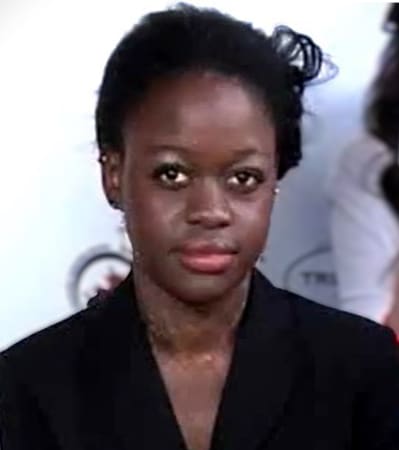
Born Mabinty Bangura in Kenema in 1995 and orphaned by the war, she was adopted from a Freetown orphanage and became a soloist with the Dutch National Ballet and then Boston Ballet, and danced in Beyoncé's Lemonade. She died in 2024, aged 29.
Sir Milton Margai
A physician by training and the country's first prime minister, who led Sierra Leone to independence from Britain on 27 April 1961 and governed until his death in 1964.
Siaka Stevens
Prime minister and then president, in power from 1968 until he stepped down in 1985, and the architect of the one-party state under the All People's Congress. The most consequential and most argued-about figure in the country's post-independence history.
Julius Maada Bio
President since 2018 and re-elected in 2023. He had briefly led a military junta in 1996 and handed power to an elected civilian government, then returned two decades later by winning an election.
Syl Cheney-Coker
Syl Cheney-Coker
Poet, novelist and journalist from Freetown. The Last Harmattan of Alusine Dunbar won the Commonwealth Writers' Prize for Africa in 1991 and remains the country's best-known novel.
Sorious Samura
Sorious Samura
The journalist who filmed Cry Freetown inside the January 1999 rebel assault on the capital, at his own expense and at obvious risk. The film won an Emmy and a Peabody and is still the primary visual record of that week.
Emmerson Bockarie
Emmerson Bockarie
The Afropop singer known simply as Emmerson, who sings in Krio and English and whose records about corruption and power have made him the country's most quoted popular musician.
Ebenezer Calendar
Ebenezer Calendar
The Freetown musician who took Krio gumbe and maringa out of the city and across West Africa between the 1930s and the 1960s. Everything the country has recorded since sits somewhere downstream of him.
Kei Kamara
Born in Kenema and raised partly in a refugee camp before moving to the United States, he became one of the highest-scoring forwards in Major League Soccer history and the first player to score in seventeen different MLS seasons.
Eunice Barber
Born in Freetown and a world champion twice over, taking the heptathlon title in 1999 and the long jump in 2003. She competed for Sierra Leone before switching allegiance to France.
Idris Elba
The London-born actor and producer, son of a Sierra Leonean father, whose work in The Wire, Luther and Mandela: Long Walk to Freedom made him a household name. He has campaigned and invested in the country his family came from.
Must-try Sierra Leonean food
Rice underneath, palm oil through it, and a leaf sauce on top. Pick a category.
Okra soup
Okro, finely chopped so it releases everything it has, cooked with fish or meat into a thick savoury sauce. The other great slippery dish, and the one most often eaten with fufu rather than rice.
Jollof rice
Rice cooked through a tomato and pepper base with chicken, beef or fish. Sierra Leone is rarely named in the regional jollof argument, which has never stopped anyone here holding a firm position on it.
Rice bread
A dense sweet loaf of rice flour with mashed ripe banana or plantain and ginger through it, baked in the Krio tradition of Freetown. Sold in slabs, eaten with tea, and the right thing to carry on a long drive.
Cassava leaves
The national plate. Cassava leaves pounded to a fine dark paste and cooked slowly with palm oil, groundnut, smoked fish or meat and pepper, then spooned over rice. Heavier and richer than the colour suggests, and the dish people will ask whether you tried.
Potato leaves
Sweet potato leaves given the same treatment, chopped rather than pounded so the texture stays coarser. Everyday food rather than special-occasion food, and the leaf is the crop here, not the tuber.
Krain krain
Jute leaves cooked down until they are deliberately slippery, which is the point and the thing visitors either love or quietly leave. Palm oil, onion, chilli and smoked fish, sometimes finished with ground sesame.
Groundnut stew
Peanuts ground to a paste and cooked out with tomato, onion, pepper and chicken, beef or fish until it coats the rice. Sweeter and milder than the palm-oil sauces beside it, and the easiest entry point on this list.
Pepper soup
A thin, fierce broth of fish, goat or offal, associated with the Sherbro and Mende coast and eaten as a starter, a cure and a comfort. Ordered hot by default and hotter than most visitors expect.
Bitter leaf
Washed bitterleaf stewed with palm oil, dried fish and plenty of pepper. The bitterness is cut rather than removed, and that is deliberate.
Rice and sauce
The default meal of the country: a mound of rice with a leaf sauce or a stew poured over it. Rice is the staple to a degree that someone who has eaten anything else will still tell you they have not eaten.
Fufu
Fermented cassava pounded to a smooth elastic dough, torn off in pieces and swallowed rather than chewed. Chewing it is the tell that you are new here. Eaten with okra or pepper soup.
Gari
Cassava grated, fermented and toasted into coarse granules. Soaked in water with sugar and groundnuts it is a cold snack; stirred into hot water it becomes eba, and it keeps for months, which is why it travels.
Binch akara
Black-eyed peas blended with onion and pepper and deep-fried into crisp golden fritters. Breakfast, street snack, and the thing to buy from the woman with the pan on the corner rather than from a restaurant.
Fry fry
The catch-all name for the fried-street-food table: akara, fried plantain, puff-puff dough balls, sometimes fish. Assembled to order, eaten standing up, and the cheapest good food in the country.
Poyo
Palm wine, tapped from the tree and drunk the same day: sweet and lightly fizzing in the morning, sharper by evening as it keeps fermenting. Bought by the gourd from whoever climbed for it, and the drink an entire genre of Sierra Leonean guitar music is named after.
Sierra Leone travel FAQ
Do you need a visa for Sierra Leone?+
Citizens of ECOWAS member states enter without one under the regional free-movement protocol. Most other nationalities need a visa and have two routes: an electronic visa applied for online before travel, or a visa issued on arrival at the airport. The online route is the one worth taking, because it removes a queue from the end of a long flight and a water crossing. Proof of yellow fever vaccination is a separate entry requirement and is checked. Requirements and fees change, so confirm the current position with a Sierra Leonean mission or your own government's travel advice rather than with any summary.
Is Sierra Leone safe to travel in?+
The civil war was declared over in January 2002 and the United Nations peacekeeping mission left in 2005, so what a visitor plans around now is ordinary risk rather than political risk. In practice that means opportunistic theft in Freetown and on the beaches, unlit roads with heavy traffic and no verges, emergency services that may not answer outside the capital, and Atlantic rip currents on beaches with no lifeguards. Medical care beyond the basic means an evacuation, so insurance that covers one is not optional. Read your own government's current advisory before you book.
When is the best time to visit Sierra Leone?+
November to April, and within that January and February are the pick. The dry season delivers firm roads, reliable boat crossings and the beaches at their best, with the trade-off that the harmattan blowing off the Sahara from about December to February can haze the light. March and April are hotter and stormier but still work. May to October is one of the wettest rainy seasons in West Africa, with July and August at the peak: the forest is at its most spectacular and the coast at its cheapest, but unpaved roads deteriorate badly and nothing inland should be planned to a timetable.
How do you get from the airport to Freetown?+
Freetown International Airport is at Lungi, on the opposite side of the Sierra Leone River from the city, so every arrival crosses the water. Licensed water taxis and a ferry both operate, both bundle the short road transfer at the Lungi end, and the operators time departures around flight arrivals, dropping passengers either in central Freetown or at Aberdeen, which is where most of the hotels are. Arrange the crossing through your hotel before you fly. Doing it any other way at midnight is the single most common way a first trip here starts badly.
Which beach should you pick on the peninsula?+
It depends what you want the week to be. Lumley and Aberdeen are Freetown's own beaches, closest to the restaurants and the nightlife and the busiest. Lakka and Hamilton are half an hour further and quieter, with small guesthouses on the sand. River No. 2 is the famous one, a river mouth in a cove backed by forest, and it is run as a community project. Tokeh has the widest stretch and the smartest places to stay. Bureh is where the surf club is and where the waves are most consistent. Kent, at the end of the road, is where boats leave for the Banana Islands.
Know before you go
The essentials for planning a trip here, starting with a water crossing and a yellow fever certificate.
Currency
Sierra Leonean leone (SLE), redenominated in 2022
The leone was cut by a factor of a thousand in 2022 and old and new notes circulated side by side through the changeover, so a quoted figure can still mean two different things. Ask which leone. Cards work in a handful of Freetown hotels and essentially nowhere else, ATMs are concentrated in the capital, and mobile money carries a great deal of ordinary trade. Bring US dollars to change, carry small notes, and do not assume a machine will be working.
Language
English is official; Krio is what the whole country speaks
Government, schooling and signage run in English. Ordinary life runs in Krio, an English-based creole that began with the Freetown settler communities and is now the first language of a few hundred thousand people and the second language of almost everyone else. Mende dominates the south and east, Themne the north, and Limba, Kono, Fula and Susu carry large communities besides. Ten words of Krio will change how a week here goes.
Visa
ECOWAS free; an e-visa or visa on arrival for most others
Citizens of ECOWAS member states enter without a visa under the regional protocol. Most other nationalities apply online in advance or take a visa at the airport, and the online route is the one that avoids a queue after a long flight. Requirements move, so check the current position with a Sierra Leonean mission or your own government's advice rather than a summary.
Proof of yellow fever vaccination is an entry requirement for travellers over nine months old and is checked on arrival. Malaria is present all year across the whole country and prophylaxis is standard advice. Hospital capacity outside Freetown is thin and anything serious means an evacuation, so insurance that covers one is the single most useful purchase before flying.
Getting there
Freetown International Airport at Lungi, across the estuary
The airport sits on the north side of the Sierra Leone River and the city is on the south, so every arrival makes a water crossing. Licensed water taxis and a ferry both run and both include the road transfer at the Lungi end; the operators time their departures to flights. Book the crossing with your hotel before you fly rather than negotiating it in an arrivals hall at midnight. A new passenger terminal opened in 2023.
Getting around
Poda-poda and kekeh in town, a hired 4x4 with a driver between them
Poda-poda minibuses and kekeh tricycle taxis cover Freetown and the larger towns cheaply, and okada motorbike taxis go where neither will. The trunk roads to Bo, Kenema and Makeni are surfaced and drivable; almost everything past them is laterite that the rains take apart. For the parks, the mountains and the peninsula beaches, a 4x4 hired with a driver is the answer rather than a rental car.
Tipping
Not obligatory, modest, and in cash
There is no fixed convention. Rounding up for a driver, a guide or a boat crew who has worked hard is welcome and normal in the tourism trade. Some Freetown hotels and restaurants add a service charge, and where they do nothing further is expected.
Power
230 V, 50 Hz, sockets D and G
British three-pin plugs fit most of what you will meet, with the older round-pin type D still in service in places. Grid supply is intermittent and generators and solar do a lot of the work, so a power bank matters more than an adaptor and a head torch is not a luxury.
Emergency
999 for police, fire and ambulance
The number exists and is worth knowing, but response capacity is limited and a call may go unanswered outside the capital. For anything medical, the practical first calls are your insurer's assistance line and your own embassy.
Travel advice
Read your own government's advisory before booking
The advisories written about Sierra Leone now deal with petty crime, road safety, swimming conditions and medical capacity rather than with conflict. They are specific enough to be useful about which parts of Freetown to avoid after dark and what the current health picture is. The FCDO, the US State Department and Smartraveller all publish one.
Planning a Sierra Leonean trip?
One fully-researched destination (ranked, mapped and paired with video) in your inbox every Thursday.
Photo credits (12)
Sengbe Piehphoto by Nathaniel Jocelyn, Public domain
Ahmad Tejan Kabbahphoto by Christian Lambiotte / European Communities, CC BY 4.0