
Don't be a tourist, be a traveler, world in motion
Plan a trip
Live destination map
◆ Country guide · East Africa

Seychelles, island by island

115 islands, and the trip is decided by which of them you sleep on. Three carry almost every visitor, a handful more take paying guests, and the rest are granite, sand and protected water.

1
City guide
119,878
People
115
Islands
2
UNESCO sites
Region
Best months
Apr · Oct · Nov
Ideal length
8–12 days
Budget / day
$150–450
Language
Seychellois Creole
Getting around
Ferries, Twin Otters & bicycles

When to visit Seychelles

Two trade winds, and the best weeks are the turns between them.
Full month guide →
Jan
Feb
Mar
Apr
May
Jun
Jul
Aug
Sep
Oct
Nov
Dec
Best: April, October and November, the calm turns between the two trade winds Peak: December and January, when the holidays price the islands Good: February, March, May, June and September, either side of the wind Windiest: July and August, when exposed coasts collect seaweed and rates drop
Quick answer · where to go in Seychelles

Everyone lands at Mahé, and the next decision is how far past it you go. Mahé itself holds the capital, the mountain trails and the widest choice of places to eat and sleep, and it is the only island where a week can be spent without a boat. Praslin is an hour away by fast ferry or a quarter of an hour by Twin Otter, and it holds the Vallée de Mai, where the coco de mer grows wild. La Digue is fifteen minutes beyond Praslin, small enough to cross by bicycle, and the reason the country appears on every beach list. Two of those three make a first trip, and three make a better one. Past them sit the private islands, one property or reserve each, reached by their own transfer, and the outer islands, hundreds of kilometres southwest, which are a separate holiday with separate flights.

1 Seychelles city guide

The country layer comes first here. Island guides follow it.

Fun fact

One number worth knowing

The coco de mer palm produces the largest and heaviest seed in the plant kingdom, up to about 25 kilograms, and it grows wild in exactly two places on earth: the Vallée de Mai on Praslin and neighbouring Curieuse.

Stereotypes, sorted out

The clichés you have heard, what is actually true, and how to fit in.
"Seychelles is a honeymoon destination and nothing else."

The realityThat is one product, sold hard. The islands also hold a national park over most of Mahé’s interior, two UNESCO World Heritage sites, a granite hiking network, and self-catering guesthouses that outnumber the resorts. Couples are the marketing; the country is broader than the brochure.

"You need a private island budget to go."

The realityGuesthouses and self-catering apartments are the majority of the beds here, and the bus on Mahé and Praslin reaches almost every bay for a flat fare. The ferry between the three main islands is a public service, not a charter. The expensive trip is the one that flies to a private island; the ordinary one does not.

"The islands are all the same postcard."

The realityMahé is a mountain with a capital on it. La Digue is flat enough to cycle and mostly car-free. Bird and Denis are coral cays on the edge of the bank with no granite at all. Aldabra is a raised atoll 1,000 kilometres away with more giant tortoises than people anywhere in Seychelles.

"There is nothing to do but lie on the sand."

The realityThe interior of Mahé is protected forest with marked trails up Morne Seychellois. Praslin holds the Vallée de Mai. Curieuse has free-ranging tortoises. The diving runs from granite boulder sites in the inner islands to remote atoll walls in the outer ones, and the fishing on the Amirantes flats draws people who never touch a beach.

Honeymoons and nothing elseImpossible on a normal budgetOne beach, repeated 115 timesYou will never meet a SeychelloisIt is just another Indian Ocean resort islandEverything has to be booked through a hotel

How to fit in

  • Greet people before anything else. A bonzour or a good morning comes before the question, and skipping it reads as rude in a way it does not at home.
  • Cover up away from the sand. Swimwear is for the beach; a shirt goes on for the shop, the bus and the restaurant. Topless sunbathing is not the norm here.
  • Sunday is quiet and largely Catholic. Shops shut, buses thin out, and the churches fill. Plan a beach day rather than a shopping one.
  • The shells, the coral and the coco de mer are regulated. A coco de mer nut needs an official export permit, sold with the nut by licensed vendors, and taking shells or coral off a beach is an offence.
  • Ask before photographing people, and especially before photographing a house. A camera pointed down a residential lane is not read as tourism.
  • Marine parks charge a fee and enforce it. Boat crews collect it, the money funds the parks, and arguing about it on the water goes nowhere good.

Famous Seychellois faces
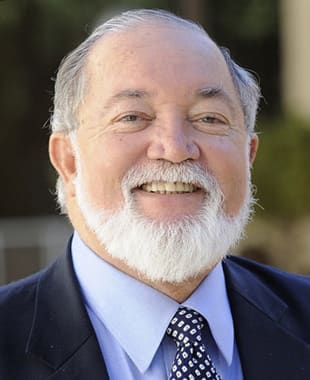
The names behind Seychellois politics, sport, music and letters. Pick a field.
James Mancham, Seychelles (portrait via Wikimedia Commons)

James Mancham

Founder of the Seychelles Democratic Party, and the country’s first president at independence in 1976
France-Albert René, Seychelles (portrait via Wikimedia Commons)

France-Albert René

President from 1977 to 2004, after the coup that removed Mancham, and the architect of the one-party years
Wavel Ramkalawan, Seychelles (portrait via Wikimedia Commons)

Wavel Ramkalawan

President since 2020, an Anglican priest before he led the opposition, and the first to take the office from the ruling party at the ballot box
Antoine Abel

Antoine Abel

Poet, storyteller and playwright, and the writer usually called the father of Seychellois literature
Patrick Victor

Patrick Victor

Singer-songwriter, and the best-travelled ambassador Seychellois Creole music has had
Jean-Marc Volcy

Jean-Marc Volcy

Composer and performer who carried the moutya, now on the UNESCO intangible heritage list, into modern Creole pop
Rodney Govinden

Rodney Govinden

Sailor, and the first Seychellois athlete to qualify for an Olympic Games, in Tokyo
Dylan Sicobo

Dylan Sicobo

Sprinter, Francophonie Games 100 metres champion in 2017 and an Olympian in Paris
James Michel, Seychelles (portrait via Wikimedia Commons)

James Michel

President from 2004 to 2016, and vice-president for the eight years before that
Danny Faure, Seychelles (portrait via Wikimedia Commons)

Danny Faure

President from 2016 to 2020, and the first head of state to address the world live from a submersible on the seabed, in 2019
Allisen Camille, Seychelles (portrait via Wikimedia Commons)

Allisen Camille

Badminton player, and Seychellois sportswoman of the year in 2018
Roland Raforme, Seychelles (portrait via Wikimedia Commons)

Roland Raforme

Boxer, quarter-finalist at Barcelona in 1992, which is the closest the country has come to an Olympic medal
Ned Azemia, Seychelles (portrait via Wikimedia Commons)

Ned Azemia

Hurdler, who ran the 400 metres hurdles for Seychelles at the Rio Olympics
Sandra Esparon, Seychelles (portrait via Wikimedia Commons)

Sandra Esparon

Singer from Takamaka on Mahé, who started in the band Dezil before going solo
Joseph Sinon

Joseph Sinon

Musician and satirist, and the country’s best-known comic songwriter
Hazel de Silva Mugot

Hazel de Silva Mugot

Novelist, and the first Seychellois woman to publish fiction, with Black Night of Quiloa in 1971
Magie Faure-Vidot

Magie Faure-Vidot

Poet writing in French, English and Creole, and the editor who founded the literary magazine Sipay

Must-try Seychellois food

Fish, coconut and chilli, cooked the Creole way. Pick a category.

Kari zourit

Octopus curry, the dish the country is judged on: the octopus goes in whole and comes out of coconut milk, curry leaf, ginger and chilli tender enough to cut with a spoon.

Pwason griye

Whole reef fish, usually job or red snapper, scored to the bone, rubbed with a chilli and garlic paste and grilled over coals. Ordered with rice and a chatini on the side.

Kat-kat banann

Green banana and fish simmered in coconut milk until it thickens to a porridge. Home cooking rather than restaurant cooking, and worth asking about.

Bouyon bred

A clear broth of island greens, moringa leaves or Chinese cabbage among them, eaten over rice. The plain dish that anchors a Creole table.

Kari koko

The coconut-milk curry base itself, made with fish, chicken or vegetables. Milder than an Indian curry and built on curry leaf, ginger and cinnamon.

Kari sousouri

Fruit bat curry, dark and gamey, and the dish most likely to divide a table. It is a Creole delicacy rather than a novelty, and it is not on every menu.

Satini reken

Shark chutney: the fish steamed, flaked and worked through lime, onion and bilimbi, served with rice and lentils. Nothing else on the islands tastes like it.

Salad zourit

Poached octopus dressed with lime, onion and chilli and eaten cold. The lighter half of the country’s octopus habit.

Soup tektek

A thin soup made from the tiny tec-tec clams dug out of the wet sand at low tide. Seasonal, local, and rarely written on a menu.

Bourzwa

Red snapper, grilled whole or baked in banana leaf. The fish most often named when a Seychellois is asked what to order.

Friyapen

Breadfruit, boiled, mashed with herbs and fried into fritters, or roasted whole. The starch these islands ate long before rice arrived by ship.

Millionaire’s salad

Palm heart, shaved raw and dressed with lime and oil. It carries the name because taking the heart means felling the palm.

Satini papay

Green papaya grated raw with lime, chilli and salt. The default sharp thing beside grilled fish, along with tomato and bilimbi versions.

Ladob

Ripe plantain or sweet potato cooked down in coconut milk with vanilla and nutmeg. It is served sweet as a dessert and savoury with salt fish.

Daube banann

Plantain stewed in sweetened coconut milk with cinnamon until the milk thickens and the fruit collapses. Warm, and usually the last thing on the table.

Nougat koko

Grated fresh coconut and mashed banana cooked to a chewy block with vanilla and nutmeg. Sold in squares at the market.

Takamaka rum

Distilled at an eighteenth-century plantation estate on Mahé, and the local pour behind every sundowner on the islands.

SeyBrew

The national lager, brewed on Mahé since 1972 and served colder than anything else on the table.

Kalou

Palm wine, tapped from a coconut palm and drunk the same day while it is still fermenting. Sweet in the morning, sharp by the afternoon.

Seychelles travel FAQ

Do you need a visa for Seychelles?+
No. Seychelles issues no tourist visas: a Visitor’s Permit is granted free at the border to every nationality, provided you hold a passport valid for the stay, a return or onward ticket and confirmed accommodation. What is required in advance is the electronic Travel Authorisation, applied for and paid for on the government’s own border-system portal before you fly. Apply through that portal rather than an agency site, which charges more for the same form.
Which islands should a first trip cover?+
Two or three of Mahé, Praslin and La Digue. Mahé has the airport, the capital, the mountain trails and the widest choice of food and lodging. Praslin has the Vallée de Mai and the calmest of the famous beaches. La Digue is fifteen minutes further, small enough to cycle end to end, and the one people describe when they get home. Splitting a week between two of them beats spreading it across four, because every move costs half a day.
When is the best time to visit Seychelles?+
April, October and November. Those are the turns between the two trade winds, when the sea flattens, the underwater visibility is at its best and the humidity drops. December and January bring the northwest monsoon and holiday rates together. July and August are the windiest weeks: dry and cooler, cheaper, and with seaweed on whichever coast the wind is loading.
How do you get between the islands?+
Three ways. The fast catamaran connects Mahé to Praslin in about an hour and Praslin to La Digue in about fifteen minutes, and it runs to a published timetable. The national carrier flies Mahé to Praslin by Twin Otter several times a day. Private and outer islands are reached only by their own boat or charter flight, which is booked with the stay rather than separately. Book ferry seats ahead in the high season.
Is Seychelles expensive?+
It can be, and it does not have to be. Imported food, fuel and anything flown in are costly, which is why restaurant bills surprise people. The cheaper trip exists: guesthouses and self-catering apartments outnumber resorts, the public bus on Mahé and Praslin reaches almost every bay for a flat fare, the takeaway Creole stalls near Victoria market feed you for a fraction of a hotel dinner, and the beaches are free and public by law.
Where do you see giant tortoises and the coco de mer?+
Curieuse, a short boat ride off Praslin, has free-ranging Aldabra giant tortoises on a protected island you can walk across. The coco de mer grows wild only in the Vallée de Mai on Praslin and on Curieuse; the Vallée de Mai is the UNESCO-listed palm forest and the easier of the two to visit. Aldabra itself holds the world’s largest population of the tortoises, but it is a managed research station 1,000 kilometres southwest and not a place you can simply book.

Know before you go

The essentials for planning a Seychelles trip.
Currency

Seychelles rupee (SCR)

The rupee is the working currency and cards are taken across the inner islands, at hotels, restaurants, the ferries and the larger shops. Cash still matters on La Digue, at market stalls, on the bus and for the small guesthouse kitchens that cook for guests, so keep small notes. Rupees are not wanted anywhere abroad, so spend or change them before the flight home.

Language

Seychellois Creole, English and French

All three are official and all three are visible in a single day: Creole in conversation, English in government and business, French in the church and the older place names. Seychellois Creole is French-based and written phonetically, which is why the map reads Anse Boileau and the menu reads pwason. Everything a visitor needs is in English. Mersi is thank you.

Time zone

UTC+4, no daylight saving

The clock never changes here, so the offset you plan around in January is the one you land on in July. The country sits close to the equator, which fixes the day as well: sunrise and sunset barely move across the year, and the light goes quickly at both ends.

Power

240V, 50Hz, Type G

The British three-pin socket, a legacy of the colonial years, and it is near universal. Bring an adapter rather than counting on the hotel to lend one. Supply is stable on Mahé and Praslin; on the smaller islands it comes off a generator or a solar array, and a short cut is nothing to worry about.

Emergency

999 police and fire, 151 ambulance

999 reaches the police and the fire and rescue service, 112 works from a mobile, and 151 is the hospital emergency line. Seychelles Hospital in Victoria is the only full hospital in the country, so anything serious on Praslin, La Digue or a private island moves to Mahé. There is no recompression chamber on every island either, which is the reason dive operators are strict about profiles.

Visa

No visa, but a Travel Authorisation first

Seychelles issues no tourist visas. Every arrival is given a Visitor’s Permit at the counter, free, once the immigration officer sees a passport valid for the stay, a return ticket and confirmed accommodation. The one thing done in advance is the electronic Travel Authorisation, applied for and paid for on the government’s own border-system portal before departure. Sites that charge extra to fill in that form are resellers.

Getting around

Ferries, Twin Otters, buses and bicycles

The fast catamaran links Mahé and Praslin in about an hour and Praslin and La Digue in about fifteen minutes, and it is the spine of most itineraries. The national carrier flies the same Mahé to Praslin hop by Twin Otter in a quarter of the time. Mahé and Praslin have a public bus network that reaches almost every bay for a flat fare, and Mahé is the only island where hiring a car is worth it. La Digue runs on bicycles and a handful of vehicles, and the private and outer islands are reached only by their own boat or plane.

Driving

On the left, and on two islands

Traffic keeps left. Roads on Mahé are narrow, steep and busy around Victoria, and the mountain crossings are slower than the distance suggests. Praslin has a short coastal road that a small car covers easily. Nowhere else needs one: La Digue is bicycles, and every private island moves guests by buggy or on foot.

Tipping

Not expected, and noticed

Service is usually included and nothing further is required. Rounding up a restaurant bill, or leaving something for a boat crew, a dive guide or the person who carried bags up a hill, is normal and appreciated rather than assumed.

Protected water

Roughly a third of the ocean

Seychelles committed to protecting 30 percent of its exclusive economic zone under a debt-for-nature agreement, and the designations completed in 2020 took the protected share past that mark. In practice this is why so much of the water carries rules: park fees on Sainte Anne, Curieuse and Baie Ternay, no-take zones around the Aldabra Group, and marine park boundaries the boat crew will know better than any map you bring.

Reef and sun

Four degrees south, and fragile

You are close enough to the equator that the burn arrives before the heat does, and the water reflects the light straight back at you. A long-sleeved rash vest beats sunscreen and does not wash onto the coral. Stand on nothing, touch nothing, and take fins off before wading over reef. Turtles nest on these beaches: give a nesting female room and keep torches off the sand at night.

Beaches and currents

No lifeguards, and real rips

Beaches here are unpatrolled, and the calm postcard bay is not the whole coast. The southeast trades push swell onto the exposed sides from about May, and several of the most photographed beaches develop currents that have caught strong swimmers. Ask locally which end of the bay is safe on the day, and treat an empty beach as information rather than luck.

Seasonal seaweed

It moves with the wind

Sargassum washes ashore somewhere in the archipelago most of the year, and which shore depends on the season: the southeast trades load the south and southwest coasts from around May, and the northwest monsoon does the same to north-facing bays from about November. Hotels rake their own frontage. It is a reason to check which side of the island you are booking, not a reason to change month.

Seychelles by theme

Themed Top 10s that pass through Seychelles.
All themes →

Planning a Seychelles trip?

One fully-researched destination (ranked, mapped and paired with video) in your inbox every Thursday.

Photo credits (9)