Sixteen states, fewer than 18,000 people, and a lagoon that decides the whole itinerary. Palau is planned in boat hours rather than kilometres, and almost everyone sleeps in the same town while doing it.
Best: November to February, when the water is flat and visibility is at its highest Peak: December, when the holiday flights from Taipei and Seoul fill up Good: March, April, September and October, the shoulders either side of the rain Wettest: May to August, when the southwest monsoon limits the outer reefs
Quick answer · where to go in Palau
You will be based in Koror. It holds the dive operators, the museums, the restaurants and almost every bed in the country, and nothing about the geography rewards moving. From there the trip is four boat rides. The Rock Islands are the reason most people came: limestone domes, marine lakes, and the drift dives at Blue Corner and the German Channel, all inside a permit-controlled lagoon south of town. Babeldaob is the opposite trip, and the one most visitors skip: a rental car, a paved road most of the way round, and the capitol, the waterfall at Ngardmau and the monoliths at Badrulchau spread along it. Peleliu is a day or a night away by state boat, and it is where the 1944 battlefield sits half swallowed by jungle. Kayangel and Angaur are the ends of the country, reached when the sea allows. Five nights covers the water. Eight lets the land in.
The Rock Islands Southern Lagoon holds the highest concentration of marine lakes on earth. UNESCO inscribed the site in 2012: 445 uninhabited limestone islands across 100,200 hectares, with saltwater lakes cut off from the sea long enough for their species to evolve on their own.
Stereotypes, sorted out
The clichés you have heard, what is actually true, and how to behave once you land.
"Palau is a dive destination and nothing else."
The realityDiving is why most people book, and it is genuinely world-class, but it is not the whole country. Babeldaob is a large forested island with a road around it, a waterfall, a freshwater lake, terraced hillsides and a set of basalt monoliths nobody has fully explained. Peleliu is one of the most intact Pacific battlefields left. A trip that never leaves the boat has seen a lagoon, not a country.
"It is a tiny island you can walk across."
The realityPalau is an archipelago spread over hundreds of kilometres of ocean. Babeldaob alone is far larger than Koror, the Southwest Islands are closer to Indonesia than to the capital, and getting from the northern atoll to the southern one is a serious journey by sea. The population is small. The country is not.
"The conservation rules are marketing."
The realityThey are law, and they are enforced. Reef-toxic sunscreen is banned from sale and from import. Most of the national waters are closed to commercial fishing. The Rock Islands are permit-controlled and patrolled, and taking anything from them is an offence. The pledge you sign at immigration is the polite version of a legal regime.
"Everything is Pacific-island casual and nothing runs on time."
The realityDive boats leave on the hour they said they would, because the tides and the currents at Blue Corner do not negotiate. The state ferry, on the other hand, genuinely does follow the tide rather than a schedule. Learn which is which before you book a flight home around one of them.
That Jellyfish Lake is the reason to come, when it is one stop on a long boat day and has closed before when the population crashed.That the Rock Islands are uninhabited because nobody wanted them, rather than because their limestone has no fresh water and undercut bases you cannot land on.That Palau is Micronesian and therefore interchangeable with Guam or Chuuk, when the language, the money and the politics all differ.That the Second World War here was Peleliu and only Peleliu, when Angaur, Babeldaob and Koror all carry their own wreckage.That a country of this size cannot have a serious food culture, which lasts until the first bowl of demok.That English being official means the culture is American. The US shaped the institutions; Japan shaped three decades of the vocabulary before that.
How to get it right
Ask before photographing a bai, a village meeting house or anyone inside one. They are working buildings, not monuments.
Take nothing off a reef or a beach, including shells and coral fragments. It is illegal, and the customs desk on the way out is not decorative.
Buy reef-safe sunscreen at home or in Koror. Bringing banned formulations into the country is a fineable offence, not a suggestion.
Land in Palau is owned by clans, not by the state, and much of what looks like empty bush belongs to someone. Ask before crossing it.
On Peleliu, the battlefield is a cemetery as much as a site. Human remains and live ordnance both turn up. Stay on the paths and leave what you find.
Dress covers more than a resort implies once you are off the boat. Swimwear stays at the water, and a shirt goes on for a shop, a village or a government office.
Famous Palauan faces
The names behind Palauan politics, conservation, sport and advocacy. Pick a field.
Surangel Whipps Jr.
President of Palau since January 2021, and one of the most persistent small-island voices on climate at the United Nations
Tommy Remengesau Jr.
Tommy Remengesau Jr.
President across four terms between 2001 and 2021, and the leader who signed the 2015 act closing most of Palau’s waters to commercial fishing
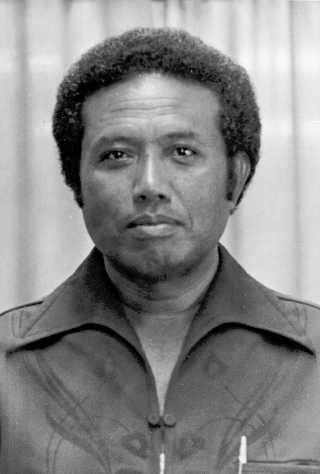
Haruo Remeliik
The republic’s first president, from 1981, when Palau’s constitution took effect
Kuniwo Nakamura
Kuniwo Nakamura
President from 1993 to 2001, through the end of the trusteeship and Palau’s admission to the United Nations in 1994
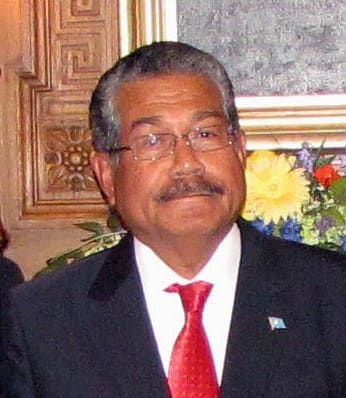
Johnson Toribiong
President from 2009 to 2013, who asked the UN General Assembly in 2011 to seek an International Court of Justice opinion on states’ climate obligations. The Court delivered it in July 2025
Noah Idechong
Noah Idechong
Goldman Environmental Prize winner in 1995 for a marine-conservation model built on traditional fishing knowledge, then a member of Palau’s National Congress for twelve years from 2000
Villaney Remengesau
Villaney Remengesau
Disability-rights advocate across Palau and the wider Asia-Pacific, named the country’s Most Impactful Person in 2024
Rodman Teltull
Rodman Teltull
Sprinter, and Palau’s flag bearer at the London 2012 Olympics as the youngest man on the team
Florian Skilang Temengil
Florian Skilang Temengil
Freestyle wrestler, and Palau’s flag bearer at the Rio 2016 Olympics
Elgin Loren Elwais
Elgin Loren Elwais
Freestyle wrestler, and Palau’s flag bearer at the Beijing 2008 Olympics
Must-try Palauan food
Taro, coconut and whatever came off the reef this morning. Pick a category.
Tapioca
Cassava, boiled or grated and baked, the second root on the table and the one that fills a plate when taro is short.
Demok
The national soup: taro leaves cooked down in coconut milk until they collapse, often with crab meat stirred through. Order it first and judge the kitchen on it.
Tinola
Chicken simmered with green papaya and a heavy hand of ginger, served over rice. The Filipino name travelled here and stayed, and so did the dish.
Fruit bat soup
The dish every visitor has heard about: the bat goes into a coconut broth whole, wings and head included, and is served the same way. Confronting on the plate, mild in the mouth.
Ukaeb
Crab meat minced with coconut cream, lime, onion and chilli, then packed back into the shell and finished with more cream and spring onion.
Mangrove crab
Pulled from the roots behind the beaches and cooked simply, because it does not need help. The single best thing on most Koror menus.
Sashimi
Yellowfin and skipjack cut thin and eaten with soy and wasabi, a habit left behind by three decades of Japanese administration and never given up.
Taro
Grown in wet patches tended mostly by women, boiled or mashed, and served with almost everything. In Palau it is closer to a staple grain than a vegetable.
Ulkoy
Squash and shrimp beaten into a batter and deep fried into a fritter. Sold hot from roadside stands and worth stopping for.
Pichi-pichi
Steamed grated cassava, sticky and translucent, rolled in fresh coconut. The dessert that turns up at every family gathering.
Halo-halo
Shaved ice layered with coconut, jackfruit, plantain and yam, then flooded with milk. The Filipino answer to a Palauan afternoon.
Palau travel FAQ
Do you need a visa for Palau?+
No. Palau issues a 30-day entry permit at the border to every nationality, free of charge, and it can be extended twice for a fee once you are in the country. You need a passport valid for at least six months, a return or onward ticket, and proof you can support yourself for the stay. Everyone also signs the Palau Pledge at immigration, in front of the officer, and it is stamped into the passport.
What is the Palau Pledge, and is it optional?+
It is a written promise to the children of Palau to tread lightly, and it is a condition of entry rather than a keepsake. It is stamped into your passport and you sign it at the desk. The behaviour it asks for is backed by real law: reef-toxic sunscreen is banned from sale and import, taking anything from a reef or beach is an offence, and the Rock Islands are patrolled.
When is the best time to dive Palau?+
November to February. The northeast trades bring the driest weather and the calmest sea, visibility is at its highest, and manta rays gather at the German Channel cleaning stations through those months. December is the most expensive of them, because the holiday flights fill. The wettest stretch is May to August, when rain is routine and swell can close the outer reefs. Diving continues year round, but a wet-season trip leans on the lagoon.
Do you need a permit for the Rock Islands and Jellyfish Lake?+
Yes, and there are two of them. The Rock Islands sit under Koror State and entry is by permit, sold for a fixed number of days and checked on the water. Jellyfish Lake is priced separately on top of it. Your dive shop or boat operator will buy them with you, but the cost is yours, and it is usually not included in a tour price unless the operator says so in writing.
How do you get to Peleliu and Angaur?+
By sea, mostly. A state ferry runs between Koror, Peleliu and Angaur for a small fare, but it sails on the tide rather than a fixed timetable, so the return leg is the part to plan around. Faster private boats cover the same water in a fraction of the time for a great deal more money, and light aircraft charters exist. Do not book a flight home for the day after a ferry you have not confirmed.
Is Palau worth it if you do not dive?+
Yes, but plan it differently. Snorkelling in the Rock Islands reaches most of what makes the lagoon famous, including Jellyfish Lake and the shallow gardens, without a certification. Babeldaob is a full day of driving past the capitol, the waterfall at Ngardmau and the monoliths at Badrulchau. Peleliu is a battlefield you can walk. What you cannot do is fill a week on beaches alone, because the good ones are on uninhabited islands and reaching them is a boat trip either way.
Know before you go
The essentials for planning a Palau trip.
Currency
US dollar
Palau uses the US dollar and issues no currency of its own. Resorts, dive operators and the larger restaurants in Koror take cards. Almost nothing else does, and there is no bank once you leave the main island, so draw what a day trip needs before you get on a boat.
Language
Palauan and English
Both are official and both are everywhere. English carries every practical conversation a visitor will have. Palauan is what people speak to each other, and it borrows enough Japanese from the colonial decades that a Japanese speaker will keep hearing familiar words.
Visa
30 days, free on arrival
A 30-day entry permit is issued at the border to every nationality at no charge, and it can be extended twice for a fee once you are in the country. Bring a passport valid for at least six months, a return or onward ticket, and proof you can pay your way.
The Palau Pledge
Signed at immigration
Every visitor signs it at the desk, in front of the officer, and it is stamped into the passport. It is written as a promise to the country’s children, and it is a condition of entry rather than a souvenir. Read it before you sign it, because the behaviour it asks for (no touching coral, no taking anything from a reef or a beach) is enforced.
Environmental fee
Already in your airfare
The Pristine Paradise Environmental Fee is collected by the airline and built into the price of every international ticket into Palau, so there is nothing to pay at the airport. It funds the Protected Areas Network, the marine sanctuary, fisheries protection and the airport itself.
Rock Islands permit
Bought in Koror, before you sail
The Rock Islands and Jellyfish Lake sit under Koror State, and entry is by permit, sold for a fixed number of days and checked on the water. Jellyfish Lake is priced separately from the general Rock Island permit. Your dive shop or boat operator will arrange it, but the cost is yours and it is not in the tour price unless the operator says so.
Getting around
Boat, rental car, no buses
There is no public bus network. The airport is in Airai and the drive into Koror takes under half an hour, but no taxis wait at arrivals, so a transfer is booked in advance. On Babeldaob a rental car is the only sensible way to see the road. Everything south of Koror is a boat, and Peleliu and Angaur are served by a state ferry whose schedule follows the tide rather than a timetable.
Tipping
Not expected, common on boats
Palau does not run on tips the way the US mainland does, and no restaurant will chase you for one. Dive crews are the exception: a day on the water is long, hard work, and the boat is where a tip actually lands.
Diving and flying
Leave a day between them
Palau is a repetitive-dive destination and the flights out are long. Every operator here will refuse to put you in the water on the day you fly, so plan the last day as a land day. Babeldaob or the Belau National Museum in Koror is what that day is for.