Don't be a tourist, be a traveler, world in motion
Plan a trip
Live destination map
◆ Country guide · West Africa

Top 10s across Nigeria

The music, the films and the food that shape West Africa are made here first. Nigeria is loud, fast and far bigger than one city, and it rewards a trip built around two places rather than five.

1
City guide
216,783,381
People
1
Video guide
36
States
Region
Best months
Nov · Dec · Jan
Ideal length
5–8 days
Budget / day
$110–260
Language
English, with Hausa, Yoruba and Igbo
Getting around
Domestic flights, then ride-hailing in the cities

When to visit Nigeria

The dry season is the answer, and December is the expensive part of it.
Full month guide →
Jan
Feb
Mar
Apr
May
Jun
Jul
Aug
Sep
Oct
Nov
Dec
Best: dry season, clear skies, and roads that behave Peak: December, when the diaspora returns and flights and hotels sell out Good: the shoulder at either end of the rains Off: the wet season, heaviest in the south from June to September
Quick answer · where to go in Nigeria

Start in Lagos. It is the arrival airport, the music, the food and the reason most trips exist, and it takes three or four days before it stops being a blur. Then pick one contrast rather than a loop: Calabar in the southeast for the December carnival and the rainforest behind it, Abuja for the planned capital and the rock country around it, or Kano in the north for the old walled city and the dye pits. Fly between them, because the distances are long and the roads are slow. November to February is the dry season and the window worth booking.

1 Nigeria city guide

Sorted by what travelers are saving this month.

Fun fact

One number worth knowing

Nigeria has more than 500 living languages, more than any other country in Africa. Hausa, Yoruba and Igbo carry the most speakers, and English is the official language precisely because none of the three could stand in for the others.

Stereotypes, sorted out

The clichés you have heard, what is actually true, and how to fit in.
"Nigeria is one culture"

The realityIt is a federation of thirty-six states holding more than five hundred living languages, and the three biggest of them do not share a script, a cuisine or a calendar. The Hausa north, the Yoruba southwest and the Igbo southeast read as different countries the moment you land in each.

"It is all Lagos"

The realityLagos is the arrival and the noise. Kano was a walled trading city on the trans-Saharan routes centuries before Lagos was a port, Calabar runs at half the speed with rainforest behind it, and Abuja was drawn on paper and built from nothing.

"The whole country is dangerous"

The realityForeign advisories on Nigeria are granular for a reason: they rate states individually, and the ratings differ sharply between neighbours. The right question is not whether Nigeria is safe but whether the specific states on your route are, and the answer is published and updated.

"Nollywood is straight-to-DVD"

The realityIt is the second-largest film industry on earth by output, ahead of Hollywood and behind only India, at something like two and a half thousand films a year. Those films now open in cinemas and sell to global streamers, and its stars are recognised across the continent.

"Jollof is jollof"

The realityThe Nigerian version uses long-grain parboiled rice cooked down in a pepper and tomato base until the bottom of the pot catches, which is where the smoke comes from. The argument with Ghana is real, it is enjoyed by both sides, and nobody is conceding.

"English will not get you far"

The realityEnglish is the official language and it is everywhere: signs, menus, newspapers, government, school. What takes an ear is Nigerian Pidgin, the language people actually use between groups, and a week is enough to start following it.

Everything runs late, and nobody is surprisedJollof settles every argument except which country makes it bestLagos traffic is a personality traitAfrobeats is the country's biggest exportEvery family has someone abroad, and a group chat to prove itA generator is standard household equipmentNollywood makes a film before you finish watching one

Cultural notes that actually help

  • Greet first, ask second. Opening with a question and no good morning reads as rude almost everywhere.
  • Give, take and eat with the right hand. Using the left alone is an insult across much of the country.
  • Age is addressed out loud. Sir, Ma, Uncle and Aunty are normal for anyone senior, related or not.
  • Social time is elastic and travel time is not. A party called for six starts at eight; a flight does not wait.
  • Ask before photographing people, markets and vendors, and do not photograph airports, bridges, military or police at all.
  • Money gets asked for directly, and a pleasant, repeated no is an acceptable answer.
  • Religion is public and it structures the week. Friday afternoons empty out in the north, Sunday mornings in the south.

Famous Nigerian faces

The names behind Nigerian writing, music, film, sport, art and public life. Pick a field.
Wole Soyinka, Nigeria (portrait via Wikimedia Commons)

Wole Soyinka

Playwright and activist, and in 1986 the first African to win the Nobel Prize in Literature
Chinua Achebe, Nigeria (portrait via Wikimedia Commons)

Chinua Achebe

Wrote Things Fall Apart, the novel that changed how the continent was written about
Chimamanda Ngozi Adichie, Nigeria (portrait via Wikimedia Commons)

Chimamanda Ngozi Adichie

Half of a Yellow Sun and Americanah, and the essayist behind We Should All Be Feminists
Fela Kuti, Nigeria (portrait via Wikimedia Commons)

Fela Kuti

Invented Afrobeat at the Shrine in Lagos and aimed it at every government he outlived
Burna Boy, Nigeria (portrait via Wikimedia Commons)

Burna Boy

Took Afrobeats to stadiums, and won the 2021 Grammy for Best Global Music Album with Twice as Tall
Ngozi Okonjo-Iweala, Nigeria (portrait via Wikimedia Commons)

Ngozi Okonjo-Iweala

Twice Nigeria's finance minister, and since 2021 the first woman and first African to lead the WTO
Hakeem Olajuwon, Nigeria (portrait via Wikimedia Commons)

Hakeem Olajuwon

Lagos-born centre who took back-to-back NBA titles to Houston in 1994 and 1995
Aliko Dangote, Nigeria (portrait via Wikimedia Commons)

Aliko Dangote

Built a cement and commodities group out of Kano, and the refinery on the edge of Lagos
King Sunny Adé, Nigeria (portrait via Wikimedia Commons)

King Sunny Adé

Took jùjú music out of Lagos clubs and onto world stages with a twenty-piece band
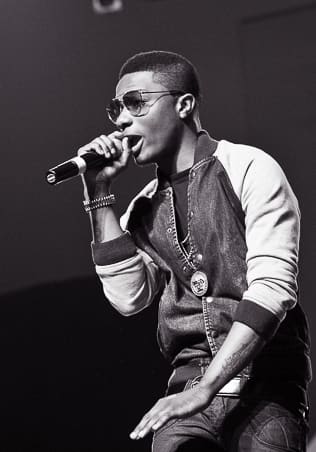
Wizkid, Nigeria (portrait via Wikimedia Commons)

Wizkid

The voice from Ojuelegba behind Afrobeats' first global crossovers
Davido, Nigeria (portrait via Wikimedia Commons)

Davido

Afrobeats headliner and one of the genre's biggest live draws on either side of the Atlantic
Tiwa Savage, Nigeria (portrait via Wikimedia Commons)

Tiwa Savage

Among the first women to front Afrobeats internationally, and still setting its standard
Tems, Nigeria (portrait via Wikimedia Commons)

Tems

Singer and writer whose voice carried Afrobeats onto American charts and into Hollywood soundtracks
Asake, Nigeria (portrait via Wikimedia Commons)

Asake

Folded fúji and amapiano into Afrobeats and went from Lagos street sound to arenas
Sade Adu

Sade Adu

Born in Ibadan, and the coolest voice in British soul for four decades
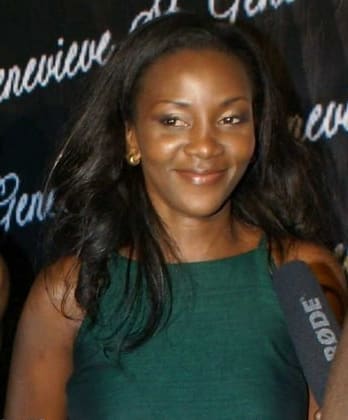
Genevieve Nnaji, Nigeria (portrait via Wikimedia Commons)

Genevieve Nnaji

Nollywood's biggest star, and the director of Lionheart
Kunle Afolayan, Nigeria (portrait via Wikimedia Commons)

Kunle Afolayan

Director who moved Nollywood out of the market stall and into cinemas and streaming
Funke Akindele

Funke Akindele

Actor and director, and a fixture at the top of the Nigerian box office
Chiwetel Ejiofor, Nigeria (portrait via Wikimedia Commons)

Chiwetel Ejiofor

London-born to Nigerian parents, and Solomon Northup in 12 Years a Slave
John Boyega, Nigeria (portrait via Wikimedia Commons)

John Boyega

British-Nigerian actor, from Attack the Block to Star Wars and back to African stories
Ben Okri, Nigeria (portrait via Wikimedia Commons)

Ben Okri

Won the Booker Prize in 1991 for The Famished Road, its youngest winner at the time
Buchi Emecheta, Nigeria (portrait via Wikimedia Commons)

Buchi Emecheta

Wrote the Nigerian woman's novel from London, from The Joys of Motherhood onward
Amos Tutuola

Amos Tutuola

The Palm-Wine Drinkard, Yoruba folklore written straight into English and never tidied up
Christopher Okigbo

Christopher Okigbo

The poet of his generation, killed fighting in the Biafran war at thirty-five
Jay-Jay Okocha, Nigeria (portrait via Wikimedia Commons)

Jay-Jay Okocha

Playmaker good enough that they named him twice, from Super Eagles captain to Bolton
Nwankwo Kanu, Nigeria (portrait via Wikimedia Commons)

Nwankwo Kanu

Olympic football gold in Atlanta in 1996, then Premier League titles with Arsenal
Anthony Joshua

Anthony Joshua

British-Nigerian heavyweight who has held the unified world titles twice
Tobi Amusan, Nigeria (portrait via Wikimedia Commons)

Tobi Amusan

Broke the 100m hurdles world record on her way to the world title in Oregon in 2022
Ben Enwonwu, Nigeria (portrait via Wikimedia Commons)

Ben Enwonwu

Sculptor and painter of the modernist generation, and of the Tutu portrait that vanished for decades
Njideka Akunyili Crosby, Nigeria (portrait via Wikimedia Commons)

Njideka Akunyili Crosby

Painter who layers Nigerian photographs into American interiors, and a MacArthur fellow
Yinka Shonibare, Nigeria (portrait via Wikimedia Commons)

Yinka Shonibare

British-Nigerian artist working in Dutch wax fabric, and the ship in a bottle on the Fourth Plinth
Amina J. Mohammed, Nigeria (portrait via Wikimedia Commons)

Amina J. Mohammed

Former environment minister, and Deputy Secretary-General of the United Nations since 2017
Oby Ezekwesili, Nigeria (portrait via Wikimedia Commons)

Oby Ezekwesili

Co-founder of Transparency International, former education minister, and a Bring Back Our Girls organiser
Tony Elumelu, Nigeria (portrait via Wikimedia Commons)

Tony Elumelu

Banker and investor whose foundation funds young entrepreneurs across the continent

Must-try Nigerian food

The classics first, then the soups, the street counter, the north, the sweet things and what to drink.
Jollof rice, Nigeria (Wimup)

Jollof rice

Long-grain rice cooked down in pepper, tomato and stock until the bottom of the pot catches. The smoke is the point.

Suya, Nigeria (Wimup)

Suya

Beef threaded onto sticks, rubbed in yaji (ground peanut and pepper) and grilled over wood after dark.

Efo riro, Nigeria (Wimup)

Efo riro

Spinach stewed in palm oil with pepper and locust bean, carrying beef, ponmo and smoked fish.

Pepper soup, Nigeria (Wimup)

Pepper soup

A thin, fierce broth around catfish or goat, built on a spice mix designed to clear your head.

Afang soup, Nigeria (Wimup)

Afang soup

Cross River greens cooked with waterleaf and seafood. The richest bowl in the southeast.

Banga soup, Nigeria (Wimup)

Banga soup

Palm fruit pulp cooked down with catfish and delta spices, eaten with starch rather than rice.

Ogbono soup, Nigeria (Wimup)

Ogbono soup

Wild mango seed ground into a draw soup that stretches from the bowl to the spoon and back.

Edikang ikong, Nigeria (Wimup)

Edikang ikong

Ugu and waterleaf cooked with almost no water, dense with beef, dried fish and periwinkle.

Moin moin, Nigeria (Wimup)

Moin moin

The same bean batter steamed instead of fried, with egg, fish or corned beef folded through it.

Ewa agoyin, Nigeria (Wimup)

Ewa agoyin

Beans mashed soft under a dark fried pepper sauce, torn Agege bread on the side.

Tuwo shinkafa, Nigeria (Wimup)

Tuwo shinkafa

Soft rice pounded into a dense ball and eaten with soup. The northern staple at almost every meal.

Kilishi, Nigeria (Wimup)

Kilishi

Beef dried thin, painted with spiced peanut paste and dried again. Jerky with far more going on.

Pounded yam and egusi

Yam beaten smooth, torn by hand, and pushed through melon-seed soup thick with greens and meat.

Ofada rice and ayamase

Unpolished local rice under a green pepper sauce cooked in bleached palm oil. Sharp, oily, worth it.

Nkwobi

Cow foot in a spiced palm oil paste, served warm in a wooden bowl with a cold beer beside it.

Asun

Goat grilled whole, then chopped small and tossed with peppers and onion. The Yoruba party plate.

Puff-puff

Yeasted dough fried into sweet golden balls and handed over hot in a twist of paper.

Akara

Peeled black-eyed peas whipped into a batter and deep fried. Breakfast, with pap alongside.

Boli

Plantain roasted black over coals and eaten with roasted groundnuts, straight from the roadside.

Dodo

Ripe plantain fried into sweet discs. It goes with everything, and it disappears first.

Small chops

The party plate: puff-puff, spring rolls, samosas and peppered gizzard, passed around all evening.

Miyan kuka

Baobab-leaf powder soup, dark and faintly sour, poured over tuwo and eaten with the hand.

Masa

Fermented rice cakes cooked in a dimpled pan, taken sweet with honey or savoury with soup.

Chin chin

Fried dough cut into hard little squares. The snack every Nigerian handbag is carrying.

Kuli kuli

Groundnut paste pressed of its oil, twisted into rings and fried until it snaps.

Coconut candy

Shredded coconut boiled in sugar until it caramelises, sold in twists at the bus park.

Zobo

Dried hibiscus steeped with ginger and pineapple, served cold and very red.

Palm wine

Sap tapped from the palm at dawn. Sweet before noon, sour by evening, and different every day.

Chapman

A Lagos club invention: bitters, grenadine and citrus soda over ice with a slice of cucumber.

Kunu

Millet or sorghum drink loosened with ginger, drunk cold through the northern afternoon.

Fura da nono

Millet balls crumbled into fermented cow's milk. A Fulani drink you take with a spoon.

Nigeria travel FAQ

How many days do you need in Nigeria?+
Five days is the honest minimum, and it buys Lagos plus one other place. A week lets you give Lagos three or four days and add Calabar, Abuja or Kano without rushing the transfer. Ten days is enough for the south and the north in one trip, but only with domestic flights between them.
Is Nigeria safe to travel in?+
It depends entirely on where, which is why government advice is written state by state rather than for the country. The security picture in the northeast has nothing in common with an evening in Victoria Island. Read the current advice against your actual route, use ride-hailing instead of street taxis, avoid moving between cities after dark, and take local guidance on neighbourhoods seriously.
Do I need a visa, and how do I get one?+
Almost every visitor does. Nigeria moved to an e-Visa on 1 May 2025 and stopped issuing visas on arrival at the same time, so the application is made online before you fly, along with the landing and exit cards. Apply through the Nigeria Immigration Service portal and leave time for the decision rather than booking against it.
Lagos or Abuja, if I only have one?+
Lagos, without much hesitation. It holds the music, the galleries, the restaurants, the beaches and the energy the country is known for. Abuja is calmer, greener and easier to move around, which makes it the better base for Zuma Rock and the middle belt, and the better second stop rather than the first.
When is the best time to visit?+
November to February. The rains are gone, the roads are passable and the north is at its most comfortable. December is the liveliest month and the most expensive one, because the diaspora comes home and Calabar runs its carnival all month. January and February give you the same dry weather with fewer people in it.
Do I need to speak a local language?+
No. English is the official language and is used everywhere in print and in business. Learning to hear Nigerian Pidgin is worth more than learning phrases, and a greeting in Yoruba, Hausa or Igbo where you are lands well every time.

Know before you go

The essentials for planning a trip to Nigeria.
Capital

Abuja

Abuja was drawn from open ground in the centre of the country and took over from Lagos as the federal capital in 1991. Lagos is still the larger city, the money and the culture, which is why both get called the capital in conversation.

Currency

Naira (₦)

Cards and contactless work in Lagos and Abuja hotels, malls and better restaurants. Everywhere else runs on cash, bank transfers and the POS agents who sit on the street doing the work of an ATM.

Language

English, plus Hausa, Yoruba and Igbo

English is the official language and the one used in signage, business and school. Nigerian Pidgin is the everyday lingua franca between them, and it is easier to follow than it first sounds.

Time zone

WAT (UTC+1)

One zone for the whole country and no daylight saving, so the offset you plan against in August is the offset you get in January.

Visa

Apply online before you fly

Nigeria launched an e-Visa on 1 May 2025 and discontinued visa on arrival at the same time, so the paperwork is done before departure. Landing and exit cards are filed online too. The Nigeria Immigration Service publishes the current rules and runs the portal.

Health

Yellow fever certificate

A yellow fever vaccination certificate is required to enter, and the shot has to be at least ten days old on arrival. Malaria is present across the country, so start prophylaxis before you travel.

Safety

Read the advice state by state

Government advice on Nigeria is written state by state rather than for the country as a whole, and the difference between one state and its neighbour can be total. Check the current version while you are still choosing the route.

Getting around

Fly between cities

Lagos to Abuja, Kano, Port Harcourt or Calabar is roughly an hour in the air and most of a day on the road. Book domestic flights early, and use ride-hailing rather than street taxis inside the cities.

Traffic

Drives on the right

Lagos congestion is not a rush hour, it is a condition. Plan two trips a day across the city, not four, and treat any journey over the Third Mainland Bridge as its own appointment.

Tipping

Welcome, never automatic

Better hotels and restaurants add a service charge. Beyond them, rounding up or handing over a small note for real help is normal and enough.

Public holidays

Two calendars at once

Christmas and Easter, both Eids on the Islamic calendar, plus Independence Day on 1 October and Democracy Day on 12 June. The Muslim holidays move each year, so check them against your dates.

Nigeria on Wimup Videos

City vlogs to watch before you book.
YouTube ↗
48:22

Lagos on Foot

Planning a Nigerian trip?

One fully-researched destination (ranked, mapped and paired with video) in your inbox every Thursday.

Photo credits (41)