
Don't be a tourist, be a traveler, world in motion
Plan a trip
Live destination map
◆ Country guide · Micronesia

Nauru, an island with a ring road and no capital

Twenty-one square kilometres of raised coral sitting less than sixty kilometres south of the equator, with the nearest land 300 kilometres away. Nauru is the third-smallest country on earth, the least visited of all of them, and the only one whose entire interior was dug up and shipped abroad.

11,680
People
21 km²
Land
14
Districts
Region
Best months
Jun · Jul · Aug
Ideal length
3–5 days
Budget / day
A$250–420
Language
Nauruan & English
Getting around
Rental car

When to visit Nauru

Two seasons, and the dry one is the one you want.
Full month guide →
Jan
Feb
Mar
Apr
May
Jun
Jul
Aug
Sep
Oct
Nov
Dec
Best: June to August, when the southeast trades blow and the rain has gone Good: May, September and October, the shoulders of the dry season Wettest: November to April, when the westerlies bring the heavy rain
Quick answer · where to go in Nauru

The choice is the order. Base on the west coast between Aiwo and Denigomodu, where the hotels, shops, hospital and port sit close together. Go south to Yaren, where the ring road crosses the runway at the island’s only traffic lights. Take the east coast to Anibare Bay, the one proper beach. Turn inland for Buada Lagoon and climb to Command Ridge, 65 metres up, with its Japanese wartime bunker. Around all of it is Topside, the mined-out phosphate plateau, and it is the reason to come.

Fun fact

One number worth knowing

Roughly 80 per cent of Nauru's surface has been strip-mined for phosphate. While it lasted, the money was extraordinary: by 1975 GDP per head was around 50,000 US dollars, second only to Saudi Arabia, for a population under 8,000. The workable deposits were effectively exhausted by 2000.

Stereotypes, sorted out

The clichés you have heard, what is actually true, and how to behave once you land.
"Nauru is a ruined island and there is nothing left to see."

The realityAround 80 per cent of the surface was strip-mined, and the UN reckons more than 70 per cent of the country uninhabitable. The damage is real. Topside is one of the most legible industrial landscapes on earth, coral pinnacles left where the phosphate was dug. The coast below is green and lived in.

"It is a Pacific beach holiday, just a hard one to reach."

The realityThere is no resort industry, no dive shop strip and, most years, no tour operator at arrivals. Accommodation is a handful of hotels and guesthouses, Anibare Bay is the one beach people swim at, and the rest of the coast is rock and reef flat. Nauru rewards curiosity, not a swimming timetable.

"You can turn up and sort a visa on arrival."

The realityYou cannot. Nearly every foreign visitor needs an approved visa before boarding, with a passport valid well beyond arrival, a confirmed onward ticket and booked accommodation. There is no visa counter at the airport, and airlines check the approval before you fly. Make it the first booking.

"The island is defined by Australia’s detention centre."

The realityOffshore processing has shaped Nauru’s economy and politics on and off since 2001, and it is a live subject. It is not the country. Nauruans have lived here for some three thousand years, through German rule, Japanese occupation and independence in 1968. They are a nation, not a news story.

"Nauru has a capital city called Yaren."

The realityNauru has no official capital. Parliament, the courts, the government offices and the airport sit in Yaren district in the south, so atlases print the name, but Yaren is a district of a few hundred people. There are no cities at all: fourteen districts, one road around them.

The phosphate money was squanderedSeen in an afternoonTopside is a wastelandThe noddy bird as a noveltyEveryone speaks EnglishA country emptying out

Cultural notes

  • Ask before photographing people, houses or Topside workings. On an island of eleven thousand people, a stranger with a camera is noticed within the hour and word travels faster than you do.
  • Land here is owned by families, not by the state, and most of the coastal strip is somebody’s. Walking off the road onto ground that looks empty is walking into a garden. Ask.
  • Sunday is quiet. Church takes the morning and most things stay shut, so plan the driving and the shopping around it.
  • Bring Australian dollars in cash. The Australian dollar is the currency, there is a single bank on the island, and foreign cards are not something to depend on at an ATM or a till.
  • Dress the way the island does: modest away from the beach, shoulders covered for church or a government office. Swimwear stays at Anibare.
  • If you are invited to eat, go, and take something. Hospitality is offered quickly here and refusing it politely is harder than accepting it.

Famous Nauruan faces
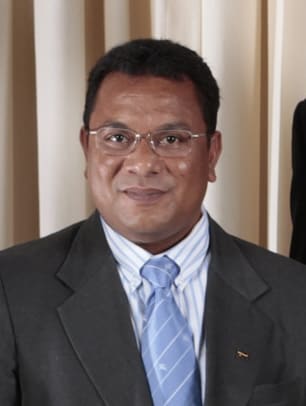
The names behind Nauruan politics, sport and letters. Pick a field.
Marcus Stephen, Nauru (portrait via Wikimedia Commons)

Marcus Stephen

Three-time Olympic weightlifter, President from 2007 to 2011, Speaker since 2019
David Adeang, Nauru (portrait via Wikimedia Commons)

David Adeang

President since October 2023, first elected to parliament in 2004
Baron Waqa, Nauru (portrait via Wikimedia Commons)

Baron Waqa

President from 2013 to 2019, and Secretary General of the Pacific Islands Forum since 2024
Sprent Dabwido, Nauru (portrait via Wikimedia Commons)

Sprent Dabwido

Weightlifting champion in 1995 and 1996, then President from 2011 to 2013
Ludwig Scotty, Nauru (portrait via Wikimedia Commons)

Ludwig Scotty

President in 2003 and from 2004 to 2007, as the phosphate revenue ran out
Marlene Moses, Nauru (portrait via Wikimedia Commons)

Marlene Moses

UN ambassador from 2005 who put the atoll climate case before the General Assembly
Hammer DeRoburt

Hammer DeRoburt

Head Chief who won independence and served as first president from 1968, over four terms
René Harris

René Harris

Four-term president who signed Australia’s first offshore processing deal in 2001
Kennan Adeang

Kennan Adeang

Three times president, each time briefly, in a parliament turned by single votes
Itte Detenamo

Itte Detenamo

Super-heavyweight lifter and three-time Olympian, the whole Nauru team at Beijing 2008
Yukio Peter

Yukio Peter

Commonwealth gold in 2010. His eighth at Athens 2004 is Nauru’s best Olympic finish
Reanna Solomon

Reanna Solomon

First Nauruan woman to win Commonwealth gold, at Manchester in 2002. Died in 2022
Timothy Detudamo

Timothy Detudamo

Head Chief from 1930 to 1953 and the linguist who gave Nauruan its written form

Must-try Nauruan food

Coconut, reef fish, pandanus and whatever the ship brought. Pick a category.
Coconut fish, Nauru (Wimup)

Coconut fish

Fresh tuna cured in lime and coconut cream. Nauru’s own dish, and the test of a kitchen.

Coconut-crusted fish

White fillets rolled in grated coconut and fried. The everyday restaurant version.

Noddy bird

Black noddy caught at dusk as the flocks return, then roasted. Eaten when invited.

Coconut toddy

Palm sap tapped twice daily, drunk fresh and sweet or fermented into something stronger.

Ibija, the lagoon milkfish

Milkfish grown in Buada Lagoon from sea-caught fry. The oldest aquaculture in the Pacific.

Grilled reef fish

That morning’s catch, scored, salted and grilled over coals.

Tuna and rice

The everyday west-coast lunch: yellowfin or skipjack off the boats, rice off the ship.

Pandanus

The fruit is chewed boiled, or dried into cakes. With coconut, the island’s oldest sweet.

Breadfruit

Roasted whole in the coals, then split and eaten hot. Grown around Buada Lagoon.

Chinese fried rice and chow mein

West-coast Chinese restaurants cook for the island, their menus set by the last ship.

Corned beef and tinned fish

A staple on an island that grows little. Nauru’s health statistics argue against it.

Know before you go

The essentials for planning a Nauru trip.
Currency

Australian dollar (AUD)

Nauru uses the Australian dollar. The one bank is the Commonwealth Bank of Australia, card acceptance is thin and foreign cards are unreliable in the machines. Bring what you need in cash.

Language

Nauruan and English

Nauruan is the everyday language and the one the island thinks in. English is the working second language of government and business, and you will be answered in it without trouble.

Visa

Approved before you fly

No visa on arrival. Nearly every visitor needs an approved visa in advance, with a passport valid well beyond arrival, an onward ticket and booked accommodation. Airlines check it.

Getting around

Rental car or hotel transfer

One sealed 19-kilometre road circles the island in under an hour. There are no visitor buses, taxis are informal and hotels arrange hire cars. The road crosses the runway at Yaren’s traffic lights.

Power

240V, 50Hz, Type I plugs

The same flat three-pin plug used in Australia and New Zealand. Supply is grid power from the Aiwo station, and a torch is worth packing.

Emergency

Police 110, ambulance 111, fire 112

Republic of Nauru Hospital in Denigomodu is the only hospital. Anything serious means evacuation on a scheduled flight, so take travel insurance seriously.

Water

Rainwater tanks and desalination

No river, no drinkable lake and little fresh groundwater. Homes run on roof tanks topped up by desalination, and drought recurs. Use water sparingly.

Health

No malaria; bring your own supplies

Nauru is malaria-free. Pharmacy stock is limited and depends on the ship, so bring any prescription medicine for the whole trip plus a margin, along with sunscreen and insect repellent.

Sunday

Church in the morning, most things shut

The island is overwhelmingly Christian and Sunday is quiet. Plan the driving, the shopping and any request for someone’s time around it.

Nauru travel FAQ

Do you need a visa for Nauru?+
Almost certainly yes, and you need it before you fly. Nauru issues no visa on arrival: nearly every foreign visitor has to hold an approved visitor visa granted in advance by the immigration section of the Department of Foreign Affairs and Trade. The application wants a passport valid well beyond your arrival, a confirmed return or onward ticket and a booked place to stay, and processing is quoted in working days. Airlines check the approval at check-in, so this is the first booking to make. Confirm the current requirement with the government before you buy a flight.
How do you actually get to Nauru?+
One airline, Nauru Airlines, on a weekly rhythm. Brisbane is the main gateway and the route most visitors use. The same airline links Nauru to Nadi in Fiji and runs an island-hopper through Tarawa, Majuro and Pohnpei, which is the way most people combine Nauru with another Micronesian stop. Frequencies are low, so a missed connection costs days. Build slack at both ends and check the current schedule with the airline itself.
How long do you need in Nauru?+
Three to five days. The ring road takes under an hour to drive, so the geography is covered in a morning, but the reason to be here is not geography. Give a day to the south and the airport crossing, a day to the east coast and Anibare Bay, a day to Buada Lagoon, Command Ridge and Topside, and keep the rest as slack for the flights. A single overnight between two flights is possible and is not really a visit.
What is there to do besides the beach?+
The island is a history lesson you can drive around. Command Ridge still carries the Japanese guns and communications bunker from the 1942 to 1945 occupation, and the view from the top takes in a whole country. The phosphate cantilevers at Aiwo, built to swing ore out over the reef onto ships that never came alongside, are extraordinary industrial objects. Topside is the mined-out plateau itself. Buada Lagoon is the one inland green place, and the fishing off the drop-off is what people who come back come back for.
Is Nauru expensive?+
Yes, by Pacific standards. Almost everything arrives by ship or in a plane hold, there are only a few places to stay and no competition between them, and a rental car is close to compulsory because there is no visitor transport network. Budget as you would for a remote resource island, and read a quoted room rate as the floor.
Can you swim and dive?+
You can swim at Anibare Bay, which is the beach the island uses, and the tide and the surf matter more than the season. Elsewhere the shore is largely coral rock and reef flat, and the reef drops away steeply very close in. There is no resort dive industry here, so anything in the water is arranged locally through your hotel or someone who knows a boat, not booked in advance from home.

Planning a Nauru trip?

One fully-researched destination (ranked, mapped and paired with video) in your inbox every Thursday.

Photo credits (7)