


Start with your own government's advisory, because here it decides the trip. In the FCDO's August 2026 reading, four stops remained. Yangon, the only one unrestricted, takes two days for Shwedagon, downtown and the Circle Line. Bagan, Mandalay and Inle Lake sit in regions marked all but essential travel. Give Bagan two days, Mandalay one for the old capitals, and Inle two, one walking down from Kalaw. Rakhine, Mrauk U, Hpa-An and Mawlamyine were under advice against all travel.
Fun fact
Myanmar's 2024 census, its first in a decade, could not reach much of the country. Of a provisional 51,316,756 people, 32,191,407 were counted in person and 19,125,349 were estimated from remote sensing. That nineteen million is the census bureau's own measure of where its staff could not go.
Stereotypes, sorted out
The realityIt is not closed, which is more awkward. Tourist e-visas are issued, flights land at Yangon, and hotels at the four usual stops take bookings. What changed after February 2021 is the advisory level, the insurance that follows it, and how much of the map is unreachable. Read the advisory first.
The realityA line from the opening years of 2012 to 2016, when arrivals climbed fast and the phrase sold trips. What is unvisited now is unvisited for a reason, and the label edits a civil war out of the sentence. The temples are extraordinary. The emptiness around them is not a feature.
The realityThe magnitude 7.7 quake of 28 March 2025 ruptured 400 km of the Sagaing Fault, killed thousands and hit Sagaing, Mandalay and Naypyidaw hard. Bagan came off lightly, with cracks and collapses among smaller stupas and damage at Shwezigon and Htilominlo. Reconstruction has stalled for lack of funding.
The realityA dilemma with no clean answer. The National Unity Government and exiled civil society groups ask people not to come, as visitor money reaches the military through state hotels, the national carrier and entry fees. Guides, drivers and guesthouses that lost work in 2021 lose again if nobody comes.
The realityBurmese is official and the lingua franca, for millions a second language learned at school. Shan, Karen, Kachin, Chin, Mon and Rakhine each have their own, and in parts of the states the street speaks something else. Over a hundred are recognised. Minorities make up roughly a third of the people.
Cultural notes worth knowing
- Shoes and socks come off at every pagoda, temple and monastery, and that means the whole compound, not only the shrine at its centre. The walk across hot stone is part of the visit and nobody makes an exception for visitors.
- Feet are the lowest part of the body and the head the highest. Do not point your soles at a Buddha image, a monk or another person, and in front of an altar sit with your legs folded back.
- Thanaka, the pale yellow paste worn on cheeks and noses, is ground bark. It is sunscreen, cosmetic and cooling all at once, worn daily by women and children and by plenty of men.
- Monks take precedence everywhere: the seat on the bus, the front of the queue, food before anyone else. Women do not hand anything to a monk directly. It is set down and picked up.
- The country drives on the right and almost every vehicle has its steering wheel on the right as well, because the fleet is largely second-hand Japanese. An overtake on a two-lane road is therefore a blind manoeuvre by design, which is worth weighing before booking a night bus.
- Politics is not small talk. People have been jailed for what they said and for what they posted, and asking a driver or a guide what they think about the government puts the risk on them. Let them raise it, or let it alone.
- Do not photograph soldiers, police, checkpoints, government buildings or anything military. It is a real problem, and more than a discourtesy. Put the phone away well before you reach one.
Famous Burmese faces

Aung San Suu Kyi
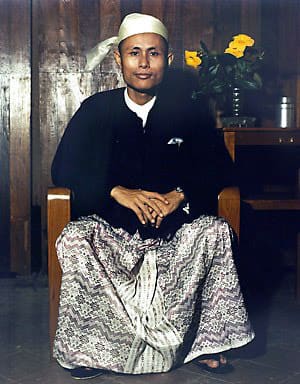
Aung San

U Thant

Min Ko Naing
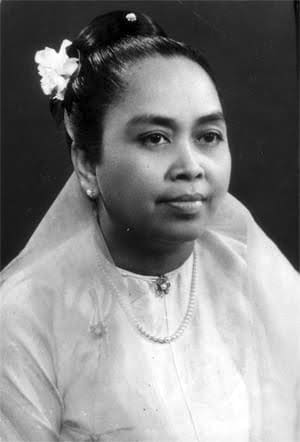
Khin Kyi

Min Aung Hlaing

Ma Thida
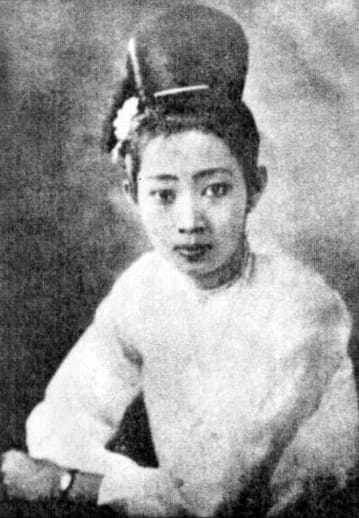
Ludu Daw Amar

Zarganar

Kyaw Thu

Aung La Nsang
Thant Myint-U
Wendy Law-Yone
Pascal Khoo Thwe
Sai Htee Saing
Htoo Ein Thin
Must-try Burmese food

Mohinga
Rice noodles in a thick fish and lemongrass broth. The national dish, eaten at breakfast.

Mont di
Rakhine rice noodles, thinner and far hotter than anything from the centre.

Kyay oh
Pork and offal noodle soup cooked to order in its own small pot, at evening shops.

Shwe yin aye
Cold coconut milk with agar, tapioca, sago and white bread. Better than it sounds.
Ohn no khao swe
Wheat noodles in coconut chicken broth with crisp noodles, egg, shallot and lime.
Shan khao swe
Flat rice noodles with chicken or pork and tomato, in broth or dry. Order it dry.
Nan gyi thoke
Thick rice noodles tossed with chicken curry, egg and peanut. The Mandalay breakfast.
Lahpet thoke
Fermented tea leaf salad with fried garlic, peanuts and shrimp. Sour, bitter, crunchy.
Samusa thoke
Broken samosas dressed with onion, cabbage, mint and curry. A snack made a meal.
Tofu thoke
Shan tofu, set from split chickpeas, dressed with chilli oil, garlic and tamarind.
Hin
Burmese curry, cooked until the oil rises. Arrives with rice, soup and free side dishes.
Danbauk
Burmese biryani from Indian Muslim cooks, with raw onion and pickled mango on the side.
Ngapi yay
Fermented fish paste dip ringed with vegetables. The smell is the only barrier.
Mont lin ma yar
Rice-flour batter halves pressed around a quail egg. The name means husband and wife.
E kya kway
Fried dough sticks sold at dawn by tea shops, dunked in tea or mohinga.
Palata
Flaky folded flatbread, with sugar at breakfast and with curry later.
Sanwin makin
Semolina baked with coconut milk, jaggery and raisins, cut into diamonds.
Mont let saung
Rice-flour drops in cold, jaggery-sweet coconut milk. In April, that is the appeal.
Lahpet yay
Strong tea with condensed and evaporated milk, its sweetness ordered by name.
Htan yay
Palm toddy, sweet and mild at dawn, sour and stronger by afternoon. The dry zone's drink.