Don't be a tourist, be a traveler, world in motion
Plan a trip
Live destination map
◆ Country guide · Southern Europe

Malta, three islands and an hour wide

Three inhabited islands inside 316 square kilometres, temples that predate the pyramids, and a capital you can walk end to end in twenty minutes. Malta is small enough to work from one base, so here the country page is the trip plan.

574K
People
316
km²
3
UNESCO sites
Region
Malta, Wimup country guide
Stuffat tal-fenek, Malta (Wimup)Stuffat tal-fenek
Aljotta, Malta (Wimup)Aljotta
Kinnie, Malta (Wimup)Kinnie
Best months
Apr–Jun · Sep–Oct
Ideal length
5–8 days
Budget / day
$100–170
Language
Maltese & English
Getting around
Buses & the Gozo ferry

When to visit Malta

The limestone decides this. Read it before you pick dates.
Full month guide →
Jan
Feb
Mar
Apr
May
Jun
Jul
Aug
Sep
Oct
Nov
Dec
Best, warm sea and walkable stone Peak, hot and short on shade Good (Mar for wildflowers, Nov still mild) Off, cool and wetter
Quick answer · where to base yourself in Malta

First trips base in Valletta or across the water in Sliema, which puts the harbour ferries, the museums and the bus network in reach without a car. Beach holidays go north to Mellieħa and St Paul’s Bay, closest to the sand and to the Gozo ferry. Give Gozo two or three nights for the quiet half of the country. The comfortable months are April to June and September to October, when the sea is warm and the limestone is not.

Fun fact

One number worth knowing

UNESCO counts 320 monuments inside Valletta's 55 hectares, one of the most concentrated historic areas in the world. The Order of St John planned it in one go on a grid after the Great Siege of 1565, on a peninsula barely a kilometre long, and you can still cross it on foot in about twenty minutes.

Stereotypes, sorted out

The clichés you have heard, what is actually true, and how to fit in.
"Malta is a beach destination"

The realityThe coast is mostly rock and cliff, and real sandy beaches are a short list in the north. Most swimming here happens off a ladder into a rocky inlet, which is a large part of why the water is so clear.

"The Azure Window is the thing to see on Gozo"

The realityIt fell into the sea in a storm on 8 March 2017. Dwejra is still worth the drive for the Inland Sea and Fungus Rock, and divers now visit the collapsed arch on the seabed, but the postcard has been out of date for years.

"It is too small to fill a week"

The realityThree inhabited islands, three UNESCO listings and temples built before the pyramids take longer than the map suggests. What is small here is the driving, not the list.

"Nobody speaks English"

The realityEnglish is an official language alongside Maltese, used in signage, schooling and business. The more interesting fact runs the other way: Maltese is a Semitic language written in Latin script, and it is the only one of its kind in the European Union.

"You need a hire car"

The realityOne bus operator covers both main islands on a rechargeable card. A car earns its keep on Gozo and along the southern cliffs, and it is a liability in Sliema and Valletta in August. Traffic drives on the left.

Honey-coloured limestonePainted eyes on the luzzu boatsFireworks every summer weekendA pastizzi hatch on every cornerKnights of St JohnFilm crews in the Grand HarbourDriving on the left

Cultural notes that actually help

  • Village festas run from late May into September, and the fireworks are the point. Ask which village is celebrating the weekend you are there.
  • Sunday lunch is the fixed meal of the week and the good places fill early. Book it.
  • Churches expect covered shoulders and knees, and there are a great many churches.
  • English is official, but a greeting in Maltese lands well. Bonġu in the morning, saħħa on the way out.
  • Tipping is light. Round up, or leave about a tenth when the service earned it.
  • Traffic drives on the left and the streets are narrow. Check the direction twice before stepping off a kerb.
  • August is when the country slows for the heat. Put the walking in the morning and the evening.

Famous Maltese faces

The names behind Maltese politics, writing, music, art, screen and sport. Pick a field.
Joseph Calleja, Malta (portrait via Wikimedia Commons)

Joseph Calleja

Operatic tenor, and Malta’s cultural ambassador
Dom Mintoff, Malta (portrait via Wikimedia Commons)

Dom Mintoff

Prime minister across two eras, 1955 to 1958 and 1971 to 1984
Agatha Barbara, Malta (portrait via Wikimedia Commons)

Agatha Barbara

The first woman to serve as President of Malta
Daphne Caruana Galizia, Malta (portrait via Wikimedia Commons)

Daphne Caruana Galizia

Investigative journalist killed by a car bomb in 2017, whose reporting reshaped politics.
Eddie Fenech Adami, Malta (portrait via Wikimedia Commons)

Eddie Fenech Adami

Prime minister who signed Malta’s EU accession treaty in 2003
George Borg Olivier, Malta (portrait via Wikimedia Commons)

George Borg Olivier

Prime minister when Malta became independent in 1964
Oliver Friggieri, Malta (portrait via Wikimedia Commons)

Oliver Friggieri

Poet and novelist, and the critic who built Maltese literary history
Francis Ebejer, Malta (portrait via Wikimedia Commons)

Francis Ebejer

The leading Maltese dramatist of the postwar stage, in Maltese and in English
Ira Losco, Malta (portrait via Wikimedia Commons)

Ira Losco

Singer who took Malta to second place at Eurovision in 2002
Destiny Chukunyere, Malta (portrait via Wikimedia Commons)

Destiny Chukunyere

Singer, and winner of the Junior Eurovision Song Contest in 2015
Joseph Calleia, Malta (portrait via Wikimedia Commons)

Joseph Calleia

Hollywood character actor of the 1930s and 40s, who retired home to Malta
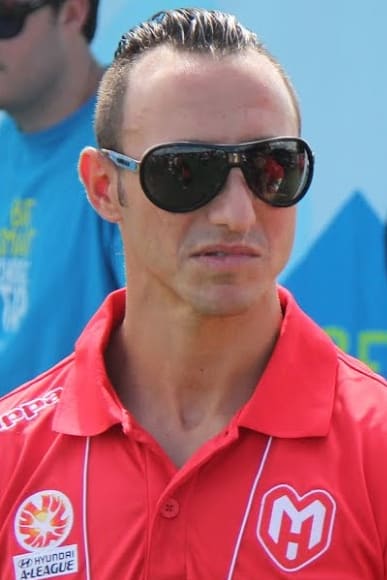
Michael Mifsud, Malta (portrait via Wikimedia Commons)

Michael Mifsud

Footballer who captained the national team
Roberta Metsola

Roberta Metsola

President of the European Parliament, and the first Maltese to hold the office
Edward de Bono

Edward de Bono

Physician and writer who coined lateral thinking
Dun Karm Psaila

Dun Karm Psaila

The national poet, who wrote the words of the Maltese anthem
Temi Zammit

Temi Zammit

Archaeologist of the Tarxien temples, and co-discoverer of how brucellosis reaches people
Antonio Sciortino

Antonio Sciortino

Malta’s foremost sculptor of the twentieth century
Richard England

Richard England

Architect of the church at Manikata, and Malta’s best-known modernist
Giuseppe Calì

Giuseppe Calì

The most prolific painter Malta has produced

Must-try Maltese food

Sicily across the channel, North Africa to the south, and two centuries of British rule on top. Pick a category.
Stuffat tal-fenek, Malta (Wimup)

Stuffat tal-fenek

The national dish: rabbit slow-cooked in tomato and red wine, with pasta in its sauce.

Aljotta, Malta (Wimup)

Aljotta

Fish soup with garlic, tomato and rice, built from whatever came in that morning.

Kinnie, Malta (Wimup)

Kinnie

The bittersweet soft drink of bitter oranges and wormwood, made here since 1952.

Cisk, Malta (Wimup)

Cisk

The local lager, and the default order at any bar on the island.

Bragioli

Beef olives, thin slices wrapped around breadcrumbs and egg, then braised in wine.

Soppa tal-armla

Widow’s soup, a vegetable broth with a fresh cheeselet dropped in at the end.

Kapunata

The Maltese answer to ratatouille, sweet and sour, eaten warm or cold.

Timpana

Baked macaroni sealed in pastry and cut into slabs.

Ross il-forn

Baked rice with mince and egg, the Sunday-lunch sibling of timpana.

Ġbejniet

Small sheep’s or goat’s milk cheeselets, eaten fresh, dried, or rolled in cracked pepper.

Pastizzi

The diamond-shaped pastry, ricotta or mushy peas, sold hot from a hatch.

Ftira

The ring-shaped Maltese loaf, split and loaded with tuna, olives and capers.

Ħobż biż-żejt

Crusty bread rubbed with tomato and olive oil, then piled high.

Qassatat

The round cousin of the pastizz, with the same fillings and a softer pastry.

Lampuki pie

The autumn fish pie: dorado baked under pastry with spinach, olives and capers.

Stuffat tal-qarnit

Octopus braised slowly in red wine and tomato, usually with peas.

Grilled lampuki

Dorado, in season from late summer into autumn, simply grilled and lemoned.

Imqaret

Deep-fried date pastries, best eaten hot from the van that fried them.

Kannoli tal-irkotta

Ricotta cannoli, the Sicilian original with a Maltese hand on the filling.

Kwareżimal

An almond and citrus biscuit eaten through Lent, made without fat or eggs.

Figolli

Almond-filled Easter biscuits, iced and cut into shapes.

Know before you go

The essentials for planning a Malta trip.
Entry

Schengen, and in the EU since 2004

EU member since 1 May 2004 and Schengen since 2007, so most visa-free nationalities get 90 days in any 180 across the area, with no check arriving from another Schengen state. Check your own case.

Currency

Euro (€), adopted in 2008

The euro since 1 January 2008. Cards work almost everywhere, but carry a little cash for a village bakery, a pastizzi hatch or a Gozo kiosk. Paying in your home currency is always the worse rate.

Language

Maltese and English, both official

Maltese is a Semitic language in Latin script, unique in the EU, with Arabic grammar and Italian and Sicilian vocabulary. English is official too and close to universal. A bonġu is still noticed.

Power

230 V, 50 Hz, plug type G

The British three-pin plug, an inheritance from before 1964. Travellers from mainland Europe need an adapter, and those from the United Kingdom do not.

Driving

On the left, and the roads are narrow

On the left, since British rule that ended in 1964. Roads are tight and busy, and parking in Valletta, Sliema and St Julian’s is hard in season. A car pays off on Gozo and along the southern cliffs.

Getting around

One bus network on a rechargeable card, plus two ferries

One operator runs the buses on both islands, radiating from Valletta, so nearby towns can be an hour apart. There is no railway. The Gozo ferry runs round the clock, about 25 minutes a crossing.

Museums and temples

Heritage Malta runs the national sites

Heritage Malta runs the temples, the Ħal Saflieni Hypogeum, the Cittadella on Gozo and the Valletta museums, and sells tickets directly. Book the Hypogeum well ahead: the daily cap is eighty.

The three islands

Malta, Gozo and Comino are the inhabited ones

Malta holds the capital, the airport and most people. Gozo is a third the size, greener and slower, by ferry from Ċirkewwa. Comino has one hotel, one chapel and the Blue Lagoon: a day, not a base.

Festa season

Late May to September, village by village

Each parish celebrates its patron saint over several days, with bands, decorated streets and fireworks people cross the island for. Sts Peter and Paul, 29 June, is biggest at Marsaxlokk and Nadur.

Malta travel FAQ

How many days do you need in Malta?+
Five to eight. Three or four cover Valletta, the Three Cities, Mdina and the southern temples, and two or three more give Gozo the time it deserves.
When is the best time to visit Malta?+
April to June and September to October. The sea stays swimmable well into October, the limestone is not radiating heat, and the sites are bearable in the middle of the day. July and August are hot, busy and short on shade.
Do you need a car in Malta?+
Not on the main island. One bus operator covers the country on a rechargeable card, and the routes run through Valletta, so a cross-coast hop can mean a change. A car earns its keep on Gozo and along the southern cliffs, and it is a liability in Sliema and Valletta in summer. Traffic drives on the left.
Is Gozo worth a night, or is a day trip enough?+
A night at least. The ferry from Ċirkewwa takes about 25 minutes and runs around the clock, so a day trip works, but it buys Victoria, Ġgantija and one beach. Gozo’s case is the evenings, once the day visitors have gone.
How far ahead do you have to book the Hypogeum?+
Months, in summer. Heritage Malta caps the Ħal Saflieni Hypogeum at eighty visitors a day to hold the temperature and humidity steady in the chambers, sells the tickets on its own site and nowhere else, and peak-season slots go about three months out. If it is sold out, Ħaġar Qim, Mnajdra, Tarxien and Ġgantija are all above ground and all open.

Planning a Maltese trip?

One fully-researched destination (ranked, mapped and paired with video) in your inbox every Thursday.

Photo credits (17)