Don't be a tourist, be a traveler, world in motion
Plan a trip
Live destination map
◆ Country guide · West Africa

Liberia, the oldest republic in Africa and one of its emptiest coasts

Africa’s oldest republic, founded by freed African Americans who landed on an island in the mouth of the Mesurado in 1822, and still among the least-visited countries on the continent. Robertsport has the long left-hand waves. Sapo has the rainforest and the pygmy hippos. Almost nobody is on either.

5.2M
People
15
Counties
Region
Liberia, Wimup country guide
Palava sauce, Liberia (Wimup)Palava sauce
Jollof rice, Liberia dish (Wimup)Jollof rice
Rice bread, Liberia (Wimup)Rice bread
Best months
Dec · Jan · Feb
Ideal length
10–14 days
Budget / day
$70–180
Language
English officially
Getting around
A 4x4 with a driver, a flight southeast

When to visit Liberia

One dry season, one very wet one, and a surf schedule that runs against both.
Full month guide →
Jan
Feb
Mar
Apr
May
Jun
Jul
Aug
Sep
Oct
Nov
Dec
Best: December to February, the driest months and the only reliable window for the southeast Good: March, April and November, the shoulders either side of the rains Wet: May to October, when the surf works and the interior roads do not
Quick answer · where to go in Liberia

Give Monrovia two days: Providence Island for the founding, Waterside for the market, and the ruins on the hill. Then pick one direction. Northwest is Robertsport, where the left points break between May and October and Lake Piso sits behind the town. Inland is greener: Kpatawee Falls, then the Nimba Range. The southeast, Sapo National Park via Greenville to Harper, needs dry-season roads or a flight. Hire a 4x4 with a driver: almost nothing off the trunk roads is surfaced.

Fun fact

One number worth knowing

Monrovia is one of the wettest capitals on earth, with close to 960 millimetres of rain in June alone and an annual total put at 3,600 to 5,000 millimetres. That sets the shape of a trip: the Cape Mount surf is best in exactly the months the inland roads are worst.

Stereotypes, sorted out

What people think they know about Liberia, what is actually true, and how to behave once you land.
"Liberia is still at war."

The realityThe second civil war ended in 2003 and UN peacekeepers left in 2018. The 2017 and 2023 elections each moved power between parties, with the loser conceding. What shapes a trip now is ordinary: unlit roads, thin emergency services, street crime in Monrovia and rains that close routes.

"Ebola makes it unsafe to visit."

The realityThe West African outbreak was declared over in 2016. Plan for the risks that were always here: malaria all year, so take prophylaxis, a yellow fever certificate to enter, and evacuation for serious care. Insurance that covers evacuation is the most useful thing to buy before flying.

"It is basically a piece of America in Africa."

The realityThe surface invites it: English is official, the flag has one star and eleven stripes, and settlers brought Baptist churches and pillared verandas. Underneath it is West African: sixteen ethnic groups, roughly 27 languages. Kolokwa, the creole most people speak, sounds nothing like American English.

"There is nothing to see because there is no tourism industry."

The realityThe gap is infrastructure. Sapo is among the largest blocks of Upper Guinean rainforest left, with pygmy hippo, forest elephant and chimpanzee. Robertsport has a long left point break. The Nimba Range is a UNESCO site. A few operators, ecolodges and the forestry authority do the booking.

Monrovia is a war zone at nightRobertsport, surf resortSapo as a day tripEveryone speaks EnglishThe beaches are the safe bitThe rains wash out the trip

How to travel well in Liberia

  • The Liberian handshake ends with a finger snap, thumb sliding against thumb. It is offered to visitors as readily as to anyone. Watch it done once and copy it.
  • Greet before you ask. Walking up and starting with a question reads as rude, and thirty seconds of good morning and how is the family changes the whole exchange.
  • Photograph people only after asking, and do not photograph government buildings, airports, ports or anyone in uniform. Officials take that seriously and explaining yourself afterwards is slow.
  • Dress covered away from the beach. Shorts are beach and compound wear; a visit to an office, a chief or a church wants long trousers and sleeves.
  • Carry small notes in both currencies. Liberian dollars and US dollars circulate side by side, change is a real problem, and a large US note is often the same as having no money.
  • Checkpoints are routine on the trunk roads. Have your passport, stay in the car unless asked, be unhurried and polite, and let your driver do the talking.

Famous Liberian faces

Two Nobel laureates, a Ballon d’Or, the second woman ever to preside over the UN General Assembly, and the rappers who invented a genre. Pick a field.
Ellen Johnson Sirleaf, Liberia (portrait via Wikimedia Commons)

Ellen Johnson Sirleaf

President 2006 to 2018, Africa's first elected woman head of state. Nobel laureate, 2011.
George Weah, Liberia (portrait via Wikimedia Commons)

George Weah

The only African Ballon d’Or winner (1995), later president, who conceded defeat in 2023.
Leymah Gbowee, Liberia (portrait via Wikimedia Commons)

Leymah Gbowee

Led the women's sit-ins that pushed the warring parties to the 2003 peace. Nobel 2011.
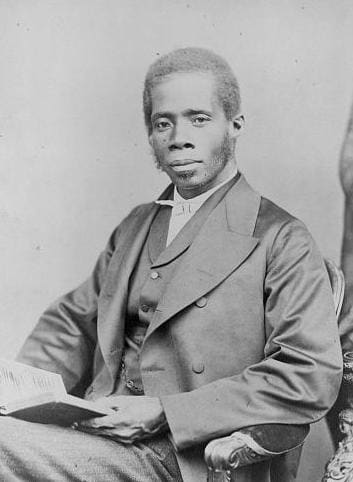
Edward Wilmot Blyden, Liberia (portrait via Wikimedia Commons)

Edward Wilmot Blyden

Educator, secretary of state in the 1860s and a founding theorist of Pan-Africanism.
Angie Brooks, Liberia (portrait via Wikimedia Commons)

Angie Brooks

Presided over the UN General Assembly in 1969, the first African woman to do so.
Joseph Boakai, Liberia (portrait via Wikimedia Commons)

Joseph Boakai

President since January 2024, after twelve years as vice-president to Sirleaf.
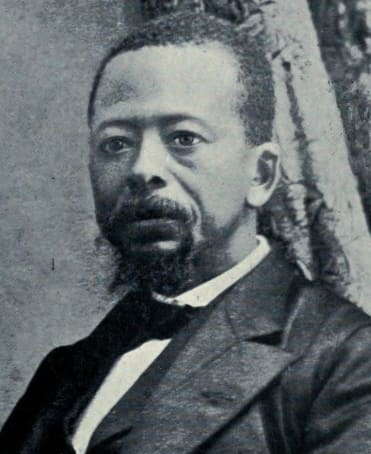
Hilary R. W. Johnson, Liberia (portrait via Wikimedia Commons)

Hilary R. W. Johnson

President from 1884 to 1892, the first Liberian-born head of state.
Takun J, Liberia (portrait via Wikimedia Commons)

Takun J

A founder of hipco, Kolokwa-language hip hop, known for protest songs like Police Man.
Joseph Jenkins Roberts

Joseph Jenkins Roberts

Born free in Virginia, first president of the republic in 1848. Now on the currency.
William V. S. Tubman

William V. S. Tubman

President from 1944 to 1971, the longest-serving, behind the Open Door investment policy.
Bai T. Moore

Bai T. Moore

Wrote Murder in the Cassava Patch (1968), the country's best-known work of fiction.
Wayétu Moore

Wayétu Moore

Novelist whose She Would Be King (2018) retells Liberia's founding as magic realism.
Helene Cooper

Helene Cooper

New York Times reporter whose memoir The House at Sugar Beach recalls the 1980 coup.
Miatta Fahnbulleh

Miatta Fahnbulleh

Monrovia singer and activist whose voice carried across West Africa and the diaspora.
Sundaygar Dearboy

Sundaygar Dearboy

Grand Bassa singer and producer, musician of the year in 2005 and 2006. Road-trip music.

Must-try Liberian food

Rice underneath, palm oil through it, and pepper in more of it than you expect. Pick a category.
Palava sauce, Liberia (Wimup)

Palava sauce

Plato leaves with dried fish and palm oil. The name is Liberian English for an argument.

Jollof rice, Liberia dish (Wimup)

Jollof rice

Rice cooked in tomato and pepper with beef or chicken. Liberians hold jollof views too.

Rice bread, Liberia (Wimup)

Rice bread

Dense, sweet rice-flour loaf with plantain and ginger. Breakfast, and road-trip food.

Cassava leaf

Cassava leaves pounded and slow-cooked with palm oil, smoked fish and pepper, over rice.

Palm butter

Palm fruit boiled down to a thick red sauce with fish or meat. The one that wins visitors.

Pepper soup

Thin, fiercely hot broth of goat, fish or offal. Starter, hangover cure and cold remedy.

Peanut soup

Groundnut paste cooked with meat, tomato and pepper. Milder than the palm-oil soups.

Potato greens

Sweet potato leaves stewed with palm oil, smoked fish and pepper. Everyday food.

Torborgee

Bitter, peppery stew of torborgee beans and palm oil, from the Lorma of Lofa County.

Bitterleaf soup

Bitterleaf with palm oil, fish or meat and pepper. The bitterness is the point.

Country chop

Greens, meat and fish cooked down in palm oil. No two households agree on the recipe.

Dumboy

Pounded cassava dough dropped into soup and swallowed whole. Chewing marks you as new.

Fufu

Dumboy's fermented cousin, sourer and stretchier, eaten with pepper soup.

Dry rice

Plain rice by the plate, as the meal itself. Without rice, a Liberian has not eaten.

Sweet potato pone

Sweet potato baked with sugar and spice. A settler dessert, still made for Christmas.

Palm wine

Palm sap drunk the day it is cut: sweet and fizzy by morning, sharper by evening.

Know before you go

The essentials for planning a trip here, starting with two currencies and a yellow fever certificate.
Currency

Liberian dollar (LRD) and US dollar, side by side

Liberian and US dollars both circulate as cash, and prices come in either. Cards work in a few Monrovia hotels only, ATMs are scarce and mostly Visa, and notes run short. Carry small cash.

Language

English is official; Liberian Kolokwa is what people speak

Government, schools and signs run in English. Conversation runs in Kolokwa, the English-based creole, which takes days to tune into. Around 27 other languages include Kpelle and Bassa.

Visa

Required for most non-ECOWAS passports

ECOWAS nationals enter free. Everyone else applies ahead, mostly online, or in person where Liberia has a mission. An e-visa on arrival exists for those with no mission nearby. Check with immigration.

Health

Yellow fever certificate required; malaria year-round

A yellow fever certificate is required to enter, and now lasts for life. Malaria is present all year, so take prophylaxis. Serious cases mean evacuation, so insure for it before flying.

Getting there

Roberts International Airport (ROB), about 60 km from Monrovia

The airport is an hour or two from the city. Book a hotel pickup or a car before a night flight. Most routes connect through Accra, Abidjan, Lagos, Dakar or Casablanca.

Getting around

A hired 4x4 with a driver, and a flight for the southeast

Under a tenth of roads are paved: Monrovia to the airport, Buchanan, Gbarnga and Ganta. Beyond is laterite that the rains can close. Yellow taxis and motorbikes cover Monrovia cheaply.

Tipping

Not obligatory, small, and always in cash

No fixed rule. Tip a hard-working driver or guide, as the tourism trade expects. Some Monrovia hotels and restaurants add a service charge, and then nothing more is needed.

Power

120 V, 60 Hz, sockets A and B

US plugs and voltage, another inheritance from the founding. The grid is patchy and generators do much of the work, so bring a power bank.

Emergency

911, with the Liberia National Police also on +231 777-800-911

The number exists, but response is limited and calls may go unanswered. For anything medical, call your insurer's assistance line and your embassy first.

Travel advice

Read your own government’s advisory before booking

Advisories here cover crime, roads and medical care: which parts of Monrovia to avoid after dark, which borders work, the health picture. The FCDO, US State Department and Smartraveller publish one.

Liberia travel FAQ

Do you need a visa for Liberia?+
Citizens of ECOWAS member states enter without one under the regional free-movement protocol. Everyone else needs a visa, and most applications now go through an online system, with an important exception: residents of the roughly two dozen countries where Liberia keeps an embassy or consulate are directed to apply there in person. An electronic visa-on-arrival service exists for travellers who cannot reach a mission. A yellow fever vaccination certificate is a separate entry requirement. Confirm the current position with the Liberian Bureau of Immigration and Naturalization or your own government’s travel advice before your trip.
Is Liberia safe to travel in?+
The wars ended in 2003 and the UN peacekeeping mission left in 2018, so the risks now are ordinary ones. In practice that means opportunistic theft in Monrovia, especially on the beaches and after dark, roads with no lighting and heavy truck traffic, emergency services that may not answer, and Atlantic rip currents on beaches with no lifeguards. Medical care past the basic is an evacuation, so travel insurance that covers one is not optional. Read your own government’s current advisory before you book.
When is the best time to visit Liberia?+
December to February, in the middle of the November to April dry season, when the laterite roads are firm and the interior is reachable. March and April are hot and increasingly stormy but still passable. The catch is that the surf works on the opposite schedule: the southwest swell that lights up Robertsport runs from about May to October, which is the wet half of the year, when Monrovia takes some of the heaviest rainfall of any capital on earth and roads inland deteriorate. Pick which trip you are taking before you pick the month.
How do you get around Liberia?+
Roberts International Airport is about 60 kilometres from Monrovia and the transfer takes an hour or more. Surfaced trunk roads connect Monrovia to the airport, to Buchanan, and north to Gbarnga and Ganta; less than a tenth of the national network is paved and the rest is laterite that softens badly in the rains. The practical answer for most visitors is a 4x4 hired with a driver. Shared yellow taxis and motorbike taxis work inside Monrovia, intercity minibuses leave when they are full, and for the southeast a domestic flight saves two hard days.
What money should you carry?+
Both the Liberian dollar and the US dollar circulate as everyday cash, and prices are quoted in either. Cards are accepted almost nowhere outside a few Monrovia hotels, ATMs are limited and largely Visa-only, and banks can run short of notes, so bring more cash than feels comfortable and carry it in small denominations. Changing a large US note in a small town is hard work.

Planning a Liberian trip?

One fully-researched destination (ranked, mapped and paired with video) in your inbox every Thursday.

Photo credits (10)