


Base yourself in Beirut and treat the country as day trips. Give the city two days, then take the north: Byblos and Batroun, with Jeita Grotto on the way. Baalbek is the strongest reason to come, paired with Anjar and lunch at a Zahlé winery. The Qadisha valley and the Cedars of God want a day and a car, the Chouf a shorter one. Tripoli and the south are second-week additions. Check your foreign ministry's advice first: it differs by region and it moves.
Fun fact
Lebanon has not held a census since 1932. That count still underpins the settlement reserving the presidency for a Maronite Christian, the premiership for a Sunni and the speaker's chair for a Shia, and no government has run it again. Every population figure here, this page's too, is an estimate.
Stereotypes, sorted out
The realityIt is a country with a war on part of it, which is harder to plan around. Central Beirut, the north coast, the Chouf and the mountains run day to day: shops open, ski lifts turn. The south, the Beqaa and Beirut's southern suburbs are another picture, and the advisories name them. Read them recently.
The realityA 1960s slogan. The real city is more interesting: rebuilt after fifteen years of civil war, torn open in one corner by the port explosion of August 2020, with a reconstructed downtown that never refilled. Its life is in Mar Mikhael, Gemmayzeh and Hamra. Come for the city that exists.
The realityLebanon recognises eighteen sects and no state religion. The presidency goes to a Maronite Christian, and Christians form a larger share here than anywhere else in the Arab world. Church bells and the call to prayer overlap on the coast. With no civil marriage, couples fly to Cyprus.
The realityPlenty do, a legacy of the mandate and the schools. But Arabic is the language of the country, English has overtaken French among the young and in business, and the Beirut sentence that switches language midway is a joke about the middle class. Learn a few words of Arabic and use them.
The realityThe map is small and the driving is not. Lebanon is about 200 kilometres long and 50 wide, and almost everything inland is up a winding mountain road. Baalbek is a full day from Beirut, the Qadisha valley another. A weekend gets you Beirut and one day trip: a fine trip, and not the country.
Cultural notes worth knowing
- Hospitality is not a soft skill here. Coffee or something sweet will be put in front of you within minutes of arriving anywhere, and turning it down flat reads as refusing the person, not the drink. Take some, even a little.
- Expect a real argument over the bill. Whoever invited you intends to pay, insisting once is polite, insisting three times is a fight you will lose, and offering to split reads as a correction.
- Sect is not small talk. Which community someone belongs to sits underneath a great deal of Lebanese politics, and asking directly, or guessing out loud from a surname or a village, lands far heavier than a visitor expects.
- Mezze arrives in waves and belongs to the table. Nobody orders a main each, dishes keep coming until you say stop, and eating straight from the shared plates with bread is the correct method.
- There are two calendars. Christian and Muslim holidays are both national, Ramadan changes the rhythm of the day in some towns and not others, and the same week can be a working one on one street and a holiday on the next.
- Take your shoes off in a home and bring something with you, sweets or a box of maamoul. You will be sent away with food regardless.
- Do not photograph checkpoints, soldiers, or army and security installations, and put the phone down when you are told to. This is the one rule where being a tourist buys you nothing.
Famous Lebanese faces

Amin Maalouf

Elias Khoury
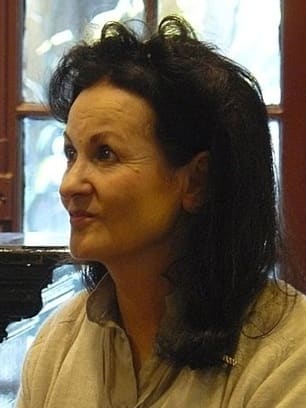
Hanan al-Shaykh

Fairuz

Marcel Khalife

Nadine Labaki

Elie Saab

Bernard Khoury

Charles Malik

Amal Clooney
Khalil Gibran
Ziad Rahbani
Mika
Ziad Doueiri
Hassan Kamel Al-Sabbah
Must-try Lebanese food

Tabbouleh
A parsley salad with bulgur in it, with tomato, mint, lemon and oil, chopped fine.

Fattoush
Tomato, cucumber, radish and purslane with toasted flatbread, sumac and pomegranate.

Shawarma
Meat off a vertical spit, rolled with pickles and garlic. Beirut's late-night default.

Manakish
Flatbread baked with za'atar, cheese or spiced meat. Breakfast, folded and on the move.
Hummus
Chickpeas, tahini, lemon and garlic, whipped smooth under oil. The test of a kitchen.
Moutabbal
Flame-charred aubergine beaten with tahini and lemon. Smokier than baba ghanoush abroad.
Kibbeh nayyeh
Raw lamb or beef pounded with bulgur and spice, with onion and mint. Trust your butcher.
Warak enab
Vine leaves rolled round rice and tomato, cooked down with lemon. Made by the hundred.
Makdous
Baby aubergines stuffed with walnut, pepper and garlic, cured in oil. A winter preserve.
Mujadara
Lentils with rice or bulgur under onions fried almost black. Meat-free, and a fair test.
Shish taouk
Chicken in yoghurt, lemon and garlic, grilled on a skewer and served with toum.
Kafta
Spiced minced meat with parsley and onion, charred on a skewer or baked under tomato.
Kaak
Handbag-shaped sesame bread from corniche carts, filled with za'atar. Eat it hot.
Sfiha
Small open meat pies with a tomato and pomegranate edge. Baalbek's are worth the drive.
Samke harra
Tripoli's dish: whole white fish under tahini, chilli, coriander and walnut.
Sayadieh
Fish on rice cooked in caramelised onion stock, topped with pine nuts. Coastal food.
Knefeh
Sweet cheese under semolina, soaked in orange blossom syrup, in a sesame kaak. Breakfast.
Maamoul
Date, walnut or pistachio shortbread pressed in a wooden mould, for Eid and Easter.
Halawet el jibn
Cheese dough rolled round ashta cream, with syrup and pistachio. Tripoli does it best.
Arak
Aniseed grape spirit that turns milky with water and ice. On the mezze table from the off.
Bekaa wine
Made for millennia, with a modern industry since the 1850s. Cinsault and carignan reds.
Jallab
Date and grape molasses with rose water over crushed ice, with pine nuts and raisins.