Don't be a tourist, be a traveler, world in motion
Plan a trip
Live destination map
◆ Country guide · Central Asia

Kazakhstan, the steppe and the mountains behind it

The ninth largest country on earth and by far the largest with no coast, holding about twenty million people. Kazakhstan is the easy entry to Central Asia: two very different cities, a wall of the Tian Shan behind one of them, and a lot of open ground in between.

20.6M
People
2,724,900 km²
Area
Region
Kazakhstan, Wimup country guide
Beshbarmak, Kazakhstan (Wimup)Beshbarmak
Kuyrdak, Kazakhstan (Wimup)Kuyrdak
Laghman, Kazakhstan (Wimup)Laghman
Best months
May–Jun and Sep–Oct
Ideal length
10–14 days
Budget / day
$40–95
Language
Kazakh
Getting around
Domestic flights for the long hops

When to visit Kazakhstan

A continental climate with no sea to soften it. The shoulder seasons are not a compromise here, they are the answer.
Full month guide →
Jan
Feb
Mar
Apr
May
Jun
Jul
Aug
Sep
Oct
Nov
Dec
Best: April to June and September to October, when the steppe, the canyons and the mountains all work at once Peak: July and August, hottest in Mangystau and the south, and the busiest weeks in the mountains Good: December to February, ski season above Almaty and the cheapest flights of the year Quietest: March and November, thaw and freeze, with the passes and the desert both between seasons
Quick answer · where to go first

Fly into Almaty and give it the first week: Charyn Canyon, the Kolsai lakes and Lake Kaindy are day trips and overnights from there. Add Turkistan and Shymkent for the Silk Road and the Yasawi mausoleum, the most important building in the country. Astana is a short flight north and worth two days with Burabay. The Mangystau desert behind Aktau is a separate flight, vehicle and three days. Pick two of the four and fly between them.

Fun fact

One number worth knowing

Every crewed Soyuz launch flies from Baikonur, a steppe enclave in southern Kazakhstan that Russia rents until 2050 for about $115 million a year. From the Space Shuttle's retirement in 2011 to the first crewed Dragon flight in 2020, it was the only route to the International Space Station.

Stereotypes, sorted out

What the film flattened, what the country is actually like, and how to behave once somebody sits you down at a table.
"You know it from Borat."

The realityAlmost nothing in that film is Kazakhstan. The country banned the 2006 film and ran a counter-campaign, then by 2020 its tourism board had adopted "Very nice" as a slogan, judging name recognition worth more than the joke cost. Assume nothing about the place from it.

"It is all flat steppe."

The realityThe steppe is the middle. The southeast is a wall of the Tian Shan with peaks over 4,000 metres, so close to Almaty that the Shymbulak ski slope is a city bus and a gondola away. The east climbs into the Altai, the west is chalk desert, and the flat part lies between.

"It is basically Russia."

The realityIndependent since 1991, Kazakhstan has put distance into the relationship: the capital moved north in 1997, the country took a single time zone in 2024, and Kazakh is switching from Cyrillic to Latin by 2031. Russian is still official on equal terms, and about 14 per cent are ethnically Russian.

"It is a strict Muslim country."

The realityThe constitution declares a secular state. Most Kazakhs are Hanafi Sunni Muslims, but alcohol is sold in supermarkets, headscarves are a minority choice in the cities, and the Soviet century left an agnostic streak. Turkistan is a pilgrimage town; treat it as one. Almaty on a Friday night is not.

"You need a visa, an invitation and a permit."

The realityThat was the 1990s. Citizens of the EU, the UK, the United States, Canada, Australia and around fifty other countries now enter visa-free for short stays, and hotels handle registration. The permit that remains is for Baikonur, leased Russian territory, arranged weeks ahead through a tour operator.

The Bayterek tower, dead centreA golden eagle on a gloveLittle brother of the Grand CanyonTurquoise Lake KaindyA lone yurt on empty grassRockets at Baikonur

Cultural notes worth knowing

  • Bread is treated with respect at the table. Nan and baursak sit in the middle of the spread, they are not turned upside down, and a guest who cannot stay is still expected to break off a piece before leaving.
  • A guest is an occasion. The dastarkhan, the laid table, is a statement about the household, and refusing food or tea outright reads as a serious slight. Accept something, even a little.
  • Tea comes half full, in a handleless piala, and it is poured again and again. A full cup is not generosity here, it is a hint that you should drink up and go.
  • The seat of honour is the one furthest from the door, and it belongs to the eldest or to the guest. Wait to be placed.
  • Take your shoes off indoors, in a flat as much as in a yurt, and sit cross-legged without pointing the soles of your feet at anyone.
  • Toasts are made standing, at length, and in turn. If you are the visitor, expect to be asked for one, and make it about the host.
  • Cash still matters outside the cities. Card payment is near universal in Almaty and Astana, and a long way from it at a canyon gate or a village guesthouse.

Famous Kazakh faces

A poet the whole country quotes, a middleweight who broke the defence record, a Wimbledon title and the first Kazakh in orbit. Pick a field.
Dimash Qudaibergen, Kazakhstan (portrait via Wikimedia Commons)

Dimash Qudaibergen

Aktobe-born singer with an extraordinary range, made famous by China's Singer in 2017.
Gennady Golovkin, Kazakhstan (portrait via Wikimedia Commons)

Gennady Golovkin

Unified middleweight champion with a record twenty straight title defences.
Elena Rybakina, Kazakhstan (portrait via Wikimedia Commons)

Elena Rybakina

Moscow-born Wimbledon champion in 2022, Kazakhstan's first Grand Slam singles title.
Denis Ten, Kazakhstan (portrait via Wikimedia Commons)

Denis Ten

Sochi 2014 bronze, the first Kazakh Olympic figure skating medal. Killed in Almaty at 25.
Alexander Vinokourov, Kazakhstan (portrait via Wikimedia Commons)

Alexander Vinokourov

Olympic road race champion in London in 2012, later head of the Astana team.
Timur Bekmambetov, Kazakhstan (portrait via Wikimedia Commons)

Timur Bekmambetov

Atyrau-born director of Night Watch and Wanted, later a pioneer of screenlife films.
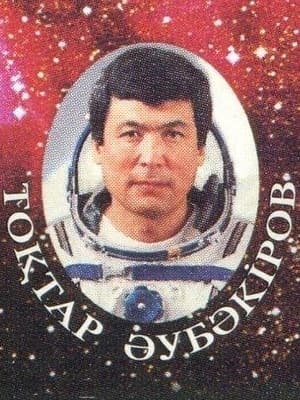
Toktar Aubakirov, Kazakhstan (portrait via Wikimedia Commons)

Toktar Aubakirov

The first Kazakh in space, flown to Mir in October 1991, weeks before the USSR ended.
Nursultan Nazarbayev, Kazakhstan (portrait via Wikimedia Commons)

Nursultan Nazarbayev

Led Kazakhstan from 1991 to 2019, moved the capital to Astana and gave up nuclear arms.
Abai Qunanbaiuly

Abai Qunanbaiuly

Poet, composer and philosopher, 1845 to 1904, founder of written Kazakh literature.
Mukhtar Auezov

Mukhtar Auezov

Author of The Path of Abai, the four-volume novel that won the Lenin Prize in 1959.
Shoqan Walikhanov

Shoqan Walikhanov

Officer and the first serious Kazakh ethnographer, who reached Kashgar in disguise.
Kurmangazy Sagyrbaiuly

Kurmangazy Sagyrbaiuly

The great dombra composer, 1823 to 1896. The Almaty conservatory bears his name.
Vladimir Smirnov

Vladimir Smirnov

Won the 50 kilometre classical at Lillehammer in 1994, still the only Winter gold.

Must-try Kazakh food

Boiled meat over wide noodles, sausage made of horse, fried dough by the bowl, and fermented milk in two species. Pick a category.
Beshbarmak, Kazakhstan (Wimup)

Beshbarmak

National dish: boiled horse, mutton or beef over wide noodles, from a shared platter.

Kuyrdak, Kazakhstan (Wimup)

Kuyrdak

Liver, kidney and heart fried with onion and potato. The cheap hot canteen plate.

Laghman, Kazakhstan (Wimup)

Laghman

Hand-pulled noodles under beef, peppers and tomato. Uyghur, and at home in the southeast.

Baursak, Kazakhstan (Wimup)

Baursak

Deep-fried dough puffs piled mid-table, the first thing a guest is offered.

Shelpek, Kazakhstan (Wimup)

Shelpek

Flat rounds of fried dough, made in odd numbers for remembrance days.

Shubat, Kazakhstan (Wimup)

Shubat

Fermented camel's milk, thicker and saltier than kumys. Mangystau will offer it.

Sorpa

The beshbarmak broth, served alongside in a bowl and drunk at the end. Hosts notice.

Kazy

Horsemeat sausage cured from the rib and sliced thin. Often the first thing served.

Shashlik

Lamb or beef skewers over charcoal with raw onion and flatbread. Every roadside stop.

Manti

Large steamed dumplings of lamb and onion, sometimes pumpkin, with sour cream.

Plov

Rice cooked in a cauldron with lamb, carrot and cumin. Uzbek, and at every southern feast.

Naryn

Chopped meat tossed through thin noodles and moistened with beshbarmak broth.

Samsa

Meat and onion pastries baked against a tandyr wall. Best with the pastry still blistered.

Kumys

Fermented mare's milk, sour, fizzy and lightly alcoholic. Sold by the roadside in summer.

Kurt

Hard salted balls of dried curd, sold by the bag. Strange for the first two or three.

Zhent

Toasted millet pressed with curd, butter and sugar into a crumbly block, eaten with tea.

Irimshik

Hard, faintly sweet cheese boiled down until it caramelises. Served with the sweets.

Chak-chak

Fried dough nuggets set in hot honey. Tatar in origin, on every celebration table.

Kazakhstan travel FAQ

Do I need a visa for Kazakhstan?+
Probably not for a short trip. Citizens of the EU and EEA, the United Kingdom, the United States, Canada, Australia and around fifty other countries enter visa-free for up to 30 days at a time, capped at 90 days in any 180. Citizens of Eurasian Economic Union states get longer. Everyone else can apply for an e-visa. Migration registration is handled electronically at the border and by your hotel, and stays of five working days or fewer need none at all. The Ministry of Foreign Affairs publishes the current list and it is the only version worth reading.
Is Kazakhstan safe to travel in?+
Yes, with ordinary caution. No major foreign ministry advises against travel to the country as a whole, and the usual advice is the usual advice: petty theft in city centres, care with unlicensed taxis, and the standard reservations about the border areas. The real hazards here are environmental. Winter temperatures on the steppe reach minus 40, mountain weather changes fast above Almaty, and the desert in Mangystau has no phone signal, no water and no traffic, so nobody drives out there alone.
Almaty or Astana: which should I fly into?+
Almaty, almost always. It is the larger city, the more interesting one on foot, and the base for the mountains, the canyons and the lakes that most people are actually coming for. Astana is worth two days for the architecture and for Burabay north of it, and it works best as a second stop or an exit point. If your trip is short, fly in and out of Almaty and skip the capital entirely.
Do I need Russian, or is English enough?+
English works in Almaty and Astana hotels, in the better restaurants and among younger people, and thins out fast beyond them. Russian is the practical lingua franca for taxis, trains, markets and small towns, and Kazakh is the state language and increasingly the one on signage. Translation apps handle most of it. Learn the Cyrillic alphabet before you arrive, because the Latin transition runs to 2031 and almost nothing is in it yet.
How do I reach Charyn Canyon and the Kolsai lakes?+
Not by public transport. There is no scheduled service to either, and the road to Kaindy needs a high-clearance vehicle for the last stretch. The options are a day tour from Almaty, a shared driver arranged through a guesthouse, or a hire car, and the three sites are far enough apart that doing them properly takes two days with a night at Saty village. Charyn is a long day trip on its own; the lakes really are not.

Planning a Kazakhstan trip?

One fully-researched destination (ranked, mapped and paired with video) in your inbox every Thursday.

Photo credits (14)