Don't be a tourist, be a traveler, world in motion
Plan a trip
Where the island, the mainland and the small Atlantic islands sit
◆ Country guide · Central Africa

Top 10s across Equatorial Guinea

The only country in Africa where Spanish is an official language, and two very different places under one flag. Bioko is a volcanic island of crater lakes, turtle beaches and a Spanish colonial capital. Rio Muni, the mainland, is rainforest with gorillas in it and almost nobody looking at them.

1.9M
People
28,051 km²
Area
Region
Best months
Dec–Feb for Bioko
Ideal length
8–12 days
Budget / day
$120–280
Language
Spanish
Getting around
Flights between Malabo and Bata

When to visit Equatorial Guinea

Two dry seasons that do not line up, on an island and a mainland that need planning separately.
Full month guide →
Jan
Feb
Mar
Apr
May
Jun
Jul
Aug
Sep
Oct
Nov
Dec
Best: December to February for the island, and June to August for the mainland forest Good: March, September and November, the edges of the two dry seasons Wettest: April, May and October, when both halves are in the rain at once
Quick answer · island, mainland, or both

Choose the island, the mainland or both, because the halves have different dry seasons and open ocean between them. Bioko is the easier half. Start in Malabo's Casco Antiguo, then head south to the Moka highlands under Pico Basile, the drills of the Gran Caldera de Luba and the turtle beach at Ureca. On the mainland, Rio Muni, Bata is the base for Monte Alen, with forest elephants and gorillas. Corisco and Annobon fly on no dependable schedule.

1 Equatorial Guinea city guide

The country layer comes first here. City guides follow it.

Fun fact

One number worth knowing

Equatorial Guinea changed capital in January 2026. A decree of 3 January moved the seat of government from Bioko to Ciudad de la Paz, a city begun in 2008 in the mainland rainforest, and gave ministries a year to follow. Malabo keeps the airport, the old town and most of the beds.

Stereotypes, sorted out

What closed actually means here, why the island and the mainland are two trips, and how to behave once you land.
"The country is closed to visitors."

The realityIt is gated. Independent travel runs on paperwork: a visa arranged before you leave, and a tourism authorisation from Malabo to travel beyond the capital, usually through a local agency since 2024. Both take days. Those who call it closed usually tried to organise a trip in a week.

"It is one destination."

The realityIt is two, plus scattered islands. Bioko, off Cameroon, is volcanic, green and Bubi. Rio Muni, the mainland between Cameroon and Gabon, is rainforest and mostly Fang. Their dry seasons differ, so one half's best month can be the other's worst, and open ocean lies between them.

"Everyone speaks Spanish, so it will feel like Spain."

The realitySpanish is the working language, the country's most distinctive feature in Africa, and it makes travel easier. It does not make the place Spanish. Malabo's cathedral and Casco Antiguo are colonial buildings on an African island, and the food, home languages and pace belong to the Gulf of Guinea.

"Oil money means it is set up for tourists."

The realityOil made the country expensive without making it easy. Malabo and Bata are dear by regional standards, hotels are priced for oil contractors, and cash pays for almost everything. Beyond the two cities there are a few operators, a few lodges and long stretches of nothing.

The last unexplored country in AfricaMalabo from a droneAfrica’s Spanish surpriseSnapshots of official buildingsBushmeat as local colourIsland and mainland, interchangeable

How to behave

  • Greet people properly and in Spanish. Buenos días, a handshake and a question before the request is the normal order, and going straight to what you want reads as rude.
  • Ask before photographing anyone, and never photograph officials, police, military sites, airports or government buildings. This is the rule visitors break most often and it carries real consequences.
  • Carry your documents at all times. Passport, visa and travel authorisation get asked for at checkpoints between towns, and having them ready turns a long stop into a short one.
  • Do not pay bribes at roadblocks. Requests happen. Stay calm, stay polite, ask for an official citation you can settle properly, and let a local driver or guide do the talking.
  • Dress a little more formally than the heat suggests, particularly in offices, churches and any dealing with officials. Neat clothes are read as respect here.
  • Skip the bushmeat. It is sold openly and it is the direct pressure on the drills and monkeys of the Gran Caldera de Luba, the thing that makes Bioko worth protecting in the first place.

Famous Equatoguinean faces

A literature written in Spanish and largely in exile, a Golden Boot at the Africa Cup of Nations, and a swimmer who became famous for finishing last. Pick a field.
Emilio Nsue, Equatorial Guinea (portrait via Wikimedia Commons)

Emilio Nsue

Captain and top scorer at the 2023 Africa Cup of Nations, with five goals in four games.
Buika, Equatorial Guinea (portrait via Wikimedia Commons)

Buika

Singer born in Spain to Equatoguinean parents, working across flamenco, jazz and soul.
María Nsue Angüe, Equatorial Guinea (portrait via Wikimedia Commons)

María Nsue Angüe

Her Ekomo (1985) was the first published novel by an Equatoguinean woman.
Justo Bolekia Boleká, Equatorial Guinea (portrait via Wikimedia Commons)

Justo Bolekia Boleká

Bubi poet and linguist from Bioko, whose Löbëla is translated into English.
Guillermina Mekuy, Equatorial Guinea (portrait via Wikimedia Commons)

Guillermina Mekuy

Novelist in Spanish, long based in Spain, whose fiction spans the gap between the two.
Jesús Owono, Equatorial Guinea (portrait via Wikimedia Commons)

Jesús Owono

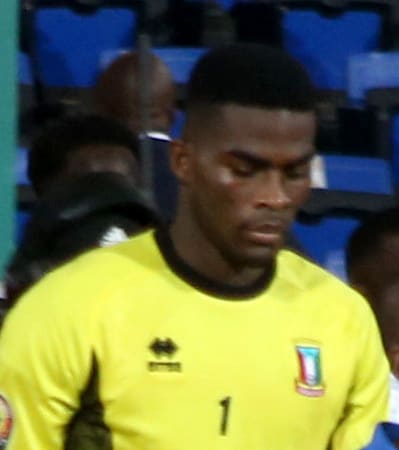
National goalkeeper who came up through Spanish football, then chose Equatorial Guinea.
Eric Moussambani

Eric Moussambani

Swimmer who learned to swim the year of Sydney 2000 and finished his 100m heat alone.
Donato Ndongo-Bidyogo

Donato Ndongo-Bidyogo

Novelist and journalist who put Equatoguinean literature before Spanish readers.
Juan Tomás Ávila Laurel

Juan Tomás Ávila Laurel

The country's most translated writer, from Annobón. Left in 2011 after a hunger strike.
Leoncio Evita Enoy

Leoncio Evita Enoy

His Cuando los combes luchaban (1953) is counted the first Equatoguinean novel.

Must-try Equatoguinean food

Pepper soup with the heat left in, cassava leaves cooked down in palm oil, fish grilled whole on the seafront, and sugarcane spirit after dinner. Pick a category.

Pepesup

Pepper soup: whole fish simmered with chillies and onion. The country's signature dish.

Bambucha

Fang cassava leaves slow-cooked dark with palm oil and chilli, with cassava or plantain.

Sopa de cacahuete

Thick groundnut soup with tomato and chilli, carrying fish, chicken or beef, over rice.

Pescado asado

Fish grilled over charcoal with onion, lemon and chilli. The seafront evening meal.

Bollo de pescado

Ground fish and cassava, spiced, wrapped in leaf and steamed. Market and roadside food.

Envueltos

Steamed banana-leaf parcels of peanut sauce, cassava, fish or meat.

Yuca and plantain

The base of most plates, boiled, pounded or fried. One arrives with every stew.

Sucotash

Beans and maize cooked down with vegetables and meat or fish. An old Bioko staple.

Arroz con pollo

Chicken and rice from the Spanish century, as paella or with peanut sauce and plantain.

Akwadu

Banana baked with coconut, the dessert most associated with the country.

Topé

Lightly alcoholic palm wine, cloudy and sour-sweet. Drink it the day it was tapped.

Malamba

Fermented sugarcane spirit, the national drink, poured after dinner. Strong.

Osang

African tea, hot and sweet, offered on arrival. Accept it.

Know before you go

The essentials for planning a trip here: entry, the travel authorisation, money, language, the roads and the seasons.
Visa

Required for most nationalities, arranged before travel

Allow weeks. Rules change often and government guidance has contradicted itself. Applications usually go through a consulate, so read your foreign ministry's page and confirm with the consulate.

Travel outside the capital

A tourism authorisation, arranged in advance

A Malabo-issued permit is needed to leave the capital, usually through a local agency since 2024. It takes days. Without it a trip shrinks to a few city blocks, so arrange it before departure.

Photography

Restricted, and enforced

Photographing government buildings, military sites, airports and police has led to detentions. Ask before pointing a camera at anything official or at a person. A phone counts as a camera.

Roadblocks

Common, especially around Malabo and Bata

Checkpoints are routine. Keep passport, visa and travel authorisation to hand, stay polite and unhurried, and never offer money. A driver who knows the route handles most of them.

Currency

Central African CFA franc (XAF)

Pegged to the euro. Cash does almost everything. Cards work in a few hotels, and ATMs are in Malabo and Bata only, mostly Visa, with low limits. Bring euros, and more than a day seems to cost.

Language

Spanish, French and Portuguese, all official

Spanish runs schools, government and the street. French and Portuguese are official but rarely heard. Fang leads on the mainland, Bubi on Bioko, and Annobon has a creole. English gets you little.

Getting around

Fly between the island and the mainland

Ceiba Intercontinental flies Malabo to Bata several times a week. The ferry takes about twelve hours. Bush taxis link Malabo with Luba and Riaba, Bata with Mongomo and Ebebiyin. Hire cars are dear.

Emergency numbers

114 police, 115 ambulance, 112 fire

Response is uneven. Register with your embassy, save your hotel's number, and carry insurance covering medical evacuation, because serious treatment means flying out.

Health

Malaria is present year round

Get antimalarial advice well ahead and use repellent and nets. Yellow fever certificate rules change and are checked at the border, so confirm with your health authority. Drink bottled water.

Tipping

Not expected, and appreciated

There is no tipping culture to observe. Rounding up a restaurant bill or paying a guide or driver something at the end of a long day is welcome and never demanded.

Equatorial Guinea travel FAQ

Do I need a visa for Equatorial Guinea?+
Assume yes, and start early. Most nationalities need a visa arranged before travel, usually through an Equatoguinean consulate, and the rules here have changed more than once in recent years. Published guidance is not always consistent between governments, which is itself the warning: check your own foreign ministry’s current entry page and confirm directly with the nearest consulate before booking flights. Allow weeks. Whatever you are told, carry the printed approval, your passport and proof of where you are staying, because all three get asked for on arrival.
Can I travel outside Malabo freely?+
Not without paperwork. A tourism authorisation issued in the capital has in practice been required to travel beyond it, and since 2024 the usual route to one has been through a local travel agency. It takes several days to come through. Arrange it before you arrive, and keep the document with your passport, because roadblocks between towns are routine and it is the paper that gets asked for.
Is Equatorial Guinea safe to visit?+
The everyday risks are ordinary ones: petty theft in Malabo and Bata, road conditions, and the friction of frequent checkpoints. The unusual risk is legal. Photographing government buildings, military sites, airports or police can lead to detention, and travelling outside the capital without the right authorisation causes problems that are entirely avoidable. Carry documents, ask before photographing anything official, do not pay bribes, and read your own government’s current advisory before departure.
When is the best time to visit?+
It depends which half you want. Bioko island is driest from about November to March, with December to February the clearest stretch and the season when turtles nest on the south coast. The mainland runs two dry seasons, roughly December to March and June to September, with June to August the most reliable window for the forest at Monte Alen. December to February is the one period that works reasonably for both, so it is the default answer for a first trip.
How do I get between the island and the mainland?+
By air, mostly. Ceiba Intercontinental flies Malabo to Bata several times a week and the hop is short. A ferry covers the same route in about twelve hours and is the cheaper option if the schedule suits. Corisco and Annobon are harder. Both are served by air, flights are infrequent and schedules move, so build slack into either.

Planning an Equatoguinean trip?

One fully-researched destination (ranked, mapped and paired with video) in your inbox every Thursday.

Photo credits (7)