Don't be a tourist, be a traveler, world in motion
Plan a trip
Live destination map
◆ Country guide · Central Africa

Chad, the Sahara at its strangest and the advisories that come with it

Chad holds two of the most extraordinary landscapes in the Sahara, the Ennedi sandstone massif and the Ounianga lakes, and one of the great conservation recoveries in Africa at Zakouma. It also carries some of the heaviest travel advisories on the continent, and that belongs at the top of a plan rather than in a footnote.

21M
People
2
UNESCO sites
Region
Best months
Nov · Dec · Jan
Ideal length
12–16 days
Budget / day
$150–400
Language
French and Arabic officially
Getting around
Escorted 4x4 convoys, charter flights

When to visit Chad

One short season that works, one long one that does not, and a haze that arrives with the good months.
Full month guide →
Jan
Feb
Mar
Apr
May
Jun
Jul
Aug
Sep
Oct
Nov
Dec
Best: November to February, cool nights, firm ground and the whole country at its most workable Good: March, April and October, hotter or wetter than the peak but still usable Closed: May to September, when the heat peaks, the rains take the roads and the operators stop
Quick answer · where to go in Chad

Read the advisory first. The FCDO advises against all travel to Borkou, Ennedi, Tibesti, the Lake Chad region and the border areas, and against all but essential travel elsewhere. The US says Level 4, Do Not Travel. Within that, the Ennedi is the draw, with the Guelta d'Archei and the Lakes of Ounianga to the north, reached by escorted convoy. Zakouma is the savanna park, reached by charter. N'Djamena takes a day. Go November to April.

Fun fact

One number worth knowing

The oldest fossil widely proposed as a hominin came from Chad. Ahounta Djimdoumalbaye found the Toumai skull in the Djurab desert on 19 July 2001. About seven million years old, it sits near the split between the human and chimpanzee lines, and it moved the search far to the west.

Stereotypes, sorted out

What people think they know about Chad, what is actually true, and how to behave once you land.
"Chad is one big desert."

The realityThe Sahara is the northern third, and most people do not live in it. The middle band is Sahel grazing country that greens after the rains, and the south is savanna with cotton, cereals, oil and enough water for a game park. Each band has its own languages, religion, food and seasons.

"There is nothing there to see."

The realityThere are two UNESCO World Heritage sites: the Ennedi Massif, inscribed in 2016 for its sandstone and rock art, and the Lakes of Ounianga, in 2012, permanent lakes in the driest place on earth that holds open water. Add Zakouma and the Guelta d'Archei. Chad lacks infrastructure, not sights.

"Human origins are an East African story."

The realityToumai says otherwise. The Sahelanthropus tchadensis skull came out of the Djurab desert in July 2001, dates to around seven million years ago and sits close to the human and chimpanzee split. It was found two and a half thousand kilometres west of the Rift Valley, and it widened the map.

"Lake Chad has dried up."

The realityIt has lost most of its surface since the 1960s, a real collapse, but it has not gone. Channels, marsh and islands still support fishing, herding and farming for millions across four countries. Travellers stay away because the basin is a conflict zone, and every foreign ministry says so.

"You can turn up and improvise, like anywhere else in Africa."

The realityNot here. Desert routes need permits, escorts and convoys with their own fuel and water, arranged months ahead by a few operators. The visa is applied for online, never at the border. The famous landscapes lie in provinces under advice against all travel, which limits insurance and consular help.

The Sahara means dunesThe desert is hot at nightFrench is enoughEnnedi and Zakouma in a weekAn expedition is a luxury holidayOne big security story

How to travel well in Chad

  • Greet before you ask. Opening with a question reads as rude across the whole country. Salaam alaikum and a moment on how the family is will change an exchange, and in the south a French bonjour and the same patience does the same work.
  • Use the right hand for eating, giving and receiving, and eat from the part of the communal dish in front of you without reaching across it.
  • Do not photograph airports, bridges, government or military buildings, checkpoints or anyone in uniform, and ask before photographing people. Cameras have been confiscated for less, and the argument afterwards is slow.
  • Dress covered. Long trousers or a long skirt and covered shoulders are the norm for both men and women almost everywhere, and it matters more in the Muslim north and the Sahel than in the southern towns.
  • Expect checkpoints and keep passport, visa and any permits to hand, with photocopies. Your operator or driver will do the talking. Patience and a greeting are the whole technique.
  • Ramadan reorders the day across most of the country. Eating, drinking or smoking in public during daylight is inconsiderate at best, hours shift, and the evening is when everything happens.

Famous Chadian faces

A Cannes prize-winner, the man who found Toumai, a Nantes title-winner and the singer who carried Chadian music abroad. Pick a field.
Mahamat-Saleh Haroun, Chad (portrait via Wikimedia Commons)

Mahamat-Saleh Haroun

Filmmaker whose A Screaming Man won the 2010 Cannes Jury Prize. Later minister of culture.
Mounira Mitchala, Chad (portrait via Wikimedia Commons)

Mounira Mitchala

Singer who won the Prix Decouvertes RFI in 2007 and took Chadian music across Africa.
AfrotroniX, Chad (portrait via Wikimedia Commons)

AfrotroniX

Caleb Rimtobaye's project, Chadian rhythms in electronic music, played in a welder's mask.
Idriss Déby Itno, Chad (portrait via Wikimedia Commons)

Idriss Déby Itno

Career soldier who took power in 1990 and ruled until his death in April 2021.
François Tombalbaye, Chad (portrait via Wikimedia Commons)

François Tombalbaye

First president from 1960, killed in a 1975 coup. He renamed Fort-Lamy as N'Djamena.
Hissène Habré, Chad (portrait via Wikimedia Commons)

Hissène Habré

President from 1982 to 1990, convicted in Senegal in 2016 of crimes against humanity.
Youssouf Djaoro, Chad (portrait via Wikimedia Commons)

Youssouf Djaoro

Actor in Haroun's films, best actor at Chicago in 2010 for A Screaming Man.
Ahounta Djimdoumalbaye

Ahounta Djimdoumalbaye

Researcher who found the Toumai skull in the Djurab desert on 19 July 2001.
Japhet N'Doram

Japhet N'Doram

Chad's most successful footballer, French champion with Nantes in 1995, then at Monaco.
Kaltouma Nadjina

Kaltouma Nadjina

Sprinter who held the national 200 and 400 metre records and ran at Sydney and Athens.
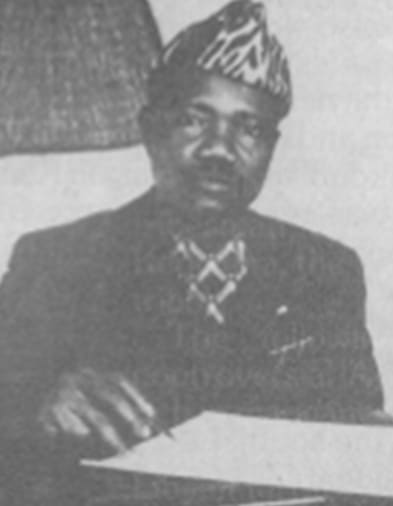
Joseph Brahim Seid

Joseph Brahim Seid

Justice minister and a founder of Chadian literature in French, with Un enfant du Tchad.
Mahamat Idriss Déby Itno

Mahamat Idriss Déby Itno

Led the transition after his father's death in 2021, elected president in May 2024.
Marie-Christine Koundja

Marie-Christine Koundja

Diplomat and the first Chadian woman to publish a novel, in 2001.
Baba Moustapha

Baba Moustapha

Playwright who died in 1982 at thirty. Commandant Chaka, on dictatorship, is his best.
Clément Masdongar

Clément Masdongar

Singer based in France who set Sara-language lyrics against a horn-driven band.

Must-try Chadian food

Millet or sorghum underneath, a sauce over it, and river fish on the grill. Pick a category.
Brochettes, Chad (Wimup)

Brochettes

Beef, goat or chicken skewers grilled at the roadside, with chilli and salt. Evening food.

Boule

The national staple: stiff millet, sorghum or maize porridge, torn by hand to scoop sauce.

Esh

The northern version: boiled millet flour under moulah, eaten by hand from a shared dish.

Daraba

Okra stewed with sweet potato, tomato and greens, often finished with groundnut.

Moulah

The all-purpose sauce of onion, tomato, fish or meat and greens, over esh and boule.

Groundnut sauce

Peanut paste cooked with tomato, onion and chilli. The mildest sauce and an easy start.

Jarret de boeuf

Beef shank slow-cooked with garlic, tomato and roots. A French colonial dish, kept.

Grilled capitaine

Nile perch from the Chari or Logone, grilled whole. The best meal in the country.

Beignets

Fried dough balls sold hot in the morning, eaten standing with tea. Cheap and good.

Karkanji

Cold hibiscus with ginger and spices, deep red and sharp. The Sahel afternoon drink.

Bili-bili

Cloudy, lightly sour millet beer brewed by women in the south and drunk from a calabash.

Gala

The lager brewed at Moundou, cold and unremarkable, handed over anywhere in the south.

Know before you go

The essentials for planning a trip here, starting with the advisory and the e-visa.
Travel advice

Read your own government's advisory before you plan anything

The FCDO advises against all travel to Borkou, Ennedi, Tibesti, Lake Chad and within thirty kilometres of any land border, and all but essential travel elsewhere. The US says Level 4.

Visa

An e-visa applied for online before travel; the paper route is gone

Since 2026 visas are issued only online through the government e-visa platform. Some African nationals enter visa-free. Rules change, so check with a Chadian mission and apply early.

Health

Yellow fever certificate required; malaria across the south and the Sahel

A yellow fever certificate is required from nine months of age and is checked. Malaria prophylaxis is standard. Care outside N'Djamena is thin, so get evacuation cover valid under the advisory.

Currency

Central African CFA franc (XAF), and this is a cash country

The Central African CFA franc, which is not interchangeable with the West African one. Cards work in a few N'Djamena hotels and ATMs stay in the capital. Bring euros and carry small notes.

Language

French and Arabic are official; Chadian Arabic is what people speak

French runs administration and Modern Standard Arabic is co-official. Daily life runs in Chadian Arabic, the south in Sara languages, the north in Toubou tongues. French will not carry a market.

Getting there

N'Djamena International Airport, with a short list of carriers

Most arrivals fly into N'Djamena from Paris, Istanbul, Addis Ababa or Casablanca. Schedules are thin and a missed connection costs days, so build in slack. Overland borders fall under the advisory.

Getting around

A 4x4 convoy with an operator for the desert, charter flights for Zakouma

No self-drive. The Ennedi and Ounianga are reached by escorted convoys carrying fuel, water and spares, booked months ahead with permits. Zakouma is a charter flight. Towns run on shared taxis.

Photography

Ask people first, and do not photograph anything official

Airports, bridges, government and military sites and anyone in uniform are off limits. Ask before portraits, especially in the north. Some sites need a permit, which your operator arranges.

Tipping

Not obligatory, modest, and in cash

No fixed rule. Round up for drivers, guides, cooks and camp crew. On an expedition the operator usually suggests a figure for the team.

Power

220 V, 50 Hz, sockets C, E and F

European two-pin plugs fit. Supply is patchy even in N'Djamena and absent in the desert, where vehicles and solar charge everything. Bring a large power bank and a head torch.

Emergency

17 for police, 18 for fire

Response is limited, especially outside the capital. On expedition the chain is the operator's satellite phone, your insurer's assistance line, then your embassy. Write all three down.

Religion

A Muslim majority with a large Christian minority

The north and the Sahel are mostly Muslim, the south mostly Christian with traditional practice, and N'Djamena is mixed. Ramadan shifts hours everywhere, and both calendars bring holidays.

Chad travel FAQ

Is Chad safe to travel in?+
It carries some of the strongest travel advice on the continent and that has to be the starting point. The FCDO advises against all travel to Borkou, Ennedi Ouest, Ennedi Est and Tibesti, to the Lake Chad region and to within thirty kilometres of every land border, and against all but essential travel to the rest of the country including N'Djamena. The US State Department holds Chad at Level 4, Do Not Travel. The concerns behind that wording are armed groups and banditry in the border zones and the north, the aftermath of the war in neighbouring Sudan, crime in the capital, and emergency services that in most of the country do not exist. Travelling against your government's advice normally invalidates travel insurance and narrows what consular help can do. Read the live text yourself, decide with it open, and if you go, go with an established operator.
Do you need a visa for Chad?+
Almost certainly yes, and it is applied for online before you travel. Chad moved visa issuance entirely onto its own e-visa platform in 2026, ending the paper and on-arrival routes for ordinary travellers, and a visa obtained outside that official channel is not valid at the border. Nationals of a number of African states enter without one. A yellow fever vaccination certificate is a separate entry requirement for anyone aged nine months and over and is checked on arrival. Fees and eligibility change, so confirm the current position with a Chadian mission or your own government's advice, and leave time: the application is not something to start the week you fly.
When is the best time to visit Chad?+
November to February, and January is the pick of them. Those months bring dry ground, nights cool enough to camp comfortably in the desert, and wildlife concentrated on the last water in the southern parks. March and April still work but the heat becomes the whole story, with the capital regularly past 38 degrees. From May to September there is no good half of the country: the rains take the roads across the south and the Sahel while the Sahara becomes unbearable, expedition operators stop running and the seasonal camps close. The one exception is the Gerewol, the Wodaabe gathering held in the Sahel at the end of the rains around late September, which is a specialist trip taken on bad roads for one reason.
How do you actually reach the Ennedi and the Ounianga lakes?+
As an escorted 4x4 expedition, arranged months in advance, and not otherwise. A small number of operators run convoys of several vehicles out of N'Djamena, sometimes flying or driving the first leg to Abeche or Faya-Largeau, carrying their own fuel, water, food, spares and mechanics because there is nothing to buy along the route. Two weeks is a realistic length for the Ennedi with the Ounianga lakes added, and a week gets you the massif and not much else. Permits and escorts come with the arrangement. All of it sits inside provinces your government very probably advises against all travel to, and going is a decision to take deliberately.
What is there to see in Chad besides the desert?+
Zakouma National Park in the southeast is the other headline. African Parks has managed it with the government since 2010, poaching had cut its elephants from roughly four thousand to about four hundred and fifty before that partnership began, and the herd has been growing since; it also holds one of the world's largest populations of Kordofan giraffe, alongside lions, buffalo and enormous dry-season bird concentrations. Beyond it, N'Djamena is worth a day for the national museum, the grand mosque and the markets, the Chari and Logone rivers carry the fish that make the best meal in the country, Abeche keeps the fabric of the old Ouaddai sultanate, and the Sahel is where the Wodaabe hold the Gerewol at the end of the rains.

Planning a Chadian trip?

One fully-researched destination (ranked, mapped and paired with video) in your inbox every Thursday.

Photo credits (8)