A short, sunlit Adriatic and Ionian coastline, mountains that rise almost from the beach, and a capital that repainted itself into a different city. Albania puts Ottoman old towns, Roman ruins and an alpine trek inside a country you can drive across in a day.
2
City guides
2,402,113
People
1
Video guide
Region
Best months
May · Jun · Sep
Ideal length
8–12 days
Budget / day
$40–90
Language
Albanian
Getting around
Coaches & furgons
When to visit Albania
Best months balance the sea, the mountain passes and the August crowds.
Best: warm sea, the mountain passes open, and rooms still available Peak: inland heat past 40°C, and a coast that fills with the August diaspora Good: city and old-town weather, before the sea has warmed or after it cools Off: wet on the coast, and the road up to Theth can close with snow
Quick answer · where to go in Albania
Tirana is where every route starts, and two nights is enough for Skanderbeg Square, the Bunk'Art museums and a Blloku dinner. The country then splits three ways. South through Berat and Gjirokastër, the two Ottoman old towns on the UNESCO list, and on to the Ionian coast at Sarandë and Ksamil, with the Greek, Roman and Byzantine ruins at Butrint an easy morning away. West to Durrës and Vlorë if flat Adriatic sand is the point rather than cliffs and coves. North to Shkodër for the lake and the Marubi photography archive, then up the valley to Theth for the Valbonë pass, the best walking in the country and a summer proposition only. May, June and September give you a warm sea, open mountain trails and none of the August crush.
From 1967 to 1990 Albania was declared the world's first officially atheist state, and around 173,000 concrete bunkers were built across the country under Enver Hoxha. Two of them, in the capital, are now the Bunk'Art museums.
Stereotypes, sorted out
The clichés you have heard, what is actually true, and how to fit in.
"Albania is risky"
The realityPetty theft is uncommon and most visitors report no trouble at all. The real hazards are ordinary ones: enthusiastic overtaking on two-lane roads, and mountain trails that are less waymarked than the photographs suggest.
"The bunkers mean the country is stuck in 1985"
The realityThe dictatorship ended in 1990 and the bunkers have been repurposed as museums, bars and storage. Tirana spent the last two decades painting its blocks, pedestrianising its centre and building upwards.
"It is one long beach"
The realityIt is two coasts and a mountain range. The Adriatic north of Vlorë is flat and sandy, the Ionian south of it is cliffs and coves, and the Accursed Mountains behind Shkodër are alpine enough to need a summer window.
"Nobody speaks anything you will understand"
The realityEnglish is common in Tirana and along the tourist coast, and Italian is widely understood almost everywhere. Albanian itself is its own branch of Indo-European, so learning a few words earns real goodwill.
"You can see it as a day trip from Corfu"
The realityThe ferry to Sarandë takes about half an hour, and plenty of people do exactly that. It buys you one town. The Ottoman old towns, the Riviera and the Alps are a week and a half between them.
A bunker in the middle of a fieldRaki poured before you have said yesCoffee that lasts two hoursByrek bought from a windowA furgon that leaves when it is fullMercedes on a mountain roadBeach clubs stacked along the Ionian
Cultural notes that actually help
Coffee is the social unit here. An invitation to one is not small talk, and whoever invites pays.
Hospitality is a point of pride. Refusing an offered coffee or raki outright reads as a snub, so accept and sip.
A head shake for yes and a nod for no still turns up, mostly with older people outside the cities. If a gesture confuses you, ask again in words.
Shoes come off at the door of a home, and slippers are usually offered.
Mosques and churches ask for covered shoulders and knees, including at the Et'hem Bey mosque on Tirana's main square.
Tips are cash on the table. Added to a card payment they rarely reach the person who served you.
Cash still runs furgons, markets and mountain guesthouses, and the machines charge a flat fee on foreign cards, so draw larger amounts less often.
Famous Albanian faces
The names behind Albania's history, letters, art, music, cinema, sport and politics. Pick a field.
Gjergj Kastrioti Skanderbeg
Gjergj Kastrioti Skanderbeg
Fifteenth-century commander who held off the Ottoman Empire for twenty-five years, and the man on the horse in Tirana's main square
Mother Teresa
Born Gonxhe Bojaxhiu to Albanian parents, awarded the Nobel Peace Prize in 1979 and canonised in 2016. Tirana's airport carries her name
Ismail Kadare
Born in Gjirokastër in 1936 and died in Tirana in 2024. Albania's defining novelist, and the first winner of the Man Booker International Prize in 2005
Dua Lipa
Pop singer and songwriter, born in London in 1995 to Albanian parents from Kosovo
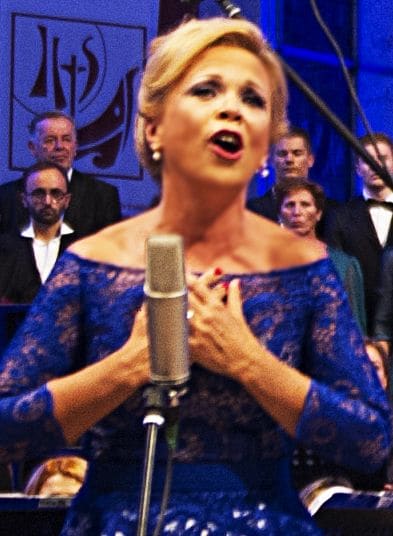
Inva Mula
Soprano from Tirana, and the singing voice behind the Diva in Luc Besson's The Fifth Element
Ferid Murad
Ferid Murad
Shared the 1998 Nobel Prize in Physiology or Medicine for the work on nitric oxide as a signalling molecule. Born in Indiana to an Albanian émigré family
Anri Sala
Contemporary artist born in Tirana who represented France at the 2013 Venice Biennale with Ravel Ravel Unravel
Aleksandër Moisiu
Aleksandër Moisiu
Stage actor of the early twentieth century, famous across German-speaking Europe as Alexander Moissi. The Durrës theatre carries his name
Ismail Qemali
Proclaimed Albanian independence in Vlorë on 28 November 1912 and led the provisional government that followed
Zog I
Zog I
Prime minister at twenty-seven, then president, then king of the Albanians from 1928 until the Italian invasion of 1939
Enver Hoxha
Enver Hoxha
Ruled from 1944 until his death in 1985, sealed the country off and left the bunkers behind
Naim Frashëri
Naim Frashëri
Poet of the nineteenth-century national awakening, and the writer Albania calls its national poet
Fan Noli
Orthodox bishop, translator of Shakespeare and prime minister for six months in 1924
Onufri
Sixteenth-century icon painter known for the red he mixed himself. The museum inside Berat castle is named for him
Pietro Marubi
Founded the Shkodër photography studio in the mid-nineteenth century that three generations ran, and whose archive is now the Marubi national museum
Kolë Idromeno
Painter, architect and photographer from Shkodër (1860 to 1939), whose Motra Tone of 1883 is the best-known Albanian portrait
Rita Ora
Rita Ora
Singer and actor, born in Pristina to an Albanian family and raised in London
Bebe Rexha
Bebe Rexha
Singer and songwriter, born in Brooklyn to Albanian parents
John Belushi
John Belushi
Saturday Night Live original and star of The Blues Brothers, from an Albanian immigrant family in Illinois
Eliza Dushku
American actor of Albanian descent, known for Buffy the Vampire Slayer and Dollhouse
Lorik Cana
Defender who spent thirteen years with the national team and captained it at Euro 2016, Albania's first major tournament
Luiza Gega
European champion in the 3000 metres steeplechase in 2022, the country's first athletics gold at that level
Edi Rama
Painter and former professor of fine art who has been prime minister since 2013, and the mayor who ordered Tirana's blocks repainted
Must-try Albanian food
The classics first, then what each region cooks. Pick a category.
Tavë kosi
The national dish: lamb baked under a set custard of yoghurt and egg, brought to the table in the clay dish it cooked in.
Flija
The northern signature: dozens of thin batter layers cooked one at a time under a lid and brushed with cream. It takes most of an afternoon.
Lakror
Korçë's thin-crust pie, baked under a saç lid on embers and filled with wild greens, leek or tomato.
Trileçe
Sponge soaked in three milks under a caramel top. Imported, adopted, and now on every dessert menu.
Fërgesë
Tirana's own plate. Peppers, tomato and gjizë curd cheese baked in a clay pan and eaten with bread rather than a fork.
Byrek
Layered pastry filled with spinach, curd cheese or meat. Bought from a window, eaten walking, and the cheapest good meal in the country.
Qofte
Meatballs of lamb or beef with onion, garlic and mint, grilled over coals or fried flat.
Speca me gjizë
Peppers stuffed with salty curd cheese and baked until the skins blister. A starter that keeps arriving.
Tavë Elbasani
Elbasan's version of the yoghurt bake, slow-cooked until the top sets into a tangy crust.
Grilled sea bream and sea bass
The Ionian default, and rightly so: olive oil, lemon, salt and nothing else.
Butrint mussels
Farmed in the lagoon beside the ruins and served a short drive from where they are lifted.
Koran
The trout of Lake Ohrid, eaten on the Pogradec shore and worth the detour east.
Baklava
Filo, walnuts and syrup, cut into diamonds. The Ottoman inheritance, and a fixture at every holiday table.
Petulla
Fried dough rounds eaten with feta, honey or jam. Breakfast, mostly, and best within a minute of the pan.
Raki
Fruit brandy, usually grape or plum, distilled at home as often as bought. Poured to welcome you, not to end the night.
Dhallë
Salted yoghurt thinned with water and served cold. The right thing to drink alongside anything baked in a clay pan.
Boza
Thick, faintly sour drink fermented from cereal, sold from small shops and an acquired taste worth acquiring.
Albania travel FAQ
How many days do you need in Albania?+
Ten days is the comfortable shape: two nights in Tirana, two in Berat and Gjirokastër, and the rest on the Ionian coast around Sarandë and Butrint. A week covers the south alone. Add three or four days for Shkodër and the Theth to Valbonë crossing, because getting into the mountains and out again is most of that time.
When is the best time to visit Albania?+
May, June and September. The sea is warm enough to swim, the mountain trails are open, and the coast is not yet full. July and August bring inland heat past 40°C and the busiest beaches of the year, when the diaspora comes home. April and October are good for the cities and the old towns, less so for swimming.
Do you need a visa for Albania?+
Most visitors do not. EU, UK, US, Canadian and Australian passport holders enter visa-free for up to 90 days in any 180, with a passport valid three months past departure and issued in the last ten years. Holders of a used multi-entry Schengen visa may also enter. The list changes, so check the Ministry for Europe and Foreign Affairs page before booking.
How do you get around Albania without a car?+
Coaches and furgons. Intercity coaches run between the main cities from fixed terminals, and furgon minibuses fill the gaps out to the villages, leaving when they are full rather than to a timetable. Trains are not a realistic option while the network is rebuilt. On the south coast the fast boat from Sarandë to Corfu takes about half an hour.
Is Albania in the European Union, and does it use the euro?+
No on both counts, for now. Albania has been an EU candidate since 2014, opened accession negotiations in 2022, and moved into the closing phase of those talks in May 2026. The currency is the lek, and while euros are informally accepted in some tourist businesses, you will pay a poor rate. Carry lek.
Know before you go
The essentials for planning an Albania trip.
Currency
Albanian lek (ALL)
Cards work in Tirana hotels, mid-range restaurants, supermarkets and car hire. Furgons, markets, small cafés and mountain guesthouses run on cash, so draw enough before heading inland. Most local bank machines charge a flat fee on a foreign card, and when the screen offers to bill you in your own currency, decline it and take lek.
Language
Albanian
Albanian is its own branch of the Indo-European family, so nothing transfers from Italian or Greek. Gheg is spoken in the north and Tosk in the south, and the written standard is based on Tosk. English is common in Tirana and along the tourist coast, and Italian is widely understood.
Calling code
+355
Local SIM cards are sold at Tirana airport and in any operator shop, and coverage on the main roads and the coast is good. It thins in the high valleys of the north.
Power
230V, 50Hz, plug types C and F
The same round two-pin sockets as most of continental Europe. UK and US plugs need an adapter, and US devices need to handle 230 volts.
Emergency
112
One number for police, ambulance and fire, and the standard European emergency line.
Time zone
CET (UTC+1), CEST in summer
The same clock as Rome, Vienna and Belgrade, and one hour behind Athens.
EU, UK, US, Canadian and Australian passport holders enter without a visa for tourism or business, up to 90 days in any 180. Your passport has to be valid for at least three months past the day you leave and issued within the last ten years. Anyone holding a valid multi-entry Schengen visa already used once in the Schengen area may also enter. Check your own passport on the Ministry for Europe and Foreign Affairs list rather than on a travel blog.
Getting around
Coaches, furgons and a hire car
Intercity coaches link Tirana with Shkodër, Berat, Vlorë and Sarandë from set terminals with ticket counters. Furgon minibuses cover everything else, including villages, and leave when they are full rather than on a timetable. Trains are effectively not running while the network is rebuilt. Hiring a car makes the Riviera and the mountains far easier, and Tirana to Sarandë is around four and a half to five hours on the coastal road.
Ferries
Sarandë to Corfu, Durrës and Vlorë to Italy
The fast boat from Sarandë reaches Corfu in about half an hour, which makes a Greek island the easiest add-on to a southern trip. Durrës and Vlorë run overnight sailings to Italian ports.
Tipping
Five to ten per cent, in cash
Rounding up is normal and ten per cent is generous. Leave it on the table rather than adding it to a card payment, because card tips rarely reach the server.
UNESCO sites
Butrint, Berat, Gjirokastër, Lake Ohrid
Butrint was listed in 1992, the historic centres of Gjirokastër and Berat in 2005 and 2008, and the Albanian shore of Lake Ohrid with the Lin peninsula was added to the Ohrid region site in 2019. Albania also holds a share of the transnational primeval beech forests.